
How to Properly Seal a Mylar Bag Without an Impulse Sealer
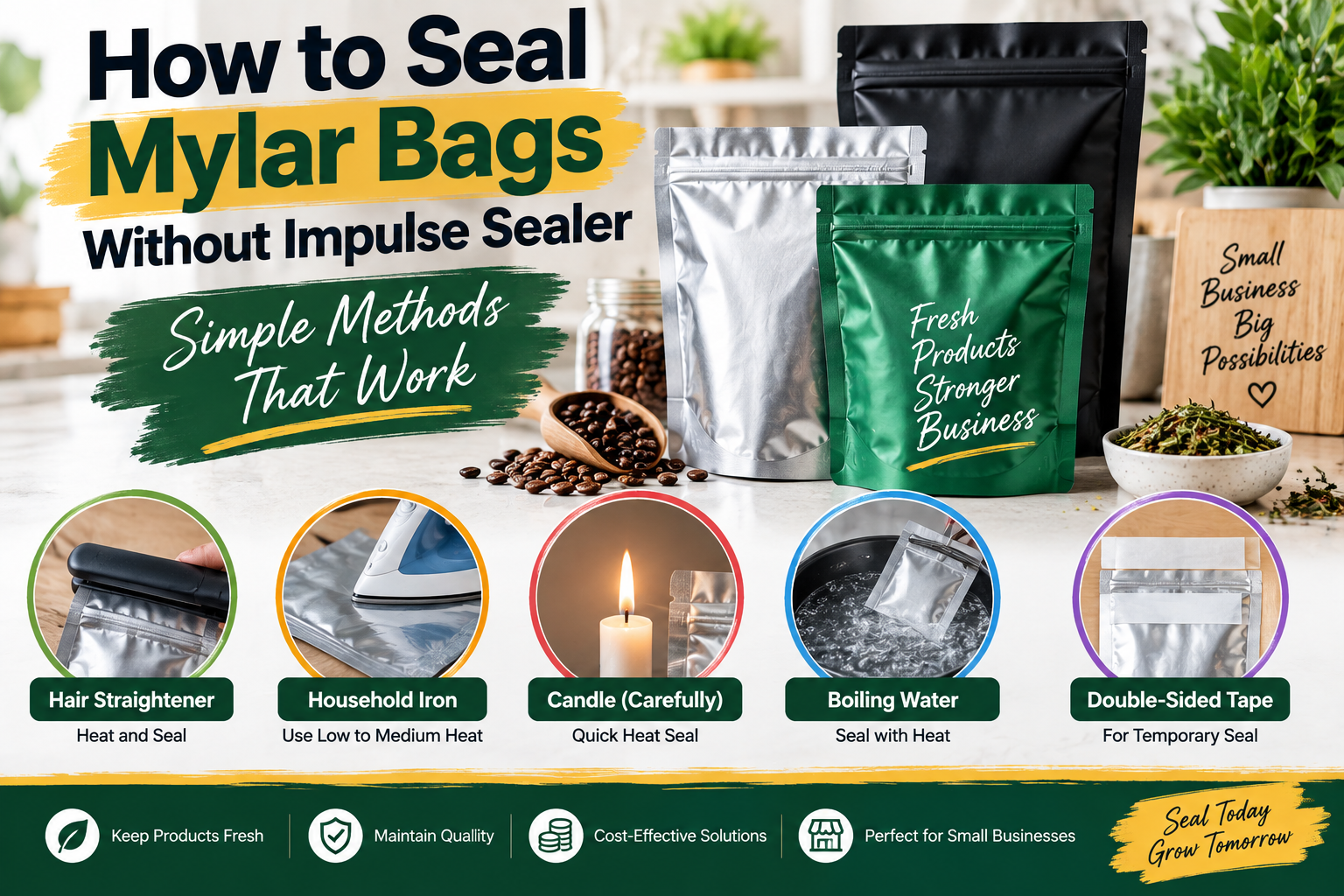
Not everyone packing food into mylar owns a dedicated heat sealer. Many people, especially those just starting to build a food storage supply, reach for whatever household tool can create a tight seal instead. The good news is that a proper seal does not require specialized equipment. Suppliers like premium mylar bags design their bags to work with several sealing methods, and a household iron or hair straightener can produce results close to what a commercial sealer achieves, as long as the technique is right.
What a Proper Seal Actually Needs
Every sealing method relies on the same three ingredients working together. Skipping or rushing any one of them weakens the final result.
- Heat, enough to melt the inner polyethylene layer without scorching the outer film
- Pressure, applied evenly across the full width of the seal
- Time, holding that heat and pressure long enough for the layers to fuse
Getting all three right matters more than which tool applies them. A clothes iron used correctly can outperform a rushed pass with a proper sealer.
Method 1: Sealing With a Clothes Iron
A clothes iron sits in most households already, which makes it the most accessible option for a first attempt at sealing mylar.
- Set the iron to a medium-high or wool heat setting, without steam
- Lay the bag flat on a heat-safe surface like an ironing board
- Press out as much excess air as possible before sealing
- Place a thin cloth or piece of parchment paper over the top edge to protect the film
- Run the iron slowly across the top edge, about one inch from the opening
- Repeat a second pass over the same line for a stronger, more even seal
- Let the seam cool for a few seconds before handling or moving the bag
Moving too quickly is the most common mistake with this method. A slow, steady pass produces a cleaner seal than several fast ones.
Method 2: Sealing With a Hair Straightener
A hair straightener applies heat from both sides at once, which often produces a smoother seal than a single-sided iron.
- Use a metal-plate straightener rather than a ceramic one, since metal plates transfer heat more evenly
- Set it to medium or medium-high heat, since too low a setting fails to fuse the layers
- Clamp the plates onto the bag's opening for two to four seconds
- Work in short, slightly overlapping sections across the full width of the bag
- Avoid holding the clamp in one spot too long, which can scorch or warp the film
This method works especially well for smaller pouches and zipper-top bags, where a full-size iron is harder to maneuver precisely.
Method 3: Using a Vacuum Sealer's Seal-Only Function
Some vacuum sealers include a seal-only mode that skips the vacuum step entirely, which makes them usable on mylar even though the vacuum function itself is not strong enough for this material.
- Turn off or bypass the vacuum pump feature
- Use only the heat-sealing bar built into the machine
- Position the mylar bag's open edge exactly as instructed for a standard plastic bag
- Run the seal cycle once, then check for a clean, unbroken line before trusting the seal
Not every vacuum sealer includes this function, so checking the manual before relying on this method saves a frustrating attempt later.
Comparing the Alternative Sealing Methods
| Method | Best For | Typical Seal Time | Learning Curve |
|---|---|---|---|
| Clothes iron | Larger bags, one-off projects | 2 passes, few seconds each | Low |
| Hair straightener | Small pouches, zipper-top bags | 2–4 seconds per section | Low to moderate |
| Vacuum sealer (seal-only) | Households that already own one | One cycle | Low |
| Impulse sealer (for comparison) | Frequent or bulk sealing | 2–5 seconds | Very low |
Each household method gets close to impulse-sealer results with practice, though consistency across dozens of bags still favors dedicated equipment for anyone sealing at scale.
Common Mistakes That Weaken a Seal
Most sealing failures trace back to a handful of avoidable errors rather than a flaw in the method itself.
- Sealing food that still has residual moisture in it, which weakens the seam from the inside over time
- Leaving too much air trapped inside before sealing, which puts pressure on the seam later
- Moving the iron or straightener too fast for the heat to fully fuse the layers
- Sealing over wrinkled or uneven film instead of smoothing it flat first
- Skipping the cooldown period and handling the bag before the seam fully sets
Catching these mistakes before filling a large batch saves both food and packaging material.
Testing the Seal Before Trusting It
A seal that looks solid is not always airtight, so a quick check before storing the bag long-term is worth the extra minute.
- Gently press the bag and listen or feel for any escaping air near the seam
- Tug both sides of the sealed edge to check for gaps or weak spots
- Hold the bag up to a light source and look for any visible pinholes along the seal line
- Run a second overlapping pass if any part of the seam looks uneven
A failed test is easy to fix immediately, but a bag stored for months with a hidden gap defeats the entire purpose of sealing it.
Safety Tips When Using Household Heat Tools
Repurposing an iron or hair straightener for sealing means using it outside its original design, so a few precautions keep the process safe.
- Work on a heat-resistant surface, never directly on a countertop or fabric ironing board cover
- Keep the cord and hot plates away from filled bags to avoid accidental contact
- Unplug the tool immediately after finishing, rather than leaving it heated and unattended
- Let the tool cool fully before storing it away with other household items
- Keep small children or pets away from the work area while sealing is underway
None of these steps take more than a few seconds, but skipping them is how minor burns and accidental scorch marks happen during an otherwise simple task.
When It Makes Sense to Switch to a Dedicated Sealer
Household methods work well for occasional batches, but the calculation changes once sealing becomes a regular task rather than a one-time project.
- Sealing more than a handful of bags in one sitting starts to feel slow and inconsistent with an iron or straightener
- Thicker film in the 6 mil and above range often needs more even heat than a household tool reliably provides
- A business packaging products for resale benefits from the speed and repeatability a dedicated sealer offers
- Anyone sealing bags weekly rather than a few times a year will likely save time by upgrading
For an occasional home project, though, a clothes iron or hair straightener remains a perfectly reliable way to get a secure, long-lasting seal without an added purchase.
Choosing the Right Bag Thickness for These Methods
Household sealing tools work more reliably on standard thickness bags than on very heavy-duty film, since thinner material reaches sealing temperature faster and more evenly. Bags in the mid-range thickness typically used for food storage mylar bags respond well to both the iron and hair straightener methods, while extremely thick film sometimes needs a dedicated sealer to fuse properly.
Specialty formats need a slightly different approach. Products like edible mylar bags are built to behave differently under heat than standard packaging film, so the same iron or straightener settings used for regular storage bags are not always appropriate. Checking the manufacturer's handling guidance before applying household heat to a specialty bag avoids damaging a product that was never meant to seal like a standard pouch.
Getting Consistent Results Without Special Equipment
Sealing mylar without an impulse sealer comes down to controlling heat, pressure, and time with whatever tool is on hand. A clothes iron, a hair straightener, or a vacuum sealer's seal-only mode can all produce a reliable, long-lasting seal once the technique is dialed in. Testing each seal before committing food to long-term storage remains the simplest way to catch a weak seam before it becomes a wasted batch.

 English
 French
 Spanish
 Portuguese
 Deutsch
 Turkish
 Dutch
Dutch
 Italiano
 Russian
 Romaian
 Portuguese (Brazil)
 Greek
Greek
