
Exploring the Best Nonwoven Fabric for Nicotine Pouches and Its Uses
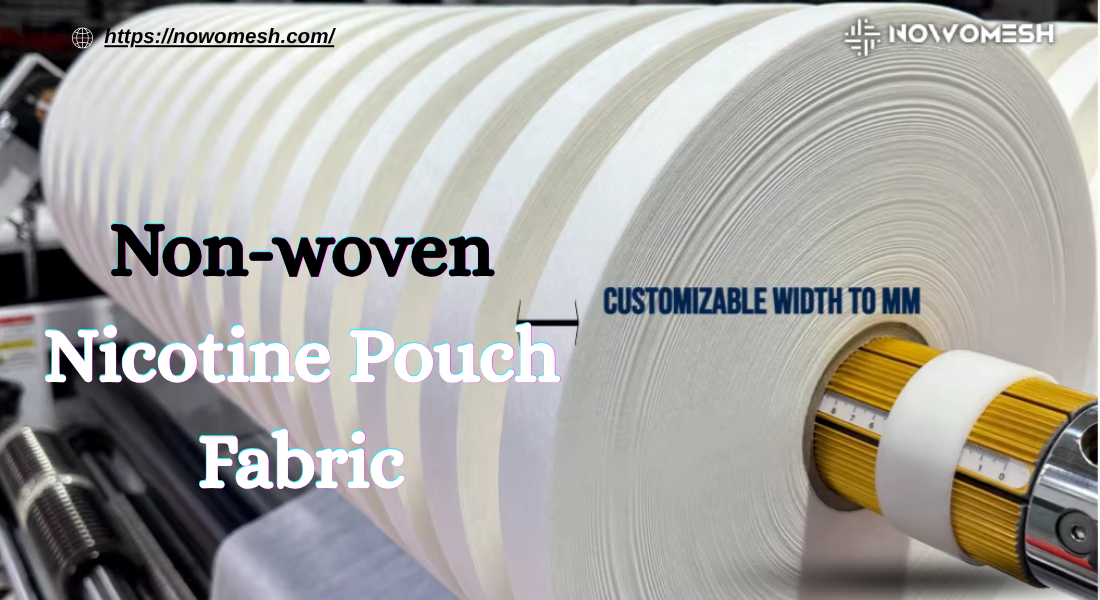
Choosing suitable materials is an important part of producing consistent nicotine pouches. The fabric used inside a pouch needs to work well with the manufacturing process while providing the right balance of structure, flexibility, and permeability. For manufacturers, understanding material characteristics can make it easier to select the Best Nonwoven Fabric for Nicotine Pouches for their specific production needs.
Nonwoven materials are produced without traditional weaving or knitting. Instead, fibers are bonded together through different manufacturing methods. This allows manufacturers to develop fabrics with specific characteristics for particular applications. When used for nicotine pouches, the material can be selected according to factors such as thickness, strength, softness, porosity, and processing requirements.
Why Material Selection Matters for Nicotine Pouches
A nicotine pouch may look simple, but its material has an important role in the finished product. The fabric needs to maintain its structure while allowing the contents of the pouch to interact appropriately with moisture.
A suitable material can also support efficient pouch formation and sealing. Consistency is particularly important when large quantities are produced because variations in thickness, strength, or surface properties can affect manufacturing performance.
This is why manufacturers often evaluate nicotine pouch fabric based on its physical characteristics rather than choosing a material based only on appearance.
Important Features of Nonwoven Fabric
Different applications require different material properties. When considering fabric for nicotine pouch production, several characteristics may be useful to evaluate.
Consistent Thickness
Uniform thickness can help manufacturers maintain consistent pouch dimensions. A material with stable thickness may also provide more predictable performance during processing and sealing.
Suitable Strength
The fabric should have enough strength to maintain its structure during manufacturing and handling. Excessively weak material may be more difficult to process, while overly rigid material may not provide the desired pouch characteristics.
Controlled Porosity
Porosity can influence how moisture and other components move through the material. Manufacturers may therefore consider the fabric's pore structure when selecting materials for specific pouch designs.
Flexibility and Softness
A flexible material can be easier to handle during high-speed production. Softness may also be considered when developing the overall texture and feel of a finished pouch.
Comparing Common Material Considerations
There is no single material specification that works for every manufacturing process. The right choice depends on the pouch design, equipment, and production requirements.
|
Material consideration |
Why it matters |
|
Thickness |
Helps support consistent pouch dimensions |
|
Strength |
Supports handling, forming, and processing |
|
Porosity |
Influences moisture and material interaction |
|
Flexibility |
Can support efficient pouch formation |
How Nonwoven Materials Support Production
During nicotine pouch manufacturing, fabric can pass through several production stages. These may include material feeding, pouch formation, filling, sealing, cutting, and packaging.
A reliable nonwoven material supplier can provide materials manufactured with consistent specifications. This can make it easier for production teams to maintain repeatable processing conditions.
Manufacturers may also look for a nonwoven fabric manufacturer that can provide material specifications and technical information. Details such as basis weight, thickness, tensile strength, and other physical properties can help businesses determine whether a fabric is suitable for their application.
Choosing Materials for Specific Manufacturing Needs
The best material depends on the requirements of the production process. Before selecting a fabric, manufacturers can consider how it will interact with their equipment and pouch design.
For example, a production line operating at a high speed may require a material with consistent handling characteristics. Another application may place greater importance on softness, permeability, or specific thickness.
This makes premium nonwoven fabric less about a general quality label and more about whether the material's characteristics match the intended application.
Role of High-Performance Nonwoven Fabric
A high-performance nonwoven fabric can be designed with particular physical properties for demanding applications. Consistency in material structure can be useful when manufacturers need predictable processing across larger production volumes.
It is also helpful to consider whether the fabric can be supplied consistently from batch to batch. Reliable specifications can help reduce unnecessary adjustments during production.
What to Consider When Selecting a Supplier
Selecting the material is only one part of the process. The supplier also matters because manufacturers need dependable product specifications and supply.
When comparing pouch fabric solutions, businesses can consider:
-
Available material specifications
-
Consistency between production batches
-
Fabric thickness and basis weight
-
Strength and flexibility
-
Technical support
-
Production capacity
-
Customization options
Working with a supplier that understands nicotine pouch manufacturing materials can help manufacturers identify materials that better match their production requirements.
Where Nonwoven Fabric Solutions Can Be Used
Nonwoven materials have applications across many industries because their properties can be adapted to different requirements. Beyond nicotine pouches, they may be used in filtration, hygiene products, medical applications, packaging, and other industrial products.
For businesses that need industrial nonwoven fabric, understanding the material's structure and performance characteristics is useful when comparing different options.
For nicotine pouch applications specifically, the focus is generally on finding a fabric that can support the required combination of strength, flexibility, porosity, and processing performance.
Final Thoughts
Selecting suitable fabric is an important part of developing a consistent nicotine pouch manufacturing process. The best nonwoven fabric for nicotine pouches depends on factors such as thickness, strength, flexibility, porosity, and compatibility with production equipment.
Manufacturers can compare these characteristics and supplier capabilities before choosing a material. Nowomesh provides nonwoven fabric solutions for businesses looking for materials suited to specific production requirements.
By understanding the characteristics of nonwoven fabric for nicotine pouches and evaluating material specifications carefully, manufacturers can make more informed decisions about their pouch production materials.
Frequently Asked Questions
What is nonwoven fabric for nicotine pouches?
It is a fiber-based material designed or selected for use in nicotine pouch construction. Unlike woven fabric, its fibers are bonded together rather than formed through traditional weaving.
Why is fabric consistency important for nicotine pouches?
Consistent thickness, strength, and structure can help support predictable manufacturing performance and maintain similar pouch characteristics throughout production.
What should manufacturers check before choosing nicotine pouch fabric?
Manufacturers can review thickness, strength, porosity, flexibility, basis weight, processing compatibility, and available technical specifications.
Can nonwoven fabric be used for other industrial applications?
Yes. Depending on its properties, nonwoven material can be used in areas such as filtration, hygiene, packaging, medical products, and other industrial applications.
Why work with a specialized nonwoven material supplier?
A specialized supplier may offer technical specifications, consistent material production, and different fabric options that can be matched to specific manufacturing requirements.

 English
 Arabic
 French
 Spanish
 Deutsch
 Turkish
 Dutch
Dutch
 Italiano
 Russian
 Romaian
 Portuguese (Brazil)
 Greek
Greek
