
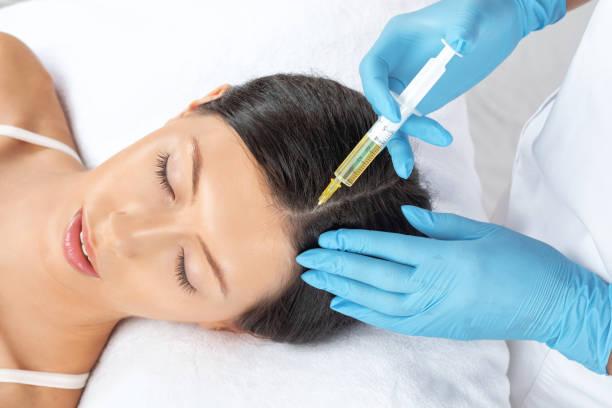
Hair loss is rarely a single, simple problem. It arrives in different patterns, at different ages, and for different reasons—and each of those differences shapes whether a treatment will actually help. PRPHairTreatment in Riyadh PRP hair treatment has become a widely discussed option for managing common hair loss concerns, but understanding which concerns it addresses well—and which it does not—is essential before committing. This guide breaks down the most frequent hair loss situations and explains where PRP genuinely fits.
Why Hair Loss Concerns Vary So Much
Hair loss differs by cause, pattern, and stage. Genetic thinning, hormonal changes, stress-related shedding, and nutritional deficiencies all present differently.
Because these mechanisms differ, no single treatment suits every situation. PRP works within a specific range of concerns rather than universally.
Concern One: Genetic Pattern Thinning
Androgenetic alopecia is the most common form of hair loss, affecting both men and women. It typically presents as a receding hairline or widening part.
PRP may help slow progression and improve density in areas where follicles remain active. It is most effective in early to moderate stages.
Concern Two: Diffuse Thinning Across the Scalp
Some patients experience general thinning rather than distinct bald patches. Density decreases evenly, and the scalp becomes more visible.
PRP may support follicle activity across treated areas. Results depend on how responsive the follicles remain.
Concern Three: Postpartum Hair Shedding
Many women experience significant shedding after childbirth due to hormonal shifts. This type of loss is usually temporary.
PRP is sometimes used to support recovery when shedding persists. However, most postpartum hair loss resolves naturally with time.
Concern Four: Stress-Related Telogen Effluvium
Significant stress can push follicles into a resting phase, causing widespread shedding months later. This condition is typically reversible.
Addressing the stressor is the primary treatment. PRP may play a supportive role during recovery but is not the first-line solution.
Concern Five: Hair Loss From Nutritional Deficiencies
Iron, vitamin D, zinc, and protein deficiencies can cause thinning. Correcting the deficiency usually restores hair growth.
PRP does not replace nutritional correction. Identifying and addressing the deficiency takes priority.
Concern Six: Hormonal and Thyroid-Related Loss
Thyroid disorders, PCOS, and other hormonal imbalances affect hair growth. Medical management is essential.
PRP may complement treatment but cannot substitute for addressing the hormonal cause.
Concern Seven: Early Stage Thinning in Younger Patients
Younger patients with early thinning often respond well to PRP. Active follicles remain responsive to growth factor stimulation.
Early intervention consistently produces better outcomes than waiting until loss progresses.
Concern Eight: Thinning After Illness or Medication
Certain illnesses and medications trigger temporary or prolonged shedding. Recovery depends on the underlying cause.
PRP may support follicular recovery once the primary issue is managed. Medical evaluation should come first.
Concern Nine: Age-Related Thinning
Hair naturally thins with age as follicles gradually weaken. PRP may help maintain density in responsive areas.
Expectations should be realistic; aging-related change cannot be reversed entirely.
Concern Ten: Areas of Complete Baldness
Where follicles have permanently stopped functioning, PRP cannot restore growth. This is a firm limitation.
Patients with long-standing bald patches may need to consider other options such as transplantation.
How PRP Fits Into a Broader Plan
PRP is best understood as one component of a comprehensive approach. Diagnosis, medical management, and lifestyle factors all matter.
Combining PRP with topical or oral treatments often produces better results than PRP alone.
What Results You Can Realistically Expect
Reduced shedding appears within weeks. Density improvements develop over three to six months.
Final results emerge around twelve months with consistent sessions and maintenance.
Who Should Consider PRP
Ideal candidates have early to moderate thinning with active follicles. Both men and women qualify.
A thorough consultation determines whether PRP suits your specific concern.
For those seeking expert guidance and customized aesthetic care, you can book an appointment consultation at the Enfield Royal Riyadh.
FAQs
What hair loss concerns does PRP address best?
Early to moderate genetic thinning and diffuse thinning with active follicles.
Can PRP help postpartum hair loss?
It may support recovery, though postpartum shedding usually resolves naturally.
Does PRP work for nutritional deficiencies?
No, correcting the deficiency is the primary treatment; PRP plays a supportive role.
Can PRP restore hair in bald areas?
No, it cannot revive follicles that have permanently stopped functioning.
How many sessions are needed?
Most protocols start with three to four sessions, then periodic maintenance.
Final Thoughts
PRP hair treatment addresses a specific range of hair loss concerns—primarily early to moderate thinning where follicles remain responsive. It supports but does not replace diagnosis, medical management, or lifestyle correction. Understanding which concern applies to you determines whether PRP is genuinely useful. When matched appropriately, PRP can be a valuable part of managing common hair loss concerns.

 English
 Arabic
 French
 Portuguese
 Deutsch
 Turkish
 Dutch
Dutch
 Italiano
 Russian
 Romaian
 Portuguese (Brazil)
 Greek
Greek
