
Hair Transplant in Al Ain for Robotic Hair Restoration
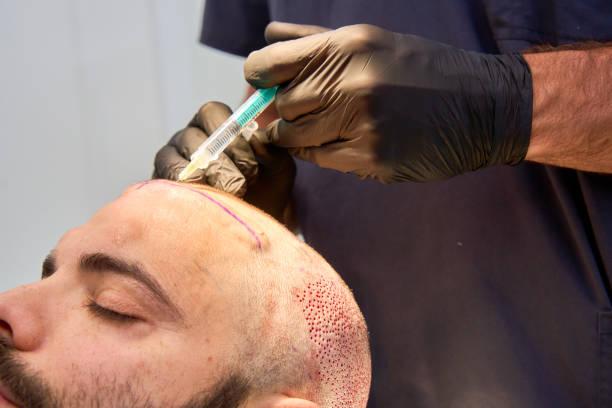
Technology has become part of modern hair restoration, but technology does not replace clinical judgment. Hair Transplant in Al Ain may include robotic-assisted options in suitable cases, with the treatment plan still based on donor characteristics, hair-loss pattern and the patient's restoration goals.
Robotic assistance is generally intended to support specific parts of the transplantation workflow. It should be considered within the wider surgical plan rather than as a standalone guarantee of better results.
What Robotic Hair Restoration Involves
Robotic systems can assist with selected aspects of follicular-unit harvesting and planning.
Hair Transplant in Al Ain and Technology-Assisted Extraction
The donor area can be assessed to identify suitable follicular units for harvesting.
Depending on the system and clinical setup, robotic assistance may help with aspects of follicle selection or extraction.
The exact capabilities vary between technologies.
Why the Human Clinical Assessment Still Matters
Hair restoration involves decisions that extend beyond mechanical extraction.
The clinician must consider:
- Which follicles are suitable for harvesting
- How much donor hair should be used
- Where grafts should be placed
- How existing hair affects recipient planning
- How future hair loss may influence the result
Technology can assist a workflow, but these decisions remain patient-specific.
Hair Transplant in Al Ain and Donor Area Analysis
The donor region is central to any transplantation strategy.
Follicular Unit Characteristics
Different donor follicles can contain different numbers of hairs and have varying characteristics.
Understanding this distribution helps determine how available grafts may contribute to the restoration.
Donor Preservation
Robotic assistance does not make donor hair unlimited.
Extraction still needs to be controlled to avoid unnecessarily reducing donor density.
Robotic Hair Restoration for FUE Procedures
Robotic systems are commonly associated with follicular-unit extraction workflows.
Individual Follicular Units
FUE involves removing individual follicular units rather than taking a strip of scalp.
Robotic assistance may support aspects of this process in appropriately selected cases.
Extraction Pattern
The donor area should be managed with a distribution strategy.
Random or excessive extraction can compromise the appearance of the donor region.
Hair Transplant in Al Ain and Recipient-Site Planning
Harvesting is only one part of transplantation.
Designing the Recipient Area
The clinician must decide where grafts should be placed and how they should interact with existing hair.
This includes considering:
- Hair direction
- Recipient density
- Existing native follicles
- Facial framing
- Scalp curvature
- Long-term hair-loss progression
Why Robotic Technology Does Not Automatically Design the Final Result
A machine can assist with specific procedural tasks, but the overall restoration requires interpretation of anatomy and aesthetic objectives.
The recipient strategy must therefore remain individualized.
Robotic Hair Transplant Compared With Other Approaches
| Approach | Role | Important consideration |
|---|---|---|
| Robotic-assisted restoration | Supports selected procedural steps | Availability and suitability vary |
| Manual FUE | Individual follicular-unit extraction | Requires detailed donor management |
| DHI | Implanter-assisted graft placement | Recipient planning remains important |
| Medical treatment | Helps manage suitable native hair loss | Does not replace lost follicles |
The appropriate technique depends on the patient's circumstances rather than technology alone.
Hair Transplant in Al Ain for Patients Interested in Technology
Technology can be attractive to patients who want a modern treatment environment.
However, a consultation should focus first on the clinical problem.
Questions Worth Asking
Patients may want to understand:
- Which part of the procedure uses robotic assistance?
- How will donor follicles be selected?
- How will the donor area be protected?
- How will recipient sites be planned?
- Is robotic assistance actually appropriate for the individual's hair characteristics?
These questions provide a clearer picture than simply choosing a procedure because it is described as robotic.
Recovery After Robotic-Assisted Hair Restoration
Recovery depends on the actual transplantation procedure performed.
The donor and recipient areas require appropriate care during the early healing period.
Patients may experience temporary redness, sensitivity or shedding. New hair growth develops gradually and should be evaluated over time rather than immediately after treatment.
What Robotic Technology Cannot Change
Even advanced technology cannot change certain biological realities.
Hair restoration remains influenced by:
- Donor supply
- Follicular survival
- Existing hair-loss progression
- Scalp characteristics
- Hair caliber
- Individual healing
- Post-treatment care
Realistic expectations remain essential regardless of the technology used.
Hair Transplant in Al Ain and Long-Term Planning
A robotic-assisted procedure should still be planned around the patient's future hair-loss pattern.
Using a large proportion of available donor follicles for one immediate restoration may leave fewer options later.
A measured strategy can help balance today's cosmetic concerns with potential future needs.
Exploring Robotic Hair Restoration With Tajmeels Clinic
For patients considering Hair Transplant in Al Ain, robotic assistance may be one option within a broader hair restoration strategy where clinically appropriate.
Tajmeels Clinic can assess the donor area, recipient requirements and restoration objectives before discussing suitable transplantation options. Explore Tajmeels Clinic to arrange a personalized hair restoration consultation.

 English
 Arabic
 French
 Spanish
 Portuguese
 Deutsch
 Turkish
 Dutch
Dutch
 Italiano
 Russian
 Portuguese (Brazil)
 Greek
Greek
