
Penile Implant in Pakistan
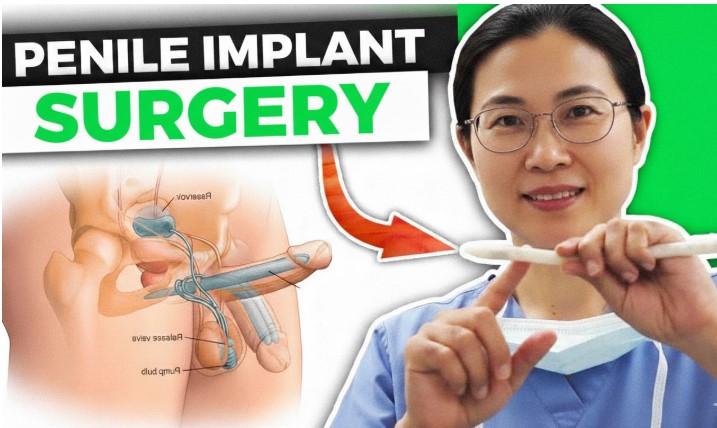
A penile implant, also known as a penile prosthesis, is a surgically placed medical device used to help men with erectile dysfunction (ED) achieve an erection suitable for sexual intercourse. It is generally considered when other ED treatments, such as oral medicines, vacuum erection devices, or penile injections, do not provide satisfactory results or are not suitable for the patient.
For men who have persistent erectile dysfunction, a penile implant can provide a predictable, on-demand method of obtaining penile rigidity. Unlike medications, the device does not require taking a pill immediately before sexual activity. The implant remains completely inside the body and is operated according to its design.
Penile implant surgery is an important medical decision because it is an irreversible surgical procedure that involves placing a prosthesis inside the penis. Therefore, patients should receive a detailed evaluation from an experienced urologist before deciding whether implantation is appropriate.
What Is a Penile Implant?
A penile implant is a medical prosthesis surgically positioned inside the penis to provide mechanical rigidity. The device is designed to help a man obtain an erection when he wants to engage in sexual activity.
A penile prosthesis does not create sexual desire. Instead, it addresses the mechanical aspect of erectile dysfunction by allowing the penis to become sufficiently rigid for intercourse.
Penile implants are particularly relevant for men whose erectile dysfunction is persistent and whose response to less-invasive treatments is inadequate.
Depending on the type of device, the patient either activates a pump to create rigidity or manually positions the penis using a bendable prosthesis.
Why Do Men Consider Penile Implant Surgery?
Erectile dysfunction can develop for many different reasons. Some men experience ED because of diabetes, cardiovascular disease, nerve damage, hormonal problems, pelvic surgery, prostate cancer treatment, medication effects, or psychological factors.
For some patients, conventional treatments work well. Others may experience limited effectiveness, unwanted side effects, or medical contraindications.
A penile implant may be discussed when:
-
Erectile dysfunction is persistent.
-
Oral ED medications are ineffective or unsuitable.
-
Injections do not provide satisfactory results.
-
Vacuum erection devices are inconvenient or unsuccessful.
-
A patient wants a more predictable mechanical solution.
-
Erectile dysfunction developed after certain pelvic or prostate procedures.
-
Severe vascular or nerve-related problems make other treatments less effective.
The decision should be individualized rather than based only on the severity of ED.
Types of Penile Implants
There are two primary categories of penile prostheses:
-
Inflatable penile implants
-
Malleable or semi-rigid penile implants
Both can provide penile rigidity, but they work differently and have different practical considerations.
1. Inflatable Penile Implant
An inflatable penile prosthesis is a hydraulic system that allows the patient to create and release an erection using an implanted pump.
A commonly used inflatable system has three main components:
-
Two inflatable cylinders inside the penis
-
A fluid reservoir inside the body
-
A small pump located in the scrotum
When the patient wants an erection, he operates the pump. Fluid moves into the cylinders, causing them to expand and create rigidity.
After sexual activity, the deflation mechanism is activated, allowing the fluid to return to the reservoir and the penis to become softer.
Advantages of an Inflatable Implant
An inflatable prosthesis can provide:
-
On-demand rigidity
-
A more natural-looking flaccid state compared with a permanently firm device
-
Greater control over when the penis becomes erect
-
A concealed system that remains inside the body
-
No requirement for medication immediately before intercourse
Because the system contains multiple components, however, there are more mechanical parts than in a simple malleable prosthesis.
2. Malleable Penile Implant
A malleable implant, sometimes called a semi-rigid implant, uses flexible rods placed inside the penis.
There is no pump and no fluid reservoir.
The patient manually positions the penis upward for sexual activity and downward or to another comfortable position afterward.
Advantages of a Malleable Implant
A malleable device can be appealing because:
-
It has a relatively simple mechanical design.
-
There is no pump to operate.
-
There is no separate fluid reservoir.
-
It can be easier to use for some patients with limited hand dexterity.
-
The procedure may involve fewer implanted components.
The main consideration is that the penis maintains a degree of firmness rather than becoming completely soft in the same way an inflatable device can.
How Does a Penile Implant Work?
The basic purpose of both implant types is the same: provide reliable penile rigidity.
With an inflatable device, the patient activates the implanted pump. The pump moves fluid into the cylinders positioned within the erectile chambers of the penis. As the cylinders fill, the penis becomes firm.
With a malleable device, the implanted rods provide continuous structural support. The patient manually positions the penis according to the desired activity.
The implant does not depend on natural blood flow in the same way as a normal erection.
Who May Be a Candidate for a Penile Implant?
Penile implant surgery may be considered for men with erectile dysfunction who have not achieved satisfactory results from other treatments.
Potential candidates may include men with ED related to:
-
Diabetes
-
Vascular disease
-
Nerve damage
-
Prostate surgery
-
Radiation therapy
-
Pelvic surgery
-
Spinal or neurological conditions
-
Certain medications
-
Severe long-standing erectile dysfunction
However, having ED does not automatically mean that an implant is necessary.
A urologist should evaluate the underlying cause, previous treatments, general health, expectations, and ability to undergo surgery.
What Happens During the Consultation?
The consultation is an important part of penile implant treatment.
The doctor may discuss:
-
How long the patient has experienced ED
-
Previous ED treatments
-
Medical conditions
-
Previous pelvic or prostate surgery
-
Current medications
-
Previous infections or surgeries
-
Sexual function and expectations
-
Ability to operate a device
-
Potential surgical risks
A physical examination may also be performed. Depending on the patient's circumstances, laboratory testing or additional diagnostic evaluation may be recommended.
The consultation is also an opportunity to discuss the differences between inflatable and malleable implants.
Preparing for Penile Implant Surgery
Once a patient decides to proceed, the surgical team may provide specific instructions before the operation.
Preparation can involve:
-
Reviewing medications
-
Managing conditions such as diabetes
-
Evaluating infection risks
-
Following instructions about eating and drinking before anesthesia
-
Arranging transportation and postoperative assistance
-
Discussing expectations for recovery
-
Reviewing the implant type and surgical plan
Patients should tell their medical team about all medications, supplements, allergies, previous surgeries, and significant medical conditions.
Good preoperative planning can help reduce avoidable complications and make the recovery process easier.
How Is Penile Implant Surgery Performed?
Penile implant surgery is performed by a urologist experienced in prosthetic surgery.
The operation is performed under anesthesia. The surgeon makes an incision and carefully places the prosthetic components.
For an inflatable implant, cylinders are positioned inside the erectile chambers of the penis. The pump is generally placed within the scrotum, while the fluid reservoir is positioned internally in an appropriate anatomical location.
For a malleable implant, flexible rods are placed inside the erectile chambers.
The surgical approach can vary depending on the implant model, patient anatomy, previous operations, surgeon preference, and other medical factors.
After placement, the surgeon checks the device and closes the incision.
How Long Does Penile Implant Surgery Take?
The length of surgery varies according to:
-
Type of implant
-
Surgical technique
-
Patient anatomy
-
Previous pelvic or penile surgery
-
Whether additional procedures are required
-
Surgeon and hospital protocols
Some patients may go home the same day, while others may require observation or a short hospital stay.
The treating surgeon should provide the expected timeline for the individual procedure.
What Is Recovery Like After Penile Implant Surgery?
Recovery is an important part of the treatment process.
It is normal to experience some discomfort, swelling, bruising, or sensitivity after surgery. These symptoms generally improve as healing progresses.
The medical team may prescribe pain medication and provide instructions regarding wound care and physical activity.
Patients may be advised to temporarily avoid:
-
Heavy lifting
-
Strenuous exercise
-
Certain physical activities
-
Sexual intercourse
-
Pressure or trauma to the surgical area
The exact restrictions depend on the surgical technique and individual recovery.
When Can You Have Sex After a Penile Implant?
Sexual activity should not be resumed simply because the patient feels better.
The implant needs time to heal into the surrounding tissues. The surgeon will determine when it is safe to begin using the prosthesis.
Many patients require several weeks of healing before the implant can be activated or used for intercourse, but the appropriate timing varies.
Following postoperative instructions is important because premature activity can interfere with healing.
What Are the Benefits of a Penile Implant?
For appropriately selected patients, a penile implant can provide several practical advantages.
Reliable Rigidity
The device is designed to provide rigidity when activated or positioned.
On-Demand Function
Inflatable implants can be activated when the patient wants an erection rather than requiring medication beforehand.
No Repeated ED Medication
Once the implant has healed, patients generally do not need to rely on oral ED medication to operate the prosthesis.
Concealed Device
The components are implanted internally and are generally not visible from the outside.
Long-Term Solution
Penile prostheses are designed for long-term use, although no mechanical device is guaranteed to last forever.
Does a Penile Implant Increase Penis Size?
A penile implant is not primarily a penis enlargement procedure.
The purpose of implantation is to provide rigidity for sexual activity.
Patients should have realistic expectations about penile length and appearance. Some men with long-standing ED may perceive a difference in penile size after surgery because natural erections have not occurred for an extended period.
A surgeon should discuss expected postoperative appearance before the procedure.
Does a Penile Implant Affect Sensation?
A penile implant is designed primarily to address erectile rigidity.
It does not automatically increase penile sensitivity.
In many patients, penile sensation can remain present because the prosthesis does not remove the nerves responsible for sensation. However, individual outcomes vary depending on the patient's underlying disease, previous surgery, nerve function, and other factors.
Patients should discuss concerns about sensation with their urologist before surgery.
Can a Man Still Have an Orgasm With a Penile Implant?
A penile prosthesis does not directly create an orgasm.
Orgasm is different from erection.
If a man was capable of orgasm before implantation and does not have another condition affecting sexual function, implantation may allow him to have intercourse more reliably. However, the outcome depends on the individual's existing sexual and neurological function.
What About Ejaculation?
Ejaculation and erection are separate functions.
A penile implant primarily addresses erectile rigidity. It does not automatically restore ejaculation in men who cannot ejaculate because of prostate surgery, neurological disease, medication effects, or another underlying condition.
The reason for any ejaculation problem should therefore be evaluated separately.
Does a Penile Implant Affect Fertility?
A penile implant is not a fertility treatment.
Men who are concerned about fertility should discuss this separately with a urologist or fertility specialist.
The implant is intended to address erectile function, not sperm production.
Possible Risks and Complications
Like all surgical procedures, penile implant surgery carries potential risks.
Possible complications include:
-
Infection
-
Bleeding
-
Hematoma
-
Pain
-
Swelling
-
Wound-healing problems
-
Device malfunction
-
Mechanical failure
-
Erosion
-
Device displacement
-
Urinary complications
-
Need for revision surgery
-
Need for removal of the implant
Infection involving a penile prosthesis can be particularly serious and may require removal of the device.
Modern surgical techniques and infection-prevention strategies are intended to reduce complications, but risk cannot be completely eliminated.
What Happens If a Penile Implant Fails?
Penile prostheses are mechanical devices and can eventually experience wear or malfunction.
An inflatable implant contains several mechanical components, so a mechanical problem can occur with the pump, cylinders, reservoir, or connections.
If a device develops a significant mechanical problem, revision surgery may be required.
The surgeon can assess the problem and determine whether a component can be repaired or whether the prosthesis should be replaced.
How Long Does a Penile Implant Last?
A penile implant is intended to be a long-term treatment, but it should not be considered a lifetime guarantee.
The lifespan of a device can vary according to:
-
Implant type
-
Device model
-
Patient factors
-
Surgical factors
-
Mechanical wear
-
Infection
-
Trauma
-
Other complications
Some implants function for many years, while others may require revision earlier.
During consultation, patients should ask the surgeon about the expected durability of the specific implant being considered.
Penile Implant vs ED Medication
ED medications work by supporting the physiological processes involved in producing an erection.
A penile implant works differently.
| Feature | ED Medication | Penile Implant |
|---|---|---|
| Requires medication | Yes | No |
| Requires surgery | No | Yes |
| On-demand function | Usually | Yes |
| Internal device | No | Yes |
| Permanence | Temporary effect | Long-term implanted device |
| Reversibility | Yes | Surgical removal/revision required |
| Mechanical components | No | Yes |
| Suitable for every patient | No | No |
The appropriate treatment depends on the patient's health, ED cause, preferences, previous treatment response, and medical suitability.
Penile Implant vs Vacuum Erection Device
A vacuum erection device uses external equipment to draw blood into the penis and produce rigidity.
A penile implant, by contrast, is surgically implanted and does not require an external pump during sexual activity.
A vacuum device may be useful for some men who want a non-surgical approach, whereas an implant may be considered by patients seeking a more predictable long-term mechanical solution.
Penile Implant vs Penile Injections
Intracavernosal injections involve injecting medication directly into the penis before sexual activity.
They can be effective for some men but require preparation and self-injection.
A penile prosthesis eliminates the need for penile injections once the implant has healed and is functioning properly.
However, implantation involves surgery and permanent placement of a device, so the advantages and disadvantages of both options should be discussed with a qualified urologist.
Cost of Penile Implant Surgery
The cost of penile implant surgery can vary significantly.
Factors that can affect the total price include:
-
Type of implant
-
Implant manufacturer and model
-
Surgeon fees
-
Hospital charges
-
Anesthesia
-
Preoperative tests
-
Medications
-
Follow-up visits
-
Treatment of complications
-
Revision surgery, if necessary
In Pakistan, prices can also vary between hospitals, surgeons, and cities.
Patients should request a complete quotation rather than looking only at the price of the implant itself.
If considering treatment in Lahore or Multan, patients should confirm current availability, surgeon experience, implant model, hospital charges, and follow-up arrangements directly with the treating facility.
Choosing the Right Penile Implant Surgeon
The experience of the surgeon is an important consideration.
Patients may want to ask:
-
How frequently do you perform penile implant surgery?
-
Which implant systems do you use?
-
Which type of prosthesis is appropriate for my condition?
-
What complications should I understand?
-
What is the expected recovery process?
-
How long before sexual activity?
-
What happens if the device develops a problem?
-
What follow-up care is included?
-
What are the additional costs if revision surgery becomes necessary?
Patients should feel comfortable asking detailed questions before consenting to surgery.
Penile Implant Treatment at Dot Clinics
For men exploring erectile dysfunction treatment in Pakistan, Dot Clinics provides men's health and ED-related services in Lahore and Multan.
A patient considering penile prosthesis surgery should confirm directly with the clinic whether penile implant surgery is currently offered, which urologist performs the procedure, what implant systems are available, and where the surgery would take place.
Because treatment availability, surgical teams, and implant options can change, these details should be verified during consultation rather than assumed from general ED services.
A proper assessment can help determine whether medication, injections, vacuum therapy, lifestyle management, or penile prosthesis surgery is the most appropriate option.
Questions to Ask Before Penile Implant Surgery
Before making a decision, patients should consider asking their urologist:
-
What is causing my erectile dysfunction?
-
Have all appropriate non-surgical treatments been considered?
-
Which implant type is suitable for me?
-
What are the advantages and disadvantages of each option?
-
How experienced are you with penile prosthesis surgery?
-
What complications should I be aware of?
-
How long should I expect recovery to take?
-
When can I resume sexual activity?
-
How long is the implant expected to function?
-
What happens if the implant fails?
-
What will the complete treatment cost?
-
What follow-up care will I need?
These questions can help patients make an informed decision based on their individual circumstances.
Frequently Asked Questions About Penile Implants
Is a penile implant permanent?
A penile implant is designed for long-term use, but it may eventually require revision or replacement because of mechanical failure, infection, or other complications.
Is penile implant surgery painful?
Some discomfort and swelling are expected during the early recovery period. Pain management is provided according to the patient's needs and the surgeon's postoperative plan.
Can a penile implant be seen from outside?
Most of the implant is located internally. The components are designed to remain concealed beneath the skin.
Can the implant be removed?
Yes, but removing a penile prosthesis requires another surgical procedure. Removal may be necessary in certain situations, particularly severe infection or device complications.
Can I urinate normally after penile implant surgery?
The implant is designed to address erectile function rather than urinary function. Temporary urinary issues can occur around surgery, but individual experiences vary.
Will I still have sexual desire?
A penile implant does not directly increase or decrease libido. Sexual desire depends on factors such as hormones, relationships, psychological wellbeing, medications, and overall health.
Can a penile implant cure erectile dysfunction?
It does not cure the underlying cause of ED in the traditional sense. Instead, it provides a mechanical way to achieve penile rigidity.
Is a penile implant suitable for every man with ED?
No. Treatment suitability depends on medical history, previous treatments, anatomy, expectations, surgical risk, and other factors.
Final Thoughts
A penile implant can be an important treatment option for men with persistent erectile dysfunction who have not achieved satisfactory results from other therapies.
The two principal options—inflatable and malleable penile prostheses—work differently and offer different practical features. An inflatable device provides adjustable rigidity through an implanted pump, while a malleable device uses flexible rods that can be manually positioned.
Because penile implant surgery is an invasive and generally irreversible treatment, careful patient selection and realistic expectations are essential. Men considering the procedure should consult an experienced urologist, understand the potential benefits and complications, compare available treatment options, and receive clear information about recovery and long-term follow-up.
The goal of treatment is not simply to create an erection. It is to provide a solution that fits the patient's medical condition, sexual goals, lifestyle, and expectations while maintaining safety and quality of care.
This article is for general educational purposes and should not replace an examination or personalized medical advice from a qualified urologist.

 English
 Arabic
 French
 Spanish
 Portuguese
 Deutsch
 Turkish
 Dutch
Dutch
 Italiano
 Russian
 Romaian
 Portuguese (Brazil)
