
Ghana Mobile Money Deepens Financial Access as Digital Payments Become Everyday Tools
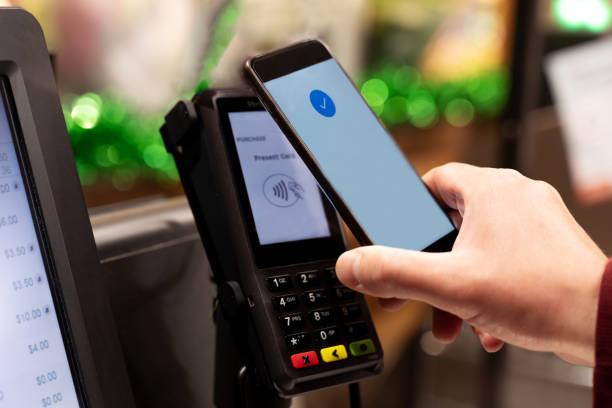
Mobile money has become an important part of Ghana’s financial ecosystem, allowing consumers and businesses to transfer funds, pay merchants, receive remittances, settle bills, and access selected financial services through mobile devices. Its importance extends beyond convenience. By connecting users who may have limited access to traditional banking infrastructure, mobile money is supporting broader participation in digital finance while changing how everyday transactions move across the economy.
A recent study by Markntel Advisor highlights that the Ghana mobile money sector was valued at USD 227 billion in 2025 and is projected to grow from USD 269 billion in 2026 to USD 770 billion by 2032, registering a CAGR of 19.16% during 2026–2032. USSD-based transactions account for approximately 58% by payment mode in 2026, while the telecom-led model represents around 92% by business model.
USSD Keeps Mobile Payments Widely Accessible
USSD remains highly relevant because users can perform transactions through structured mobile menus without relying entirely on smartphones or high-speed internet connections. This provides an accessible route to mobile financial services across different income groups and connectivity environments.
Its strong position within the supplied study demonstrates that Ghana’s mobile money ecosystem continues to support both traditional mobile channels and newer app-based experiences. This combination allows providers to serve users with different devices, digital skills, and connectivity conditions.
Telecom-Led Services Maintain a Strong Position
Telecommunications companies have played a central role in building mobile money infrastructure through extensive agent networks, mobile subscriptions, customer relationships, and payment platforms. The telecom-led model accounts for around 92% of the supplied study in 2026, showing how closely mobile financial services remain connected with Ghana’s communications infrastructure.
However, the ecosystem now extends beyond mobile network operators. Banks, fintech companies, payment service providers, merchants, and government platforms increasingly interact through a broader digital-payment environment.
Regulation Supports a Structured Payments Ecosystem
A clear regulatory framework is important because mobile money providers manage customer funds, payment information, agents, and transactions at considerable scale. Ghana regulates electronic money issuers and payment service providers under its payments framework.
The Bank of Ghana’s approved institutions framework identifies licensed electronic money issuers and payment service providers operating within the country. The central bank also stated in July 2026 that Ghana retained the top position in the GSMA Mobile Money Regulatory Index 2025, reflecting the development of its regulatory environment.
Interoperability Expands the Value of Mobile Wallets
Mobile money becomes more useful when customers can transfer funds across different providers rather than remaining inside a single closed network. Interoperability allows users of separate mobile wallets, banks, and payment platforms to transact more easily.
The GSMA’s work on mobile money interoperability identifies Ghana among the countries where interoperability operates through a regulatory framework and national switch. This connectivity can strengthen competition and make digital payments more practical for everyday users.
Merchant Payments Extend Mobile Money Beyond Transfers
Mobile money initially became popular for person-to-person transfers, but its use is expanding toward merchant payments and wider commercial transactions. Customers can increasingly use mobile wallets to pay retailers, service providers, online merchants, and small businesses.
This reflects a global trend. The GSMA reported that mobile money merchant payments reached USD 155 billion worldwide in 2025, making merchant payments the fastest-growing use case during the year. Ghana’s established mobile-money infrastructure provides a strong foundation for similar diversification of digital-payment activity.
Financial Inclusion Remains a Core Benefit
Mobile money can reduce dependence on physical bank branches by allowing customers to perform basic financial transactions through nearby agents or mobile devices. This is particularly important in locations where conventional banking access may be less convenient.
World Bank research has previously documented the significant role of mobile money in Ghana’s financial inclusion progress, while more recent digital-adoption analysis has shown that fintech use in the country is heavily influenced by mobile money.
Security and Consumer Trust Become More Important
As transaction volumes increase, providers must maintain strong controls around fraud, account access, agent behaviour, customer verification, and transaction monitoring. Consumers also need clear information about fees, digital loans, suspicious requests, and safe transaction practices.
The Bank of Ghana maintains payment-system oversight and publishes guidance covering regulated payment services. Continued consumer education and effective supervision will remain important as mobile wallets become connected with a wider range of financial products.
Digital Finance Will Shape the Next Phase
Ghana mobile money is evolving from a basic transfer mechanism into broader financial infrastructure connecting consumers, merchants, telecom operators, banks, fintech providers, and digital platforms. Interoperability and stronger payment regulation are increasing the usefulness of this ecosystem.
Future development will depend on secure transactions, wider merchant acceptance, reliable connectivity, product innovation, and financial literacy. As mobile money becomes increasingly embedded in everyday commerce, it is positioned to remain a major component of Ghana’s digital-finance transformation.

 Arabic
 French
 Spanish
 Portuguese
 Deutsch
 Turkish
 Dutch
Dutch
 Italiano
 Russian
 Romaian
 Portuguese (Brazil)
 Greek
Greek
