
How to Choose the Right AI Agent Builder
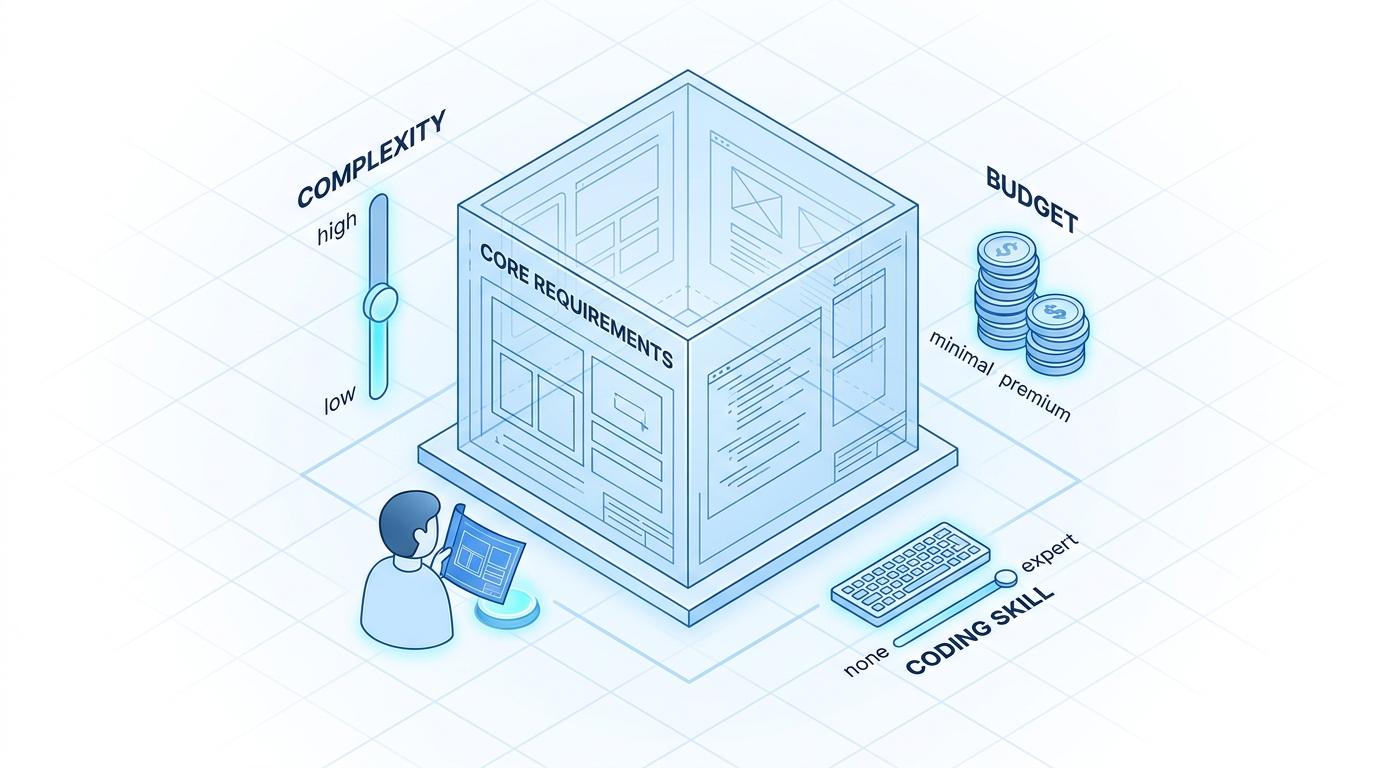
With dozens of platforms now competing in this space, choosing the right AI agent builder has become a genuinely confusing decision for many teams. Features overlap heavily in marketing language, pricing models vary widely, and the platform that suits a technical engineering team often looks nothing like the one that suits a non technical operations team. This guide offers a practical framework for evaluating options based on what actually matters for your specific use case.
Start With the Task, Not the Platform
The most common mistake teams make when choosing an AI agent builder is starting with platform comparisons before clearly defining what they actually need the agent to do. A well defined task, such as automating first line customer support responses or researching and qualifying inbound sales leads, immediately narrows which platforms are genuinely suited to the job. Starting with platform features in isolation, without a specific task in mind, tends to produce a choice driven by impressive demos rather than genuine fit.
Evaluate Integration Depth With Your Existing Tools
An agent is only as useful as its ability to actually interact with the systems your business already relies on. Before committing to any AI agent builder, check specifically whether it offers native integrations with your CRM, support platform, database, or whatever core systems the agent will need to access. A platform with hundreds of generic integrations but weak, unreliable connections to your specific critical systems is often less useful in practice than a platform with fewer total integrations but genuinely robust support for the tools your team actually uses daily.
Consider the Skill Level Required to Build and Maintain Agents
AI agent builder platforms range from fully no code, natural language driven interfaces to platforms that expect genuine coding ability for anything beyond the most basic use cases. Matching this to your team's actual skill level matters enormously for long term success. A powerful, flexible platform is not the right choice if nobody on your team has the technical background to configure it properly, while a highly simplified platform might feel limiting once your agents need to handle more complex logic than the interface easily supports.
Test Guardrails and Human Oversight Features
Since agents can take real actions rather than simply generating text, the quality of a platform's guardrails deserves serious evaluation. Check how easily you can configure which actions require human approval before execution, how the platform handles an agent that gets stuck or produces an unexpected result, and what visibility you have into an agent's reasoning and action history after the fact. An AI agent builder with weak or confusing guardrail configuration creates real risk once agents are handling anything beyond low stakes, easily reversible tasks.
Understand the Pricing Model Before Scaling
Pricing models across AI agent builder platforms vary significantly, some charging per agent, some per task or execution, and some based on underlying AI model usage that can scale unpredictably as agent usage grows. Model this out realistically based on expected usage volume before committing, since a platform that seems affordable during a small pilot can become surprisingly expensive once agents are handling meaningful production volume across a full team or department.
Check How the Platform Handles Errors and Edge Cases
Agents will inevitably encounter situations outside their expected pattern, whether that is an API returning unexpected data, an ambiguous instruction, or a task that genuinely requires human judgment. A quality AI agent builder provides clear mechanisms for an agent to recognize when it is stuck, escalate appropriately to a human, and log enough detail about what happened for someone to diagnose the issue afterward. Platforms that handle errors poorly, either by failing silently or by having agents proceed confidently down an incorrect path, create risks that are difficult to catch until real damage has already occurred.
Run a Genuine Pilot Before Committing Broadly
Rather than selecting a platform based purely on features and demos, running a real pilot project, ideally on an actual task your team currently handles manually, reveals far more about a platform's genuine fit than any sales presentation. Pay particular attention during a pilot to how much configuration effort was actually required, how reliably the agent performed on real, sometimes messy real world inputs, and how much ongoing maintenance the agent needed once it moved beyond the initial happy path scenarios.
Final Thought
Choosing the right AI agent builder comes down to matching platform capability, integration depth and guardrail quality to your team's actual task and skill level, rather than selecting based on the most impressive feature list or demo. A focused pilot on a real task, rather than an extended features comparison exercise alone, consistently reveals the genuine fit that matters most before a broader rollout.

 English
 Arabic
 French
 Spanish
 Portuguese
 Deutsch
 Turkish
 Italiano
 Russian
 Romaian
 Portuguese (Brazil)
 Greek
Greek
