
SOC SIEM Consulting for Indian Healthcare: A Costly Security Planning Mistake to Avoid
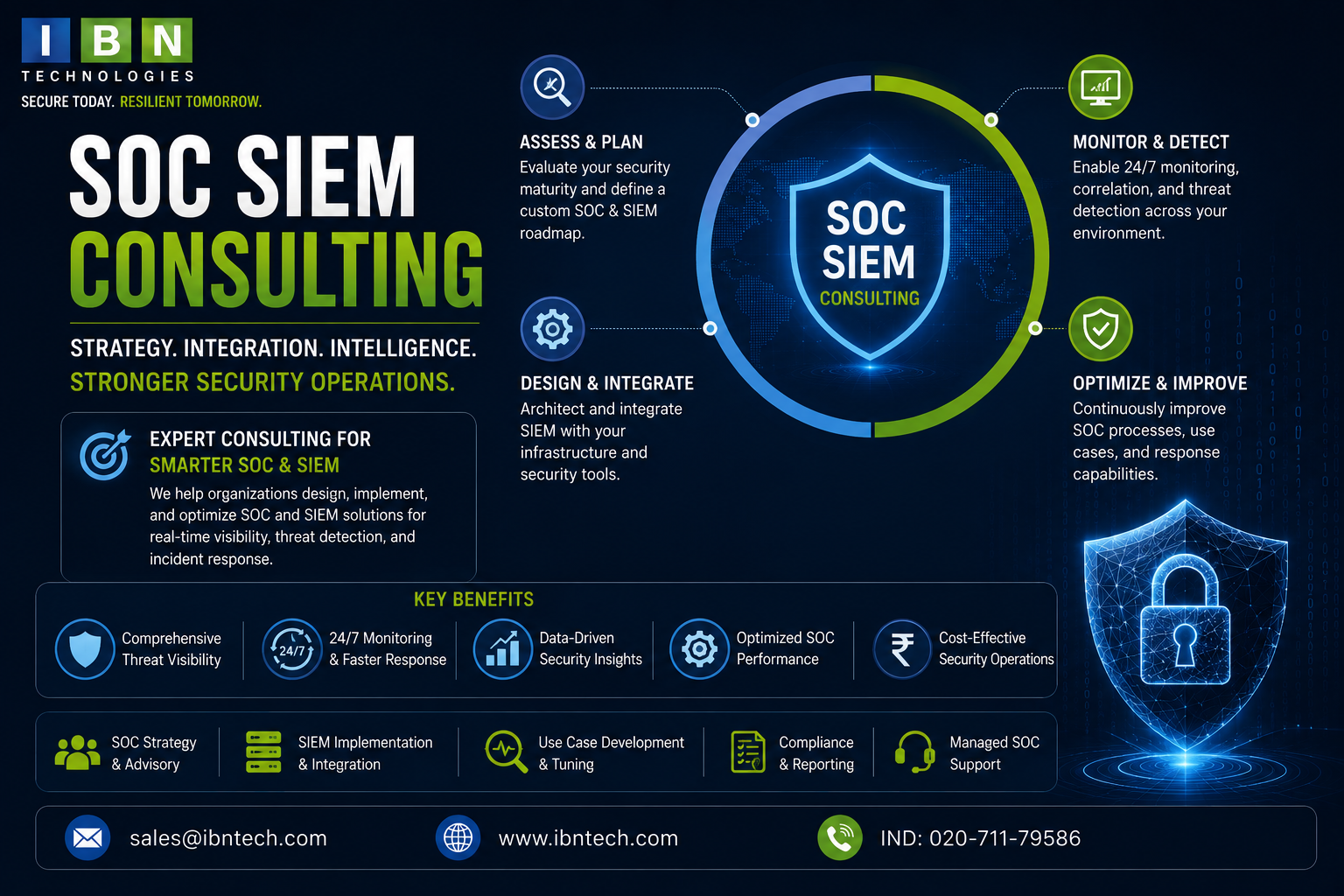
What Really Shapes SOC SIEM Consulting Costs for Healthcare in India?
Healthcare organizations are managing increasingly connected technology environments. Electronic health records, clinical applications, patient-facing platforms, connected infrastructure, user accounts, and other digital systems can create a large amount of security activity that requires appropriate monitoring.
For healthcare organizations, cybersecurity spending therefore needs to be connected to actual operational requirements rather than treated as a simple technology purchase.
soc siem consulting can help healthcare organizations assess their monitoring environment, identify security visibility gaps, define operational requirements, and determine what kind of SOC and SIEM model fits their needs. Understanding these requirements is also important when evaluating the cost of security operations.
There is no single SOC or SIEM cost that applies to every healthcare organization. The scope, environment, monitoring requirements, data sources, response model, and level of support can all influence the overall investment.
What Does SOC SIEM Consulting Cover in Healthcare?
SOC SIEM consulting is an advisory approach that helps an organization understand how security monitoring and security operations should work within its technology environment.
In healthcare, that can involve reviewing relevant systems, security data sources, monitoring priorities, incident response processes, reporting requirements, and operational responsibilities.
SIEM capabilities can centralize and correlate security information, while SOC operations provide the monitoring, analysis, investigation, and response processes around that information.
Consulting helps connect these components to the organization's requirements.
This distinction matters because healthcare organizations should not determine their security investment simply by choosing the largest available monitoring package. The appropriate model depends on what needs to be protected, what needs to be monitored, and how security incidents should be handled.
How Managed SOC Pricing Is Shaped by Service Requirements
managed soc pricing can vary because managed security services are not necessarily identical in scope.
The number and type of systems being monitored can affect service requirements. So can the volume of security events, monitoring coverage, response expectations, reporting needs, and the level of involvement expected from the service provider.
Healthcare organizations should therefore look beyond a headline price when evaluating a managed SOC model.
A lower-cost service may have a narrower monitoring scope, fewer response responsibilities, or different service coverage. A broader service may include more systems, deeper investigation, continuous monitoring, and additional operational support.
The useful comparison is not simply cost versus cost. It is service scope versus the organization's security requirements.
The First Cost Driver: What Needs to Be Monitored?
Monitoring scope is one of the first areas healthcare organizations should define.
A healthcare environment can contain many different technology components. However, not every system necessarily needs identical monitoring treatment.
Organizations should identify the systems that are important to operations and determine what security information they generate.
This may include relevant applications, infrastructure, endpoints, authentication systems, network environments, and other technology components.
The broader the monitoring environment, the greater the operational requirements can become.
This is why a consulting assessment can be useful before selecting a service. It allows the organization to understand what actually needs monitoring rather than paying for unnecessary coverage or overlooking important systems.
The Second Cost Driver: Security Data and Log Sources
SIEM platforms rely on security information from relevant sources.
The number, type, quality, and integration requirements of those sources can influence the complexity of a monitoring environment.
Healthcare organizations should examine which logs are already available, which systems generate useful security events, and whether those events contain sufficient information for investigation.
Simply collecting more logs does not automatically produce better security.
The organization should know what it expects to detect from each source and how analysts will use the resulting information.
A consulting engagement can help establish those priorities before implementation.
Why Healthcare Organizations Should Avoid Buying Monitoring by Volume Alone
Security events are not equally important.
A healthcare organization may generate substantial amounts of routine activity. If every event is treated with the same level of urgency, analysts can spend time investigating low-value signals while more meaningful activity becomes harder to identify.
A well-designed monitoring model focuses on useful detection and investigation.
This may involve prioritizing security scenarios involving authentication, privileged access, endpoints, applications, network activity, and other relevant systems.
The objective is to create actionable visibility.
For healthcare organizations, that means evaluating whether the SOC and SIEM environment can help security teams understand what is happening and determine what requires attention.
The Third Cost Driver: Monitoring Coverage
Healthcare operations may require security visibility beyond standard business hours.
Security events can occur at any time, and organizations need to decide what level of monitoring coverage is appropriate for their environment.
Continuous monitoring can require a different operational model from limited-hours monitoring.
Organizations should therefore clarify whether they require ongoing monitoring, what systems need that coverage, how alerts are investigated, and how incidents are escalated.
The coverage requirement should be connected to business operations and security objectives rather than selected simply because it is included in a particular package.
The Fourth Cost Driver: Incident Response Expectations
Monitoring and response are related but distinct activities.
A healthcare organization may want a service to identify and investigate suspicious events, while response actions may remain with its internal IT or security teams.
Another organization may require greater external involvement during incident handling.
These differences can influence service scope.
Before evaluating costs, healthcare organizations should document what happens after a significant alert is identified.
Who validates it?
Who communicates with internal stakeholders?
Who decides whether containment is required?
Who performs technical remediation?
Who documents the incident?
Clear answers make service comparisons more meaningful.
The Fifth Cost Driver: Internal Security Capabilities
The organization's existing team also matters.
A healthcare provider with an experienced security team may want external monitoring and alert investigation while retaining internal ownership of response.
Another organization may have limited security resources and require broader operational support.
Neither model is automatically appropriate for every organization.
SOC SIEM consulting can help identify where external support complements existing capabilities and where internal responsibilities should remain.
This can prevent organizations from paying for capabilities they already have while ensuring that important operational gaps are not ignored.
The Sixth Cost Driver: Reporting and Governance Requirements
Security reporting can also influence service requirements.
Healthcare organizations may need information for security management, internal governance, risk functions, audits, or other applicable requirements.
Reports can range from technical incident information to broader operational summaries.
A useful reporting model should answer practical questions:
- What security activity occurred?
- Which events required investigation?
- What incidents were identified?
- How were significant events handled?
- What monitoring areas need attention?
- What security trends should management understand?
The required reporting depth can affect the amount of operational work associated with the service.
Comparing SOC Cost Components Before Selecting a Model
Healthcare organizations can use a structured framework when reviewing potential security operations investments.
|
Cost Factor |
What to Evaluate |
Why It Matters |
|
Monitoring scope |
Systems and environments included |
Broader coverage can require additional monitoring effort |
|
Data sources |
Number and type of relevant log sources |
Integration and analysis requirements vary |
|
Event volume |
Amount of security data generated |
Higher volumes may require greater processing and analysis |
|
Monitoring hours |
Required coverage period |
Continuous monitoring has different operational needs |
|
Detection |
Required use cases and correlation |
More tailored detection may require additional configuration |
|
Investigation |
Level of analyst involvement |
Deeper investigation requires greater operational effort |
|
Response |
Provider versus internal responsibilities |
Broader response support changes service scope |
|
Reporting |
Technical and management reporting needs |
Detailed reporting can require additional processes |
|
Change management |
Frequency of infrastructure changes |
New systems may require monitoring updates |
This framework is more useful than comparing provider prices without understanding what each service includes.
Healthcare Compliance Should Be Part of the Cost Discussion
Security investment should also account for applicable compliance and governance requirements.
Healthcare organizations may handle sensitive patient information and operate under specific contractual, regulatory, and security obligations. The exact requirements depend on the organization's location, operations, data, and relationships with customers or partners.
IBN Technologies' healthcare offering identifies cybersecurity and compliance services for healthcare organizations, including 24/7 SOC & SIEM monitoring, VAPT, vCISO, and MDR. Its healthcare page also references security and compliance frameworks relevant to healthcare organizations, including HIPAA and ISO 27001:2022.
The important consideration is that compliance should not be treated as an isolated checkbox. Security monitoring, logging, incident handling, and evidence processes should support the organization's broader security and governance objectives.
The Risk of Choosing a SOC Model Based Only on Price
Cost is an important business consideration, but price alone does not describe the value of a security operation.
A service with limited monitoring coverage may appear less expensive but leave important systems outside the monitoring scope.
Similarly, a broad service may include capabilities that the organization does not currently need.
The better approach is to define requirements first and compare services against those requirements.
Healthcare organizations can then determine whether a proposed model provides the appropriate combination of monitoring, detection, investigation, reporting, and response.
This approach also makes future budgeting more predictable because the organization understands what its security operations investment is intended to accomplish.
A Practical Checklist Before Requesting SOC Pricing
Before approaching providers, healthcare organizations can prepare the following information:
- Identify critical healthcare applications and infrastructure
- Document existing security monitoring tools
- List relevant log and event sources
- Estimate the scope of systems requiring monitoring
- Define required monitoring hours
- Identify important security detection scenarios
- Clarify internal security staffing and responsibilities
- Define expectations for incident investigation
- Document internal and external response responsibilities
- Identify reporting and governance requirements
- Review applicable security and compliance obligations
- Establish how new systems will be added to monitoring
- Determine which security operations gaps need external support
Having this information available can make provider discussions more precise.
Why Consulting Before Procurement Can Reduce Uncertainty
Organizations sometimes begin the procurement process by asking for a service price before defining what they actually need.
That can make comparisons difficult.
Two providers may quote different amounts because they are offering different levels of monitoring, different response responsibilities, or different service coverage.
Consulting can help establish a baseline first.
The organization can understand its current security environment, identify gaps, define monitoring priorities, and determine what operating model makes sense. It can then use those requirements to assess service proposals.
This creates a more structured procurement process and reduces the risk of selecting a service based on an incomplete comparison.
Building a Healthcare Security Investment Around Requirements
For healthcare organizations, the right security investment is not necessarily the largest or smallest SOC model. It is the model that corresponds to the organization's environment and security requirements.
That means understanding what needs to be monitored, which events require investigation, how incidents should be escalated, what reporting is required, and where internal capabilities end.
soc siem consulting can help bring these questions together before an organization commits to a particular operating model.
IBN Technologies provides SOC & SIEM services as part of its cybersecurity portfolio, with healthcare-specific security capabilities that include 24/7 monitoring as well as VAPT, MDR, and vCISO services.
For Indian healthcare organizations, evaluating SOC and SIEM investment through service scope, monitoring requirements, response responsibilities, and governance needs provides a clearer foundation for making technology and budgeting decisions.
Contact Us:
IND- 02067680404
IBN Technologies Ltd.
E-mail: - sales@ibntech.com

 English
 Arabic
 French
 Spanish
 Portuguese
 Deutsch
 Turkish
 Italiano
 Russian
 Romaian
 Portuguese (Brazil)
 Greek
Greek
