
How a Managed SIEM Service Helps Indian Healthcare Avoid Essential Security Blind Spots
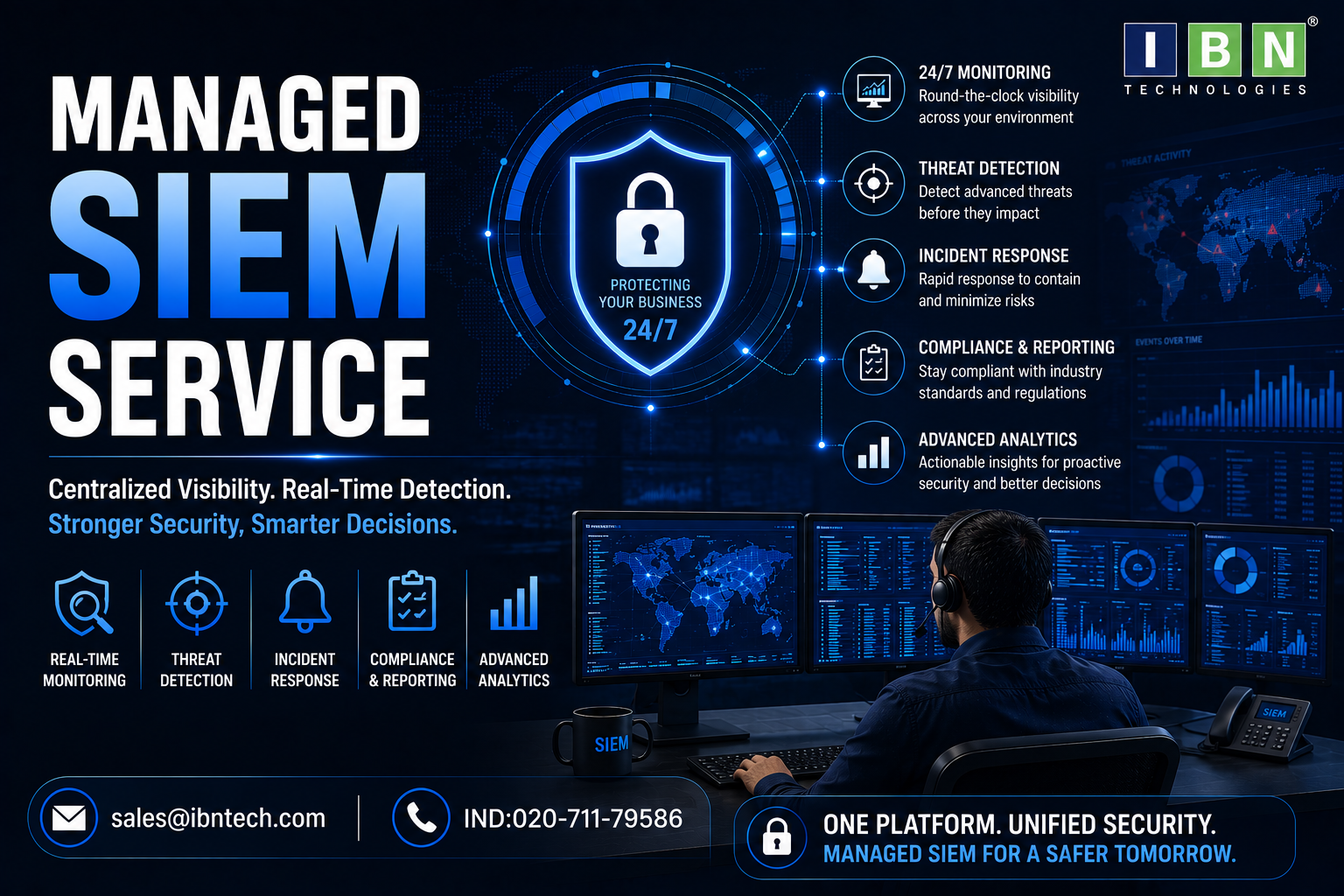
How Indian Healthcare Organisations Can Implement a Managed SIEM Service Effectively
Healthcare organisations increasingly depend on digital systems to support patient services, administrative operations, applications, connected infrastructure, and access to sensitive information. As these environments expand, security teams need visibility into what is happening across their technology environment.
A managed siem service can help healthcare organisations establish a structured approach to collecting and analysing security events. Instead of treating security logs as isolated technical records, organisations can use SIEM capabilities to bring relevant security information together for monitoring and investigation.
However, successful implementation is not simply about connecting systems to a SIEM platform. Healthcare organisations need to define what should be monitored, who reviews alerts, how incidents are escalated, and how the service fits into existing security processes.
Why a Managed SIEM Service Matters for Healthcare Security
A managed SIEM service provides security information and event management capabilities alongside an operational monitoring model. It can help collect relevant security data, analyse events, identify suspicious activity, and support security teams in investigating alerts.
For healthcare organisations, this can create greater visibility across environments where different systems may generate different types of security events.
The objective is not to monitor everything indiscriminately. Effective implementation starts by identifying the systems, events, and security activities that matter most to the organisation.
How Managed SOC Providers Fit Into the Implementation
Healthcare organisations evaluating managed soc providers should look beyond the availability of a SIEM platform. The provider's monitoring processes, alert analysis, escalation approach, reporting, and communication model are equally important.
A managed service should have clearly defined responsibilities between the healthcare organisation and the external security team.
Before implementation, organisations should establish:
- Which systems and log sources are included
- What types of security events require attention
- How alerts are investigated
- When incidents are escalated
- Who receives security notifications
- What reports are provided
- How responsibilities are divided between internal and external teams
This creates a practical foundation for the service instead of treating SIEM deployment as a standalone technology project.
Start With a Clear Security Visibility Assessment
The first implementation step is understanding the existing environment.
Healthcare IT teams should identify the systems that generate meaningful security information and determine where visibility currently exists or is limited.
This assessment can include applications, infrastructure, user access activity, endpoints, network-related events, and other relevant technology components.
The purpose is to create a monitoring scope that reflects the organisation's actual security environment.
Without this step, organisations may either monitor too little and leave visibility gaps or collect excessive information without a clear operational purpose.
Define Monitoring Priorities Before Connecting Data
Not every security event requires the same level of attention.
Healthcare teams can establish monitoring priorities based on the systems involved, the sensitivity of the activity, potential business impact, and the type of behaviour being detected.
For example, unusual authentication activity may require different investigation criteria from a routine system event. Similarly, repeated access-related events may become more meaningful when considered alongside other security signals.
This is where a well-designed managed siem service can provide value by helping security teams analyse relevant events within a structured monitoring process.
Build an Effective Alert and Escalation Process
Implementation should clearly define what happens after an alert is generated.
An alert without ownership can become another item in an already busy security queue. Healthcare organisations therefore need an agreed workflow for investigation and escalation.
A practical process can include:
- Security event is generated.
- Relevant event information is collected.
- Alert is reviewed and analysed.
- Potentially significant activity is investigated.
- Appropriate internal stakeholders are notified.
- Further response actions are coordinated according to established procedures.
- The event and actions taken are documented.
The exact workflow should reflect the organisation's internal policies and responsibilities.
Integrate the Service With Existing Healthcare IT Operations
A managed SIEM implementation should complement existing IT and security processes.
Healthcare organisations may already have procedures for access management, system changes, incident handling, data protection, and technology administration. Security monitoring should support these processes rather than operate separately from them.
For example, when a system change produces an unusual security event, internal teams should have a way to determine whether the activity was authorised or requires investigation.
Clear communication between IT, security, compliance, and the managed service can make this process more consistent.
What to Check Before Choosing Managed SOC Providers
The selection process should examine the complete operating model rather than focusing only on SIEM technology.
Is the Managed SIEM Service Ready for Healthcare Operations?
A managed siem service should be evaluated according to how well it supports the organisation's monitoring requirements.
Healthcare decision-makers can assess:
- Monitoring coverage
- Alert analysis processes
- Escalation procedures
- Security reporting
- Communication practices
- Integration with existing operations
- Defined responsibilities
- Ability to accommodate changes in the technology environment
The evaluation should also clarify how the provider works with the organisation's internal security and IT personnel.
Benefits of a Structured Managed SIEM Approach
When implementation is planned around operational requirements, healthcare organisations can gain several practical benefits.
Improved visibility: Relevant security events can be brought into a more structured monitoring environment.
More organised alert analysis: Security teams can use a defined process for reviewing events and identifying activity that requires attention.
Reduced operational fragmentation: Security information can be considered within a broader monitoring workflow rather than across disconnected sources.
Better coordination: Defined escalation and communication procedures can help internal teams understand when and how to act.
Scalable monitoring: As the technology environment changes, the monitoring scope can be reviewed and adjusted.
These benefits depend on implementation quality, monitoring scope, service design, and organisational processes.
Healthcare Implementation Checklist
Before going live with a managed SIEM service, healthcare organisations should confirm:
- Critical systems and relevant log sources have been identified.
- Monitoring objectives are documented.
- Alert priorities are defined.
- Investigation responsibilities are clear.
- Escalation contacts are established.
- Internal and external responsibilities are documented.
- Reporting requirements are agreed.
- Existing security policies are considered.
- Changes to monitored systems can be incorporated into the monitoring process.
- Security events can be reviewed as part of ongoing governance.
This checklist can help organisations move from technology deployment toward an operationally useful security monitoring model.
Compliance and Data Protection Context
Healthcare organisations must consider applicable information-security, privacy, data-protection, contractual, and regulatory obligations when designing security monitoring processes.
A SIEM service does not itself guarantee compliance. Instead, security monitoring can contribute to a broader control environment by helping organisations maintain visibility into relevant security activity and supporting investigation and documentation.
Organisations should establish appropriate internal policies for security-event handling, access to monitoring information, retention, reporting, and escalation based on their specific legal and operational requirements.
Making Managed SIEM Part of Long-Term Security Operations
Implementing a managed SIEM service should be treated as an ongoing security capability rather than a one-time deployment. Monitoring requirements can change as healthcare applications, infrastructure, users, and operational processes evolve.
Regularly reviewing monitoring coverage, alert patterns, escalation procedures, and service responsibilities can help ensure that the operating model remains aligned with the organisation's environment.
For Indian healthcare organisations seeking stronger security visibility and a structured monitoring process, a managed siem service can provide an operational foundation for analysing security events, supporting alert investigation, and strengthening continuous security monitoring.
Contact Us:
IND- 02067680404
IBN Technologies Ltd.
E-mail: - sales@ibntech.com

 English
 Arabic
 Spanish
 Portuguese
 Deutsch
 Turkish
 Dutch
Dutch
 Italiano
 Russian
 Romaian
 Portuguese (Brazil)
 Greek
Greek
