
Why Healthcare Needs Managed SOC Services India: Essential Response Readiness
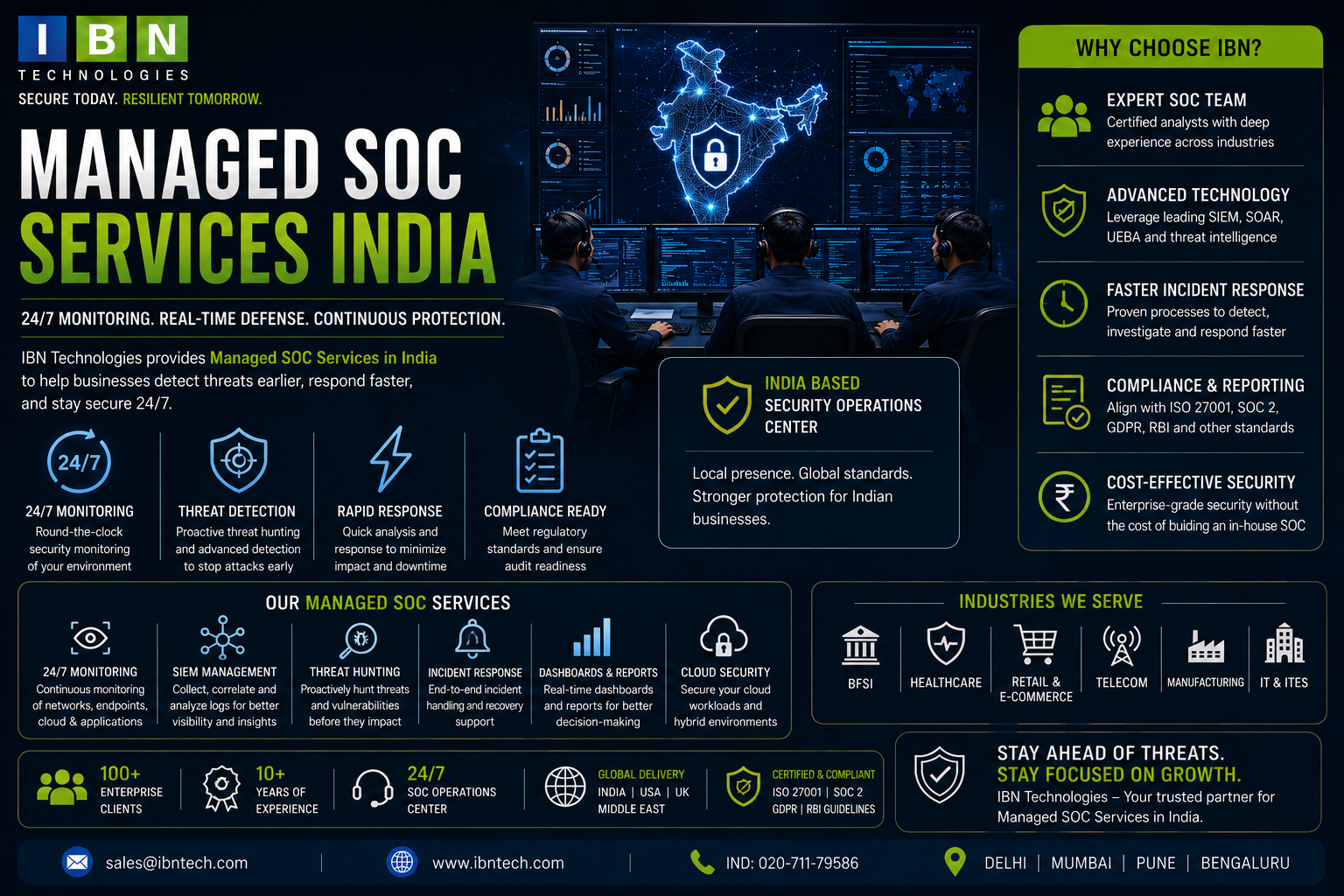
Why Managed SOC Services India Matter for Healthcare Organisations
Healthcare organisations depend on digital systems to support clinical operations, administration, communication, and patient-facing services. As more processes rely on connected technology, security teams need visibility into activity across multiple environments. managed soc services india can provide a structured approach to monitoring security events, investigating suspicious activity, and escalating incidents when additional action is required.
The key value is not simply having another security tool. A managed SOC can provide an operational process for reviewing security alerts and helping healthcare teams determine which events require attention.
For healthcare organisations, security readiness is particularly important because an unresolved technology issue can affect more than an individual system. It can disrupt workflows, delay access to important applications, or create additional operational pressure for already busy teams.
How a SOC Managed Service Supports Healthcare Response
A soc managed service can extend the security operations capability available to a healthcare organisation. The model can support continuous monitoring, alert analysis, investigation, prioritisation, and escalation based on agreed processes.
This can be useful for healthcare organisations that have internal IT teams responsible for infrastructure and applications but do not have the operational capacity to continuously review security events.
The managed SOC does not replace internal ownership. Instead, it can provide an additional security operations layer that helps identify potentially significant events and route them to the appropriate internal stakeholders.
Why Healthcare Security Requires More Than Alert Generation
Security systems can produce a large number of notifications. Treating every notification as an incident can overwhelm internal teams, while ignoring alerts can create visibility gaps.
Healthcare organisations therefore need a process for determining which events deserve further investigation.
Consider an unusual login to an important application. The alert itself may not explain whether the activity is legitimate. Analysts may need to review additional context, examine related events, and determine whether the activity matches expected behaviour.
A managed SOC can support this process by applying structured investigation and escalation procedures instead of leaving internal teams to review every event independently.
How Managed SOC Services India Support Security Readiness
A healthcare security operation can be organised around several connected activities.
Monitoring: Relevant security events are collected and reviewed from the environments within the agreed monitoring scope.
Analysis: Alerts are examined to determine their relevance and potential significance.
Investigation: Suspicious activity receives additional review using available event information and context.
Prioritisation: Events can be categorised according to urgency and potential business impact.
Escalation: Significant findings are communicated to the appropriate internal teams.
Response coordination: Internal stakeholders can use the investigation findings to determine and execute the appropriate response actions.
This approach creates a repeatable path from detection to escalation.
The Role of Internal IT and Security Teams
Healthcare organisations often have internal teams managing applications, infrastructure, networks, users, and business systems. These teams understand the environment in ways that an external security operation may not.
For this reason, clearly defined collaboration is important.
The SOC can focus on security monitoring and investigation, while internal teams provide system context and take responsibility for approved technical or operational actions.
For example, an analyst may identify suspicious activity involving a user account. The internal team can then verify the user's role, determine whether the activity was expected, and follow the organisation's established access or incident procedures.
The soc managed service becomes more effective when these responsibilities are documented before an incident occurs.
Healthcare Benefits of a Managed SOC Operating Model
A structured SOC service can provide several operational benefits for healthcare organisations.
- Continuous security oversight: Security activity can be monitored through an organised process.
- Reduced alert pressure: Internal teams can receive support in reviewing and prioritising security notifications.
- Structured investigation: Suspicious events can be examined using defined procedures.
- Clear escalation: Relevant findings can be routed to responsible stakeholders.
- Improved coordination: Security analysts and internal technology teams can work through established communication paths.
- Greater operational readiness: Teams can have a defined process for moving from detection toward investigation and response.
These benefits depend on the scope of monitoring, quality of security data, internal processes, and the responsibilities agreed between the organisation and its managed security provider.
A Healthcare Example: Detecting Unusual Account Activity
Imagine a healthcare organisation where employees use several digital applications as part of their daily work.
A user account suddenly generates authentication activity outside its normal pattern. An automated security system may generate an alert, but the notification alone does not establish whether the event represents a genuine security concern.
A SOC analyst can review the alert and examine related activity. If the event appears unusual, it can be investigated and escalated according to the organisation's defined procedures.
Internal teams can then validate the account activity and take appropriate action based on the circumstances.
This example demonstrates the difference between having an alert and having a process for acting on an alert.
A Practical Checklist for Healthcare Security Operations
Before implementing managed SOC services India, healthcare organisations should establish:
- Which systems and environments require monitoring
- What security events should be collected
- How alerts will be prioritised
- What investigation procedures will apply
- Which events require immediate escalation
- Who receives critical security notifications
- Which actions remain with internal teams
- How security incidents are documented
- What reporting the organisation requires
- How the SOC process fits into existing security policies
Clear definitions can help healthcare organisations avoid uncertainty when a security event requires coordinated action.
Governance, Data Protection, and Security Controls
Healthcare organisations should consider security monitoring as one component of a broader security and governance framework.
Policies, access management, data protection, incident management, risk management, and security awareness remain important alongside monitoring. A managed SOC does not replace these controls.
Organisations should also establish appropriate requirements for handling security information and determine how monitoring activities align with their internal policies and applicable legal or regulatory obligations.
Where an organisation follows recognised information-security frameworks, SOC processes should be mapped appropriately to its wider control environment.
Building Security Readiness Before an Incident Occurs
Security readiness is easier to manage when responsibilities are established before a significant event takes place. Healthcare organisations can use managed SOC services India to create a structured process around monitoring, investigation, prioritisation, and escalation.
The objective is not simply to generate more alerts. It is to create a dependable operational pathway that helps teams understand suspicious activity and coordinate appropriate action.
For healthcare organisations, managed soc services india can therefore support a more organised approach to security operations by connecting continuous monitoring with investigation and clearly defined escalation procedures. When internal teams and the SOC understand their respective responsibilities, security events can move through a more consistent process from initial detection to informed response.
Contact Us:
IND- 02067680404
IBN Technologies Ltd.
E-mail: - sales@ibntech.com

 Arabic
 French
 Spanish
 Portuguese
 Deutsch
 Turkish
 Dutch
Dutch
 Italiano
 Russian
 Romaian
 Portuguese (Brazil)
 Greek
Greek
