
The Role of Smart Devices in Accelerating Wireless Charging Market Growth
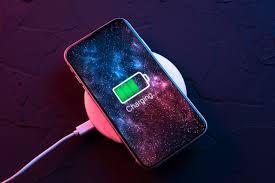
To properly evaluate the vast world of untethered energy systems, it is helpful to categorize them based on operational frequency and underlying power delivery mechanisms. Low-frequency systems, which typically operate below one megahertz, are the absolute workhorses of consumer electronics and electric vehicle charging due to their ability to transfer high amounts of raw power over short distances. On the other side of the spectrum, high-frequency systems operate in the multi-megahertz or microwave bands, offering incredible spatial freedom and the ability to beam power across large rooms to multiple low-power internet-of-things sensors simultaneously. This clear split divides the industry into distinct engineering camps, each focusing on solving unique technical challenges related to antenna design, wave propagation, and signal attenuation. Understanding this divide helps component suppliers optimize their production lines for either high-capacity bulk power transfer or hyper-localized micro-power delivery networks. To explore how these technical categories split the commercial landscape, reviewing the Wireless Charging Market segment analysis offers great insight.
As these distinct technology segments continue to advance, we are starting to see the first hybrid power systems that can seamlessly switch between low and high frequencies depending on what a device needs. A smart home transmitter, for example, might emit a wide, high-frequency background wave to keep low-power wall clocks and security sensors running, while simultaneously focusing a tight, low-frequency magnetic beam onto a smartphone lying on a table. Developing these multi-mode systems requires highly sophisticated digital signal processors and dynamic antenna arrays capable of altering their physical properties on the fly. This level of flexibility will completely change how we interact with everyday spaces, transforming ordinary rooms into fully smart environments where every electronic item draws exactly the energy it needs without a single power cord in sight.
Can a single wireless transmitter charge both a high-power laptop and a low-power smartwatch at the same time? Yes, next-generation multi-mode transmitters can dynamically split and adjust their power frequencies to deliver different energy levels to different devices simultaneously.
What is signal attenuation, and how does it affect long-range wireless power? Signal attenuation is the loss of wave intensity as it travels through space or obstacles; minimizing it is crucial for maintaining high energy efficiency over long distances.
➤➤➤Explore MRFR’s Related Ongoing Coverage In Semiconductor Industry:
Data Center Accelerator Market
Endpoint Detection And Response Market
Property Casualty Insurance Market

 English
 Arabic
 French
 Portuguese
 Deutsch
 Turkish
 Dutch
Dutch
 Italiano
 Russian
 Romaian
 Portuguese (Brazil)
 Greek
Greek
