
Smart Speakers Market Analysis: Innovation, Connectivity, and Consumer Preferences
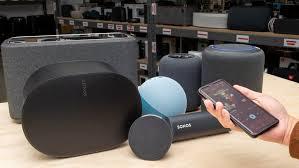
As the market for voice-enabled hardware matures, manufacturers are forced to segment their product lines to sustain consumer interest and capture distinct user demographics. In complex group discussions, participants often analyze how product differentiation prevents market stagnation. On one end of the spectrum, we see the rise of ultra-affordable, compact dot-style speakers designed to act as cheap entry points or secondary devices spread throughout a home. On the opposite end, there is a booming demand for premium, audiophile-grade smart speakers that place equal emphasis on acoustic engineering and artificial intelligence. These high-end devices utilize advanced spatial audio algorithms, room-calibration microphones, and high-fidelity drivers to attract music enthusiasts who refuse to compromise on sound quality for the sake of smart connectivity, effectively merging two traditionally separate consumer tech markets.
Evaluating each distinct Smart Speakers Market segment reveals that the fastest-growing sub-category is the smart display. By adding a visual screen to a voice assistant, companies have unlocked entirely new use cases that appeal directly to families and older generations. For example, a smart display placed in the kitchen serves as an interactive cookbook, a digital photo frame, and a central communication hub for video calling relatives. This segmentation strategy allows tech companies to maximize their household footprint, ensuring they have a specialized device tailored for every room in the house—from the nightstand to the living room media center. Group panels discussing product management often use this strategy as a prime example of how hardware ecosystems can be systematically expanded to capture maximum consumer mindshare and create multiple touchpoints for data collection.
What distinguishes a premium smart speaker from a standard entry-level voice assistant?
Premium smart speakers feature high-fidelity audio components, superior physical materials, and advanced spatial audio calibration algorithms designed primarily for high-quality music reproduction.
How do smart displays expand the utility of voice assistants for elderly users?
Smart displays offer simplified, touch-and-voice visual interfaces for video calling family members, displaying visual reminders for medication, and monitoring home security without complex menus.
➤➤➤Explore MRFR’s Related Ongoing Coverage In Semiconductor Industry:
Cybersecurity Insurance Market
Debt Collection Software Market

 English
 Arabic
 French
 Spanish
 Portuguese
 Deutsch
 Turkish
 Dutch
Dutch
 Italiano
 Russian
 Portuguese (Brazil)
 Greek
Greek
