
SOC service providers: Reliable Security for Indian Healthcare Businesses
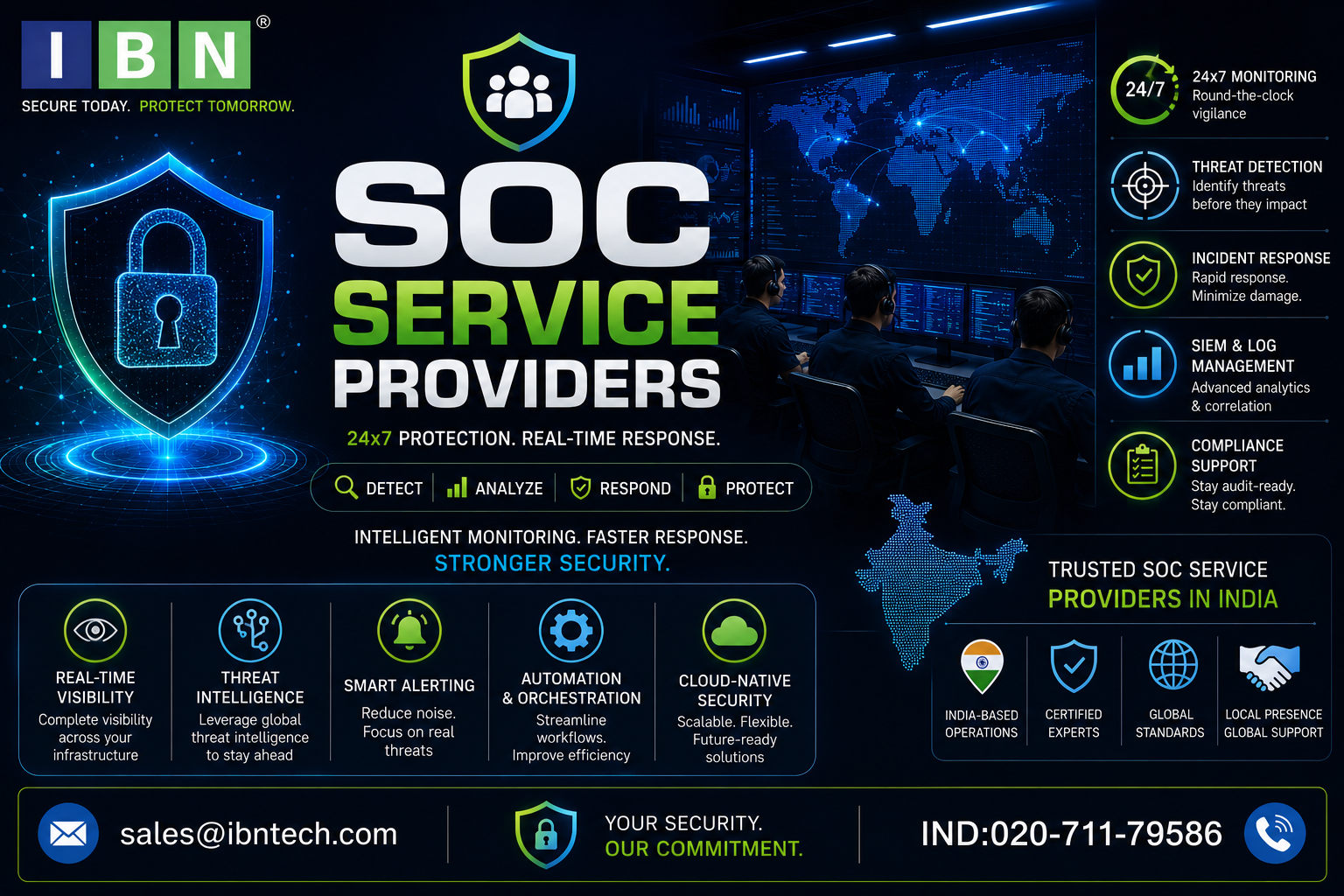
How Healthcare Organizations Can Choose the Right soc service providers
Healthcare organizations increasingly depend on connected digital systems to support clinical, administrative, operational, and patient-facing activities. As technology environments become more interconnected, security teams need visibility into activity across the systems that support day-to-day operations. soc service providers can help healthcare organizations establish a structured approach to security monitoring, investigation, and incident escalation.
The challenge for healthcare leaders is not simply finding a provider that offers SOC monitoring. The more important task is determining whether the provider's operating model is appropriate for the organization's technology environment, security responsibilities, and operational priorities.
What Do SOC Service Providers Offer Healthcare Organizations?
SOC service providers help organizations monitor security events, analyze potentially suspicious activity, investigate alerts, and coordinate incident escalation.
A Security Operations Center brings security technologies, trained personnel, and defined processes together to create a continuous security-monitoring capability.
For healthcare organizations, this can provide greater visibility across relevant infrastructure while reducing reliance on occasional manual reviews. A SOC can also establish a consistent process for deciding which security events require investigation and which can be treated as lower-priority activity.
The goal is not simply to generate more alerts. Effective security operations help healthcare teams understand which events matter and what should happen next.
Why Managed SOC Services India Matters for Healthcare Teams
The healthcare technology environment can include applications, endpoints, networks, cloud resources, identity systems, and other connected infrastructure. Managing security operations across these environments can place significant demands on internal IT and security personnel.
Managed soc services india can provide an external operating model for organizations that need ongoing monitoring and security support but may not want every SOC responsibility handled internally.
A managed service can help establish defined processes for monitoring, alert analysis, investigation, escalation, and reporting. The exact scope should be aligned with the organization's infrastructure and internal responsibilities.
Healthcare leadership should clearly understand what the external SOC team handles and which decisions or remediation activities remain with authorized internal personnel.
Why Healthcare Security Requires More Than Basic Monitoring
Healthcare organizations often have technology environments where availability and security are both important. Security teams must therefore consider how monitoring activities fit into broader operational requirements.
A basic alerting approach can become difficult to manage when multiple systems produce security events simultaneously. An internal team may receive alerts from endpoints, applications, network infrastructure, identity systems, and other technologies.
Without a structured process, the volume of information can make prioritization difficult.
Another challenge is maintaining consistent monitoring when internal IT teams have competing operational responsibilities. A security event that appears outside normal working routines may require investigation even when the organization's primary technical personnel are focused on other priorities.
A structured SOC model provides a defined process for monitoring and escalation rather than leaving these activities entirely to ad hoc internal review.
How Healthcare Organizations Should Evaluate a SOC Provider
Provider selection should begin with the healthcare organization's actual security environment.
Understand the Monitoring Scope
Healthcare leaders should identify which technology environments require security visibility. The provider should clearly explain what can be monitored and what information is required to support that monitoring.
Examine Alert Analysis
The provider should have a defined approach for examining suspicious events. Healthcare teams need to understand how alerts are prioritized and how analysts determine whether additional investigation is required.
Review Escalation Procedures
Incident escalation should be clearly documented. Internal teams need to know how serious events are communicated and which personnel are expected to participate in the response.
Assess Security Reporting
Reports should provide information that is useful to both technical teams and leadership. Excessive technical detail without interpretation can make reports difficult to use for decision-making.
Consider Existing Technology
A SOC should complement the organization's existing security environment. Healthcare organizations should determine how relevant security data will be incorporated into monitoring and investigation workflows.
Benefits of a Structured SOC Approach
A well-defined SOC model can improve security operations in several ways.
Greater security visibility allows organizations to maintain awareness of relevant events across monitored systems.
Consistent investigation processes can help reduce dependence on individual staff members deciding how to handle alerts.
Defined escalation procedures make it easier for internal teams to understand when an event requires organizational attention.
More efficient use of internal resources can allow healthcare IT personnel to focus on technology availability, applications, user support, and other operational priorities.
Ongoing security insight can also help organizations identify recurring issues that deserve further attention.
The effectiveness of these benefits depends on appropriate monitoring scope, clear responsibilities, and coordination between internal teams and the SOC provider.
Healthcare Security Use Case: Unusual Access Activity
Consider a healthcare organization where authorized personnel access multiple digital applications during their daily responsibilities.
An unusual access event may not immediately indicate a security incident. However, if related activity shows repeated authentication attempts, unexpected access behavior, or interaction with systems outside an individual's normal responsibilities, the event may warrant investigation.
A SOC can help identify and analyze such activity by reviewing relevant security signals and establishing context around the event.
The objective is not to assume that every unusual action is malicious. Instead, the monitoring process should provide a structured way to determine whether further investigation or escalation is appropriate.
Establishing Clear Responsibilities Between Teams
Healthcare organizations should define operational responsibilities before relying on an external SOC model.
The provider may be responsible for monitoring and investigating security alerts, while internal personnel may retain responsibility for system changes, access decisions, remediation, or business-critical actions.
These boundaries should be documented and understood by everyone involved.
Communication procedures are equally important. During a significant security event, delays can occur if personnel are unsure who should be contacted or which team has authority to take the next step.
A clear operating model reduces this uncertainty.
Practical Checklist for Healthcare SOC Selection
Healthcare security and IT leaders can evaluate a potential SOC relationship by reviewing the following:
- Identify the systems and environments that require security monitoring.
- Determine which security events require immediate investigation.
- Review the provider's alert prioritization process.
- Understand how suspicious activity is investigated.
- Define incident escalation responsibilities.
- Establish communication procedures for significant events.
- Review how existing security technologies will connect with monitoring processes.
- Determine what technical and management reports will be provided.
- Clarify internal and external responsibilities.
- Establish a process for reviewing and improving monitoring over time.
Security Governance for Indian Healthcare Organizations
Healthcare organizations in India should consider their applicable legal, regulatory, contractual, and organizational security requirements when developing security operations.
Security monitoring should support broader information-security governance rather than operating as an independent activity.
Organizations should also maintain appropriate controls around access, system administration, incident handling, data protection, and security policies according to their specific environment and obligations.
A SOC can support this broader framework by providing more consistent monitoring and documentation of relevant security activity.
However, no SOC operating model should be considered a complete substitute for comprehensive organizational security governance.
Making Security Operations Sustainable
Healthcare technology environments continue to change. New applications, connected systems, cloud services, users, and operational requirements can alter the organization's security monitoring needs.
For this reason, healthcare leaders should periodically review whether their SOC coverage remains aligned with the technology environment.
They should also examine recurring alerts, investigation patterns, escalation effectiveness, and reporting quality. These reviews can identify opportunities to improve the security operations model without simply increasing the volume of monitoring.
The most effective approach is one that remains practical for both security teams and operational stakeholders.
For Indian healthcare organizations, selecting soc service providers should therefore involve more than comparing service descriptions. The right provider should align monitoring, investigation, escalation, reporting, and governance with the organization's actual technology environment. A well-structured SOC relationship can help healthcare teams strengthen security visibility while creating a more consistent foundation for ongoing cyber resilience.
Contact Us:
IND- 02067680404
IBN Technologies Ltd.
E-mail: - sales@ibntech.com

 English
 Arabic
 French
 Spanish
 Portuguese
 Deutsch
 Turkish
 Dutch
Dutch
 Italiano
 Russian
 Romaian
 Greek
Greek
