
Global Asphalt Market Growth Forecast and Key Opportunities
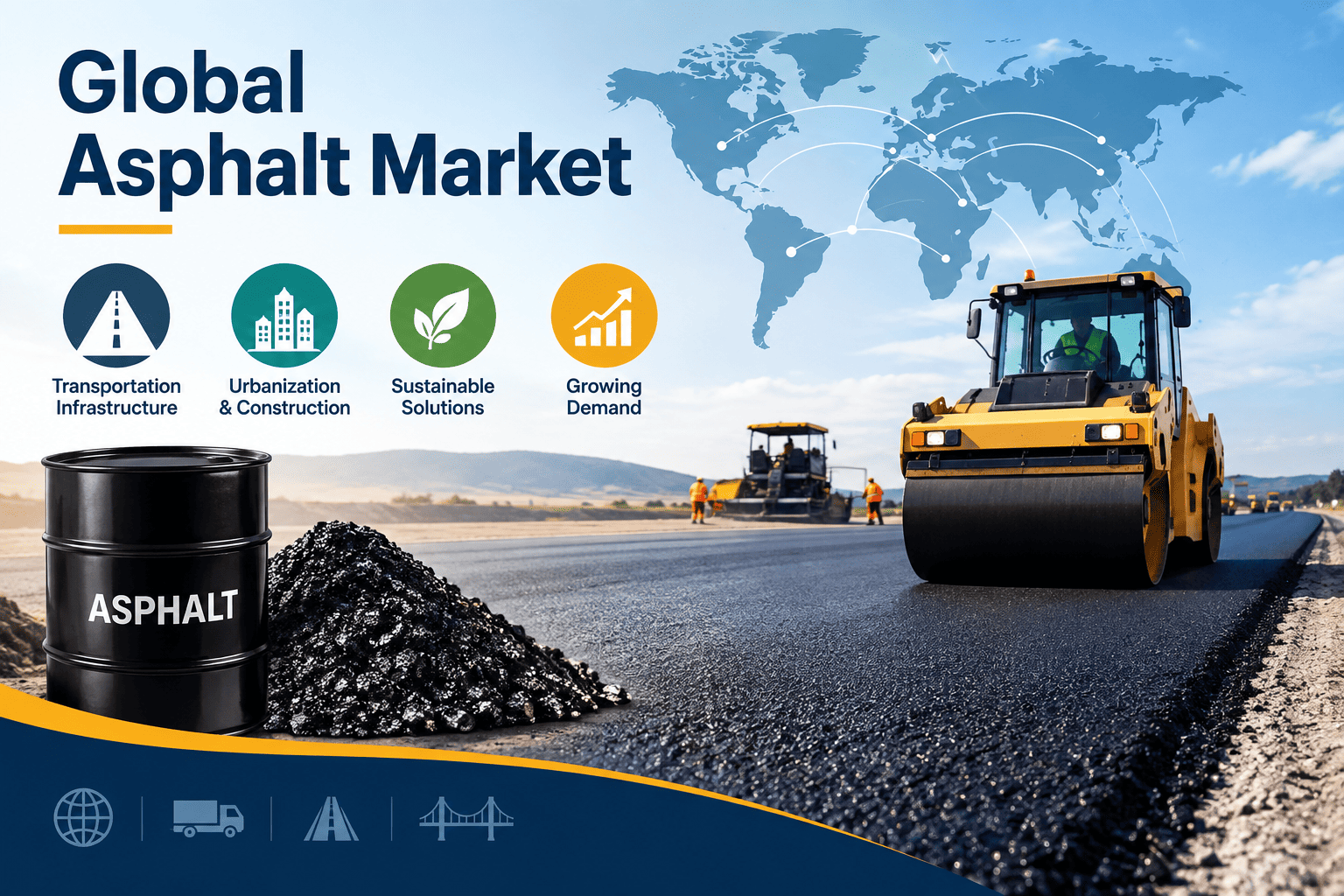
The Global asphalt market is positioned for continued development as infrastructure investment, urbanization, transportation expansion, and construction activity create sustained demand for asphalt products. According to the supplied market research, the market was valued at approximately USD 245 billion in 2025 and is projected to reach USD 336 billion by 2032, growing at a CAGR of 4.60% during 2026–2032. Asphalt remains an essential material for road construction, highways, airport infrastructure, parking areas, roofing, and other applications. Alongside traditional demand, the growing emphasis on recycling, energy efficiency, sustainable construction, and technological innovation is creating new asphalt market opportunities for producers, contractors, investors, and technology providers.
Advantages of Investing in the Global Asphalt Market
The investment potential of the global asphalt market is closely linked to the recurring need for infrastructure construction and maintenance. Roads and highways require periodic resurfacing, rehabilitation, and repair, which means demand does not depend exclusively on the construction of new infrastructure. This recurring requirement provides an important foundation for companies operating across asphalt production, distribution, construction, and related services.
New infrastructure development adds another layer of opportunity. Governments and private organizations continue to invest in highways, urban transportation networks, logistics corridors, airports, industrial zones, and commercial developments. Every expansion of these networks can generate demand for paving materials and related construction solutions.
The projected increase from approximately USD 245 billion in 2025 to USD 336 billion by 2032 demonstrates the scale of the expected opportunity. Companies that understand regional infrastructure plans, application trends, material requirements, and changing procurement priorities can identify attractive areas for expansion.
Why People Prefer the Global Asphalt Market for Future Growth
The global asphalt market is supported by a fundamental requirement: communities and economies need reliable transportation infrastructure. Population growth and urbanization are increasing pressure on existing road networks while simultaneously creating requirements for new transportation connections.
Urban expansion is particularly important. As residential areas, business districts, industrial facilities, and logistics hubs spread, roads must connect these locations efficiently. Existing infrastructure also needs improvements to accommodate increasing traffic volumes.
Asia Pacific represents an important source of future growth because of its rapid urbanization and infrastructure investment. Expanding cities and transportation networks in major economies are generating requirements for highways, urban roads, and supporting infrastructure.
Changing mobility patterns can create additional asphalt market opportunities. Electric vehicle charging facilities, logistics centers, parking infrastructure, and new transportation hubs all require appropriately developed paved surfaces. Therefore, the evolution of transportation can continue to support asphalt demand even as vehicle technologies change.
Search Visibility Through Asphalt Market Opportunities
Growing interest in asphalt market opportunities is being influenced by technological and environmental developments. Businesses are increasingly evaluating asphalt not only according to traditional paving requirements but also according to sustainability, efficiency, durability, and lifecycle performance.
Recycled asphalt pavement is an important example. Reusing existing pavement materials can help reduce waste and limit the need for virgin resources. As governments and construction companies place greater emphasis on resource efficiency, recycling can become an increasingly important component of asphalt production and road construction.
Warm mix asphalt is another development attracting attention. Its lower production temperatures can help reduce energy requirements compared with conventional hot mix processes. The technology therefore aligns with broader efforts to improve energy efficiency within infrastructure construction.
Digitalization is also changing industry operations. Digital project-management tools, logistics systems, quality monitoring, equipment tracking, and data-based planning can improve coordination and efficiency. Companies that adopt these capabilities may be better prepared to compete as customer expectations evolve.
Demand and Benefits Across the Global Asphalt Market
Paving remains one of the largest sources of demand in the global asphalt market. Highways, city streets, rural roads, parking areas, airport surfaces, and other transportation infrastructure require asphalt for construction and maintenance.
One of asphalt's important advantages is its versatility. It can be applied across different road environments and project scales, making it suitable for everything from major highways to local streets and parking facilities. Its established role in transportation infrastructure provides a broad and diversified demand base.
Roofing is another important application. Growth in residential and commercial construction can increase demand for asphalt-based roofing products. As cities expand and new buildings are developed, this application can contribute to the overall market opportunity.
Industrial uses provide further diversification. Asphalt-based materials can be incorporated into specialized construction and industrial applications, creating additional demand beyond conventional road paving.
Enhance User Experience with Better Asphalt Solutions
Developments in asphalt materials and construction techniques can improve the experience of people who rely on transportation infrastructure every day. Better pavement performance can contribute to smoother journeys and more reliable roads for commuters, commercial vehicles, public transportation, and emergency services.
Longer-lasting pavement can also reduce the frequency of major repairs. When roads remain in good condition for longer periods, users may experience fewer disruptions caused by construction and rehabilitation work.
Technology can further enhance infrastructure quality. Improved pavement design, quality-control systems, material monitoring, and construction planning can help project teams achieve more consistent results. These improvements are particularly important as traffic volumes and infrastructure demands increase.
For investors and businesses, the emphasis on better user experiences creates opportunities for advanced materials and technologies that deliver measurable improvements in durability, performance, and lifecycle value.
Lifestyle Benefits from the Global Asphalt Market
The global asphalt market has a direct connection to everyday mobility. Roads influence how people travel to workplaces, schools, hospitals, shopping centers, and other essential destinations. Reliable transportation infrastructure can make daily journeys more predictable and improve connectivity between communities.
In growing cities, well-developed roads can support access to employment and commercial opportunities. In rural areas, improved road networks can help connect communities with larger markets and essential services.
Businesses also benefit from reliable transportation infrastructure. Efficient roads support the movement of raw materials, finished products, food, consumer goods, and industrial supplies. Better connectivity can therefore contribute to more efficient supply chains and broader economic activity.
These lifestyle and economic benefits help explain why infrastructure spending continues to support long-term asphalt demand.
Infrastructure Development Creates New Asphalt Market Opportunities
Infrastructure development remains one of the strongest foundations for asphalt market opportunities. Developed economies have extensive transportation networks that require ongoing maintenance and modernization, while emerging markets continue to build new roads and transportation corridors.
North America remains an important market because of its large existing infrastructure base and continued rehabilitation requirements. European markets similarly offer opportunities through infrastructure renewal and sustainability-focused projects.
Asia Pacific is expected to provide significant future growth potential because of urbanization and expanding infrastructure investment. Large-scale transportation projects, industrial development, logistics expansion, and growing urban populations can create substantial demand for asphalt.
Government infrastructure programs are also important because they can provide visibility into future construction activity. Companies monitoring public spending, transportation projects, environmental regulations, and regional development plans can better identify areas where demand is likely to strengthen.
Sustainability and Technology Will Expand Future Opportunities
The future development of the global asphalt market will depend increasingly on the industry's ability to balance performance, cost, and sustainability. Producers are being encouraged to improve resource efficiency while continuing to deliver durable paving materials.
Recycling technologies can help reduce waste, while warm mix processes can support more energy-efficient production. Advances in pavement engineering may also help extend infrastructure life and reduce the need for frequent major rehabilitation.
Technology providers have opportunities to support these changes through digital monitoring, predictive maintenance, logistics optimization, automated equipment, and quality-management systems. These solutions can create new business models around the traditional asphalt supply chain.
Wrapping Up
The global asphalt market presents a broad range of growth opportunities supported by infrastructure investment, urbanization, transportation expansion, road maintenance, roofing demand, sustainability, and technological development. The projected increase from approximately USD 245 billion in 2025 to USD 336 billion by 2032 highlights the sector's considerable commercial potential.
For businesses and investors, buying or investing now can be a smart decision when supported by careful analysis of regional demand, infrastructure pipelines, application trends, raw-material costs, and regulatory changes. The recurring nature of road maintenance provides a stable foundation, while emerging technologies and sustainable construction practices create additional avenues for expansion.
The companies most likely to benefit from future growth will be those that combine reliable supply with efficient production, innovative materials, recycling capabilities, digital solutions, and strong knowledge of infrastructure requirements. With transportation infrastructure remaining essential to economic development, the global asphalt market is expected to remain an important and evolving opportunity through the forecast period.
Who We Are
About 6Wresearch
6Wresearch is a commercial strategy and growth advisory firm founded in 2011 and headquartered in New Delhi, India, with partners across Southeast Asia and the Middle East & Africa. The firm has delivered over 20,000 commercial engagements for over 2,000 organizations, including Fortune 500 companies, government agencies, and multilateral institutions such as the World Bank and the Asian Development Bank. Backed by proprietary market research and advanced analytics, 6Wresearch combines sector expertise with data-driven intelligence to help organizations navigate market complexity and drive sustainable growth. These capabilities explain why organizations trust 6Wresearch Global Market Research & Consulting Firm for reliable commercial insights and confident decision-making.
Our Proprietary Platform: 6W Export GTM
6W Export GTM is 6Wresearch's proprietary trade intelligence and go-to-market platform, built on UN Comtrade data and enhanced with 6Wresearch's in-house analytical and simulation models, including system dynamics-based forecasting. Unlike broad, sector-level market sizing tools, 6W Export GTM operates at the individual product level down to specific HS codes and micro-segments to identify precise, actionable export opportunities by country and product pair, including markets where trade currently does not exist. This granular, simulation-driven approach allows 6W Export GTM to surface opportunities that sector-wide analysis typically misses, positioning it among a small number of platforms globally offering this depth of product-and-country-specific export intelligence.
Read More..

 English
 Arabic
 French
 Portuguese
 Deutsch
 Turkish
 Dutch
Dutch
 Italiano
 Russian
 Romaian
 Portuguese (Brazil)
 Greek
Greek
