
Railway Hydraulic Damper Market: Global Rail Modernization, Vibration Control and Growth Outlook
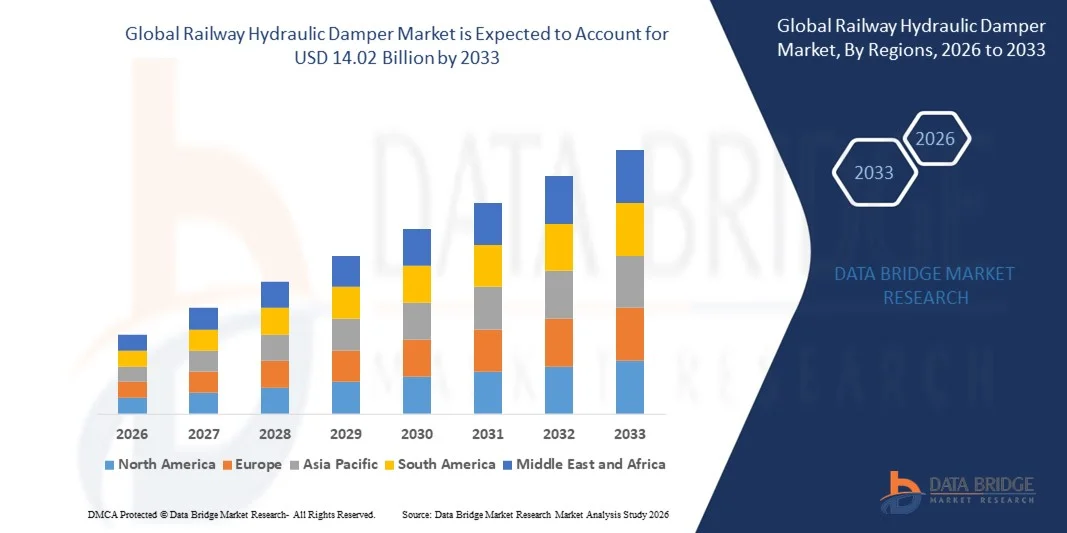
"According to the latest report published by Data Bridge Market Research, the Railway Hydraulic Damper Market
CAGR Value
The global railway hydraulic damper market size was valued at USD 3.36 billion in 2025 and is expected to reach USD 4.85 billion by 2033, at a CAGR of4.70% during the forecast period
The Railway Hydraulic Damper Market document contains precise and up to date information about the consumer’s demands, their preferences, and their variable likings about particular product. It also guesstimates the prospective market for a new product to be launched in the market. Market share analysis and key trend analysis are the two other major success factors in this market report. This global market report additionally encompasses predictions utilizing a practical arrangement of suspicions and techniques. Railway Hydraulic Damper Market document is delivered as the most relevant, unique, fair and creditable global market research report to valuable customers and clients depending upon their specific business needs.
Stay informed with our latest keyword market research covering strategies, innovations, and forecasts. Download full report: https://www.databridgemarketresearch.com/reports/global-railway-hydraulic-damper-market
Railway Hydraulic Damper Market Segmentation and Market Companies
Segments
- Product Type: The railway hydraulic damper market can be segmented by product type into linear damper and rotary damper. Linear dampers provide damping force in a linear motion, while rotary dampers offer resistance in a rotational motion.
- Application: Based on application, the market can be categorized into high-speed railways, metro railways, light railways, and others. Different types of railways have varying requirements for hydraulic dampers based on factors such as speed, weight, and infrastructure.
- Sales Channel: The sales channel segment includes OEM (Original Equipment Manufacturer) and aftermarket. OEM sales are typically direct from manufacturers to railway companies, while the aftermarket involves the distribution of hydraulic dampers through third-party sellers.
Market Players
- ITT INC.: ITT Inc. is a key player in the global railway hydraulic damper market, offering a range of products for various railway applications. The company focuses on innovation and quality to meet the evolving needs of the industry.
- Parker Hannifin Corp: Parker Hannifin Corp is another prominent player known for its hydraulic systems and components. The company's hydraulic dampers are used in railway vehicles to enhance safety and performance.
- Enidine Inc.: Enidine Inc. specializes in energy absorption and vibration isolation technologies, including hydraulic dampers for railway systems. The company's products are designed to withstand harsh operating conditions and ensure passenger comfort.
- Zahnraderfabrik Renk AG: Zahnraderfabrik Renk AG is a leading manufacturer of gear units and hydromechanical variable speed couplings for railway applications. The company's hydraulic dampers play a vital role in ensuring smooth operation and stability of train systems.
- Wabtec Corporation: Wabtec Corporation is a global provider of equipment, systems, and services for the transportation industry, including hydraulic dampers for railways. The company's focus on innovation and sustainability drives its growth in the market.
The global railway hydraulic damper market is characterized by intense competition and technological advancements. Key players are investing in research and development to introduce innovative products that enhance safety, efficiency, and comfort in railway operations. The market segmentation based on product type, application, and sales channel provides insights into the diverse needs of the industry. With the increasing demand for reliable and durable hydraulic dampers in railway systems, market players are focusing on strategic partnerships and new product launches to strengthen their market presence and cater to evolving customer requirements.
The global railway hydraulic damper market is experiencing significant growth driven by factors such as the increasing emphasis on passenger safety, the expansion of railway infrastructure, and the need for enhanced performance in rail vehicles. Key market players are leveraging technological advancements to develop innovative hydraulic dampers that improve efficiency and reliability in railway operations. These advancements aim to address the diverse requirements of different railway segments, including high-speed railways, metro railways, and light railways. With a focus on quality and innovation, companies like ITT Inc., Parker Hannifin Corp, Enidine Inc., Zahnraderfabrik Renk AG, and Wabtec Corporation are leading the market by offering a wide range of hydraulic dampers tailored to meet the unique needs of various railway applications.
One of the emerging trends in the railway hydraulic damper market is the increasing adoption of sustainable and energy-efficient solutions. As the global focus shifts towards environmental conservation and reducing carbon emissions, railway operators are seeking hydraulic dampers that not only enhance performance but also contribute to a greener transportation system. Market players are responding to this trend by developing eco-friendly hydraulic dampers that meet stringent sustainability standards while maintaining high levels of safety and durability. This shift towards sustainability is creating new opportunities for innovation and collaboration within the market, driving growth and competitiveness among key players.
Another key driver of growth in the railway hydraulic damper market is the growing demand for customized solutions to address specific railway challenges. Different types of railways have unique requirements when it comes to hydraulic dampers, and manufacturers are increasingly offering tailored solutions to meet these diverse needs. By collaborating closely with railway operators and understanding the specific demands of each segment, market players can develop specialized hydraulic dampers that optimize performance, enhance safety, and improve overall passenger experience. This focus on customization and personalization is enabling companies to differentiate themselves in the market and gain a competitive edge through niche product offerings.
Furthermore, the aftermarket segment of the railway hydraulic damper market is witnessing steady growth due to the increasing need for replacement parts, maintenance services, and upgrades in existing railway systems. Third-party sellers play a crucial role in distributing hydraulic dampers to railway operators, ensuring a constant supply of quality products and services to support ongoing operations. As railway networks expand and modernize, the aftermarket segment is expected to continue growing, presenting opportunities for market players to diversify their revenue streams and strengthen customer relationships through aftermarket sales and services.
In conclusion, the global railway hydraulic damper market is evolving rapidly, driven by technological advancements, sustainability initiatives, customization trends, and aftermarket growth. Key players in the market are proactively responding to these trends by investing in research and development, forging strategic partnerships, and introducing innovative products to meet the evolving needs of the railway industry. By understanding the market dynamics, catering to specific railway segments, and embracing sustainability practices, companies can position themselves for long-term success and growth in the competitive landscape of the railway hydraulic damper market.The global railway hydraulic damper market is a dynamic and competitive landscape that is driven by various factors influencing the industry. Key players such as ITT Inc., Parker Hannifin Corp, Enidine Inc., Zahnraderfabrik Renk AG, and Wabtec Corporation are at the forefront of innovation and quality in delivering hydraulic dampers for railway applications. The segmentation of the market based on product type, application, and sales channel enables a comprehensive understanding of the diverse needs and requirements of the railway industry. This segmentation allows market players to tailor their products and strategies to meet the specific demands of high-speed railways, metro railways, and light railways, among others.
Technological advancements play a significant role in shaping the market landscape, as companies continuously invest in research and development to introduce innovative solutions that enhance safety, efficiency, and passenger comfort in railway operations. The emergence of sustainable and energy-efficient hydraulic dampers reflects the industry's commitment to environmental conservation and reducing carbon emissions. This shift towards sustainability not only aligns with global trends but also opens up new opportunities for market players to differentiate themselves and drive growth through eco-friendly solutions.
Customization is another key trend driving growth in the railway hydraulic damper market, as companies focus on developing tailored solutions to address the specific challenges and requirements of different railway segments. By collaborating closely with railway operators and understanding their unique needs, manufacturers can create specialized hydraulic dampers that optimize performance and safety while improving overall passenger experience. This emphasis on customization allows companies to stand out in a competitive market and meet the evolving demands of railway systems worldwide.
The aftermarket segment of the railway hydraulic damper market is also experiencing steady growth, driven by the increasing need for replacement parts, maintenance services, and upgrades in existing railway systems. Third-party sellers play a crucial role in ensuring a continuous supply of quality products and services to support railway operations, presenting opportunities for market players to expand their offerings and strengthen customer relationships. As railway networks continue to modernize and expand, the aftermarket segment is expected to remain a significant revenue driver for companies operating in the railway hydraulic damper market.
In conclusion, the global railway hydraulic damper market is characterized by competitiveness, technological innovation, customization trends, sustainability initiatives, and aftermarket growth. Market players must stay agile, proactive, and responsive to these trends to maintain a strong market presence and drive long-term success in the evolving landscape of the railway industry. By focusing on innovation, quality, sustainability, and customer-centric strategies, companies can position themselves for growth and competitiveness in the dynamic market for railway hydraulic dampers.
Frequently Asked Questions About This Report
What is the Overall Equipment Effectiveness (OEE) in the Railway Hydraulic Damper Market industry?
How are Green regulations changing the Railway Hydraulic Damper Market?
How is the Railway Hydraulic Damper Market catering to Remote Work needs?
How do regulatory frameworks differ across regions in the Railway Hydraulic Damper Market?
Why is the Asia-Pacific region expected to be the fastest-growing Railway Hydraulic Damper Market?
What was the historical growth rate of the Railway Hydraulic Damper Market over the last five years?
How does the [Specific Agreement/Treaty] benefit the Railway Hydraulic Damper Market?
How many new entrants have joined the Railway Hydraulic Damper Market in the last 24 months?
What is the impact of Influencer Marketing on the Railway Hydraulic Damper Market?
What are the safety standards for Railway Hydraulic Damper Market products?
What is the impact of the current global scenario on the Railway Hydraulic Damper Market 2040?
What is the growth potential of the within the Railway Hydraulic Damper Market?
Browse More Reports:
Global Milking Systems Market
Global Nerve Growth Factor (NGF) Market
Global Smart Elevator Automation System Market
Global Central Precocious Puberty (CPP) Treatment Market
Global Machined Seals Market
Global Shrink Sleeve Label Applicator Market
Global Sodium Dichromate Market
Global Cardiotoxicity Treatment Market
Global Styrene Butadiene Latex Market
Global Alopecia Areata Totalis Market
Global Automotive Active Purge Pump Market
Global Cup Carriers Market
Global Electric Coolant Pump Market
Global Environmental Test Chambers Market
Global Halal Ingredients Market
Contact Us:
Data Bridge Market Research
US: +1 614 591 3140
UK: +44 845 154 9652
APAC : +653 1251 993
Email:- corporatesales@databridgemarketresearch.com"

 English
 Arabic
 French
 Spanish
 Portuguese
 Deutsch
 Dutch
Dutch
 Italiano
 Russian
 Romaian
 Portuguese (Brazil)
 Greek
Greek
