
The Classroom of the Future: Understanding Artificial Intelligence In Education Market Share
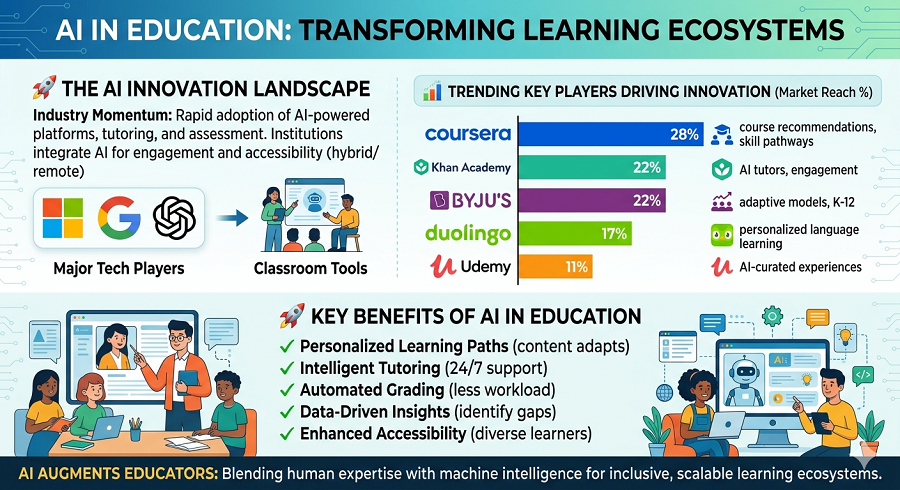
The global Artificial Intelligence In Education Market Share is a complex and evolving landscape, with dominance varying significantly across different segments of the educational ecosystem, from K-12 to higher education and corporate learning. Unlike some technology markets that are controlled by a single monopoly, the EdTech space is characterized by a mix of large platform players, established content providers, and a long tail of innovative startups. Market share in this context is not just about revenue but also about user adoption—the number of students and teachers actively using a platform. The battle for market share is a strategic contest to become the preferred "operating system" for digital learning, a position that requires not only superior technology but also deep pedagogical understanding, trusted content, and effective distribution channels into the often-slow-moving world of educational institutions. The current dynamics show a clear trend towards platform-based models and a fierce competition to own the core learning experience.
A significant portion of the market share, particularly in the K-12 and higher education sectors, is held by companies that provide the foundational Learning Management Systems (LMS). Platforms like Canvas (by Instructure), Blackboard (now part of Anthology), and Moodle have a deeply entrenched market share, serving as the central digital hub for millions of students and educators. These companies are in a powerful position. They own the primary user interface for digital learning and have access to a vast amount of data on student activity. Their strategy for capturing the AI market share is to increasingly build or integrate AI-powered features directly into their core LMS platforms. This includes features like predictive analytics to identify at-risk students, automated grading tools, and personalized recommendation engines for learning content. By bundling these AI capabilities, they create a sticky, all-in-one solution that makes it difficult for schools to adopt standalone AI tools from other vendors, thereby defending and expanding their market share.
Another major slice of the market is controlled by the traditional educational content providers and publishers, such as Pearson, McGraw-Hill, and Cengage. These companies have dominated the textbook market for decades, and their primary asset is their vast library of trusted, curriculum-aligned content. As education has digitized, these publishers have transitioned from selling physical books to selling access to comprehensive digital learning platforms that include their e-textbooks, online homework systems, and assessment tools. Their strategy for gaining AI market share is to infuse this content with intelligence. They are building adaptive learning platforms where the digital textbook itself can personalize the presentation of material, generate practice questions based on a student's weak spots, and provide interactive feedback. By leveraging their deep pedagogical expertise and their ownership of the core curriculum content, these companies are well-positioned to command a significant share of the market for AI-driven instructional tools.
While the LMS and content giants hold a large share of the institutional market, the most rapid growth and innovation—and a significant share of the direct-to-consumer and supplemental learning market—is being driven by specialized EdTech startups and technology giants. Companies like Duolingo have captured a massive global market share in language learning with their AI-powered, gamified mobile app. Khan Academy uses AI to provide personalized math practice to millions of students for free. In the broader technology space, Google has an immense market share in the K-12 sector through the widespread adoption of Google Classroom and Chromebooks, giving it a powerful distribution channel for its growing suite of AI-powered learning tools. Microsoft is also a major player, leveraging its dominance in productivity software to integrate AI learning features into tools like Teams and OneNote. This dynamic landscape shows that market share is contested on multiple fronts: through institutional sales, content ownership, and direct consumer adoption, creating a vibrant and highly competitive environment.
Explore More Like This in Our Trending Reports:

 English
 Arabic
 French
 Spanish
 Portuguese
 Deutsch
 Turkish
 Dutch
Dutch
 Italiano
 Romaian
 Portuguese (Brazil)
 Greek
Greek