
Wireless Charging Revolution: Market Growth, Trends, and Opportunities Through 2035
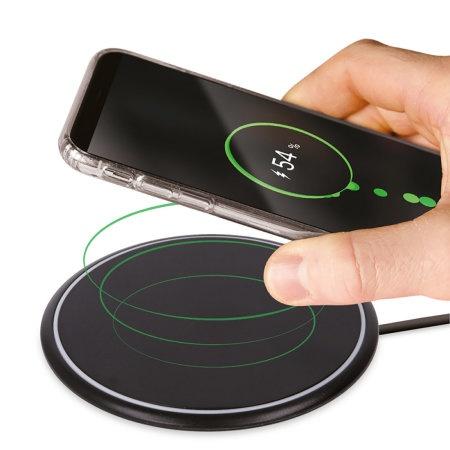
The global wireless charger market is witnessing remarkable growth, driven by rapid advancements in consumer electronics and an increasing preference for seamless, cable-free experiences. Valued at US$ 20.3 billion in 2024, the market is projected to surge to US$ 168.0 billion by 2035, expanding at a robust CAGR of 21.2% from 2025 to 2035. This exponential rise reflects the growing importance of wireless charging as a core feature in modern digital lifestyles.
The Shift Toward a Wireless Future
Wireless charging technology, once considered a premium convenience, is now becoming an essential feature across a wide range of devices. From smartphones to wearable gadgets, users increasingly expect fast, efficient, and hassle-free charging solutions. The ability to simply place a device on a charging surface without dealing with tangled cables or worn-out connectors has significantly enhanced user experience.
At the core of this technology are methods such as electromagnetic induction, magnetic resonance, and radio frequency (RF) transmission. These innovations enable power transfer without physical connectors, making charging more intuitive and reducing wear and tear on devices.
Market Drivers Fueling Growth
One of the primary drivers of the wireless charger market is the rising adoption of smartphones and wearable devices. With billions of people connected to the internet globally, smartphones have become indispensable tools for communication, entertainment, navigation, and digital transactions. This widespread usage directly increases the demand for efficient and convenient charging solutions.
In addition, the growing popularity of wearables such as smartwatches, fitness trackers, and health monitoring devices has further amplified charging needs. As consumers own multiple smart devices, the demand for multi-device wireless charging solutions continues to rise.
Another key growth factor is the increasing preference for convenience and cable-free environments. Traditional wired charging often involves repetitive plugging and unplugging, leading to cable damage and port wear. Wireless charging eliminates these issues, offering a cleaner, more organized setup—whether at home, in offices, or in vehicles.
Product Segment Dominance: Charging Pads Lead
Among various product types, charging pads dominate the market, accounting for 62.4% of the total share in 2024. Their popularity can be attributed to their simplicity, affordability, and versatility. Charging pads feature a flat, compact design that allows users to place devices directly on the surface without precise alignment.
Moreover, these pads are cost-effective to manufacture and widely compatible with standardized wireless charging protocols. This interoperability enables consumers to use a single charger across multiple devices and brands, enhancing convenience and reducing the need for multiple accessories.
Continuous improvements in multi-coil designs, thermal management, and charging efficiency have further strengthened the position of charging pads as the most commercially viable wireless charging solution.
Regional Insights: Asia Pacific at the Forefront
The Asia Pacific region leads the global wireless charger market, holding a significant 45.1% revenue share in 2024. This dominance is largely due to the region’s strong electronics manufacturing ecosystem and high penetration of consumer devices.
Countries such as China, Japan, South Korea, and Taiwan serve as major hubs for device manufacturers, component suppliers, and OEMs. The proximity of these stakeholders facilitates faster innovation cycles and cost-effective production, enabling quicker commercialization of wireless charging technologies.
Additionally, the rapid adoption of wireless charging in emerging applications—such as electric vehicles (EVs), industrial automation, and smart infrastructure—further strengthens the region’s leadership. Increasing investments in smart cities and public charging infrastructure are also contributing to widespread adoption.
Expanding Applications Across Industries
While consumer electronics remain the primary application area, wireless charging is increasingly being adopted across diverse industries. In the automotive sector, wireless charging is gaining traction for electric vehicles, enabling convenient and cable-free power transfer.
In industrial environments, technologies such as automated guided vehicles (AGVs) and autonomous mobile robots (AMRs) benefit from wireless charging by minimizing downtime and improving operational efficiency. Similarly, healthcare applications—including medical devices and wearable health monitors—are leveraging wireless charging for improved hygiene and ease of use.
The aerospace and defense sectors are also exploring wireless power solutions for unmanned aerial vehicles (UAVs) and communication devices, highlighting the technology’s versatility and future potential.
Competitive Landscape and Key Players
The wireless charger market is highly competitive, with leading companies focusing on innovation, strategic partnerships, and ecosystem development. Major players include Apple Inc., Samsung Electronics Co., Ltd., Xiaomi Corporation, Huawei Technologies, and LG Electronics.
These companies are continuously enhancing their product portfolios by introducing faster charging technologies, improved alignment mechanisms, and better compatibility with global standards such as Qi and Qi2.
Recent developments highlight the pace of innovation in the market. For instance, Apple’s introduction of a new Qi2-certified MagSafe charger alongside its latest smartphone lineup underscores the company’s commitment to advancing wireless charging efficiency and ecosystem integration.
Similarly, collaborations such as the partnership between Powermat Technologies and Panasonic Automotive Systems aim to accelerate the transition toward a fully wireless future, particularly in automotive and industrial applications.
Future Outlook: Toward a Truly Wireless Ecosystem
Looking ahead, the wireless charger market is poised for sustained growth as technology continues to evolve. Advancements in fast-charging capabilities, energy efficiency, and thermal management are expected to address current limitations and enhance performance.
Furthermore, the integration of wireless charging into everyday infrastructure—such as furniture, vehicles, and public spaces—will play a crucial role in driving adoption. As smart homes and smart cities become more prevalent, embedded wireless charging solutions will likely become a standard feature.
The convergence of multiple trends—including digital connectivity, IoT expansion, and sustainability—will further reinforce the importance of wireless charging in the global technology landscape.
Conclusion
In conclusion, the wireless charger market is transitioning from a niche convenience to a fundamental component of modern technology ecosystems. With strong growth projections, expanding applications, and continuous innovation, the industry is set to redefine how devices are powered in the years to come. As consumers and industries alike embrace the benefits of cable-free charging, the vision of a truly wireless world is steadily becoming a reality.
Source: https://www.transparencymarketresearch.com/wireless-chargers-market.html

 English
 Arabic
 French
 Spanish
 Portuguese
 Turkish
 Dutch
Dutch
 Italiano
 Russian
 Romaian
 Portuguese (Brazil)
 Greek
Greek