
Emerging Paradigms in Smart Infrastructure: Analyzing the Mmwave Sensors And Modules Market Trends for Modern Cities
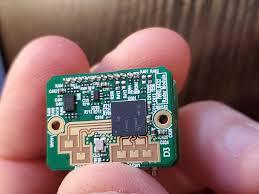
The concept of the "Smart City" is rapidly evolving from a futuristic vision into a tangible reality, largely supported by the deployment of advanced sensing networks. The Mmwave Sensors And Modules Market trends indicate a move toward multi-modal sensing platforms where millimeter-wave radar works in tandem with cameras and acoustic sensors to provide a comprehensive view of urban dynamics. One of the most significant trends is the use of these modules for "vulnerable road user" detection, where smart intersections can identify pedestrians and cyclists even in total darkness or heavy rain, alerting nearby vehicles to prevent accidents. This trend is driven by a global push for "Vision Zero" initiatives aimed at eliminating traffic fatalities. Moreover, these sensors are being deployed in public transit systems to monitor passenger density and optimize route scheduling in real-time, improving the efficiency and comfort of urban travel. The privacy-preserving nature of radar—which can track movement without capturing identifiable facial images—makes it an ideal solution for monitoring public spaces in compliance with strict data protection regulations.
Another burgeoning trend is the application of millimeter-wave technology in smart building management. High-frequency modules can detect the presence, location, and even the posture of occupants, allowing HVAC and lighting systems to adjust dynamically based on real-time usage. This leads to significant energy savings and improved occupant comfort. In the retail sector, these sensors are being used to create "frictionless" shopping experiences, where the system can track which items are picked up by customers without the need for invasive camera systems. The trend toward miniaturization is also enabling these modules to be hidden within streetlights, signage, and even pavement, creating a hidden layer of intelligence throughout the city. As 5G infrastructure continues to mature, we expect to see these trends converge into a unified urban operating system, where every sensor contributes to a digital twin of the city, allowing planners to simulate and respond to events with unprecedented accuracy.
How do these sensors protect privacy in public spaces? Unlike cameras, radar sensors detect movement and shapes through radio waves, meaning they do not capture faces or identifiable personal characteristics.
Can millimeter-wave sensors work through walls? Generally, millimeter waves are blocked by solid walls, which is actually a benefit for security and interference management as it confines the signal to a specific room or area.
➤➤➤Explore MRFR’s Related Ongoing Coverage In Semiconductor Industry:
Industrial Control Systems Market

 English
 French
 Spanish
 Portuguese
 Deutsch
 Turkish
 Dutch
Dutch
 Italiano
 Russian
 Romaian
 Portuguese (Brazil)
 Greek
Greek