
What Is Redefining the Role of Siding and Decking in Modern Buildings?
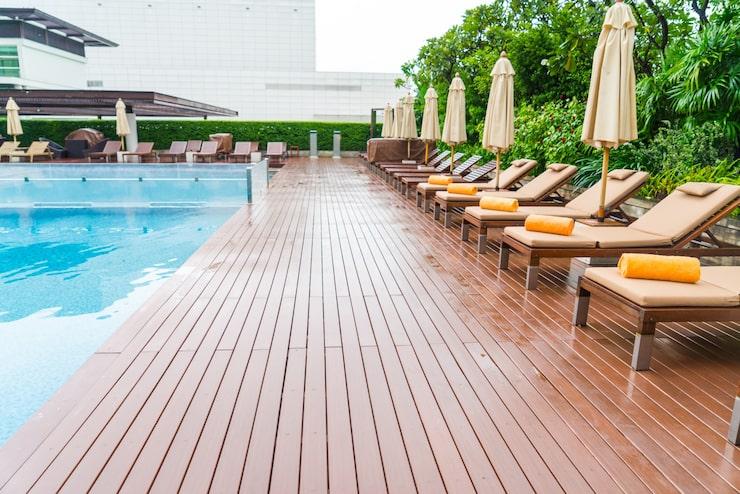
Exterior building materials are increasingly expected to deliver more than visual appeal. Property owners, builders, architects, and contractors are looking for solutions that can support durability, weather protection, maintenance requirements, design flexibility, and the changing expectations of modern construction. Siding and decking are therefore becoming important components of how residential and commercial spaces are designed, renovated, and maintained. According to a Vyansa Intelligence report, the global siding and decking market was valued at USD 60.55 Billion in 2025 and is projected to reach USD 84 Billion by 2032, registering a CAGR of 4.79% during 2026-2032.
The wider role of these products is closely connected with the building envelope and outdoor living environment. Siding contributes to exterior wall protection and appearance, while decking can extend usable outdoor space. Together, they provide opportunities to combine functional performance with architectural design.
Construction and Renovation Are Shaping Product Demand
New construction creates opportunities for siding and decking, but renovation and replacement activity are equally important to the industry's development. Existing properties often require exterior upgrades to improve appearance, durability, weather resistance, or overall usability.
This makes replacement and renovation an important part of the broader industry landscape. Homeowners and property managers can use exterior improvements to modernize buildings without necessarily undertaking complete structural redevelopment.
In this report, construction activity and residential renovation are identified as important demand drivers. The combination of new buildings, remodeling projects, exterior upgrades, and outdoor-living improvements creates multiple application opportunities for manufacturers and suppliers.
Material Selection Is Becoming More Performance-Oriented
Material selection is increasingly influenced by the conditions in which siding and decking will be installed. Buyers are considering durability, maintenance requirements, weather exposure, appearance, installation characteristics, and expected service life when evaluating exterior products.
The industry includes a broad range of material choices, including vinyl, fiber cement, wood, metal, plastic or PVC, aluminum, and other solutions. This diversity allows manufacturers to address different architectural requirements and customer priorities.
The latest market analysis also highlights the importance of engineered and composite solutions. Manufacturers are exploring materials that can combine durability with lower maintenance requirements while offering different textures, finishes, and design possibilities.
For example, ASTM International maintains specifications covering PVC siding as well as other exterior building materials. ASTM D3679 establishes requirements and test methods related to areas such as dimensions, impact strength, expansion, appearance, weathering, and wind-load resistance for rigid PVC siding.
Sustainability Is Influencing Exterior Material Development
Environmental considerations are becoming increasingly relevant to construction materials. Builders and property owners are paying greater attention to material efficiency, durability, recyclability, and the potential environmental impact associated with building products.
This is encouraging manufacturers to explore recycled and composite materials alongside conventional exterior solutions. Product development is increasingly focused on balancing performance with resource efficiency.
According to this industry report, low-carbon material adoption and composite system integration are becoming important areas of innovation within siding and decking. Recycled polymers, modified wood composites, and other engineered solutions can provide manufacturers with opportunities to respond to sustainability expectations while maintaining practical exterior performance.
Sustainability can also influence product selection through the entire lifecycle of a building. Longer-lasting exterior materials may help reduce the frequency of replacement, while responsible material choices can support broader construction sustainability objectives.
Design Flexibility Is Expanding the Application Base
Exterior surfaces have a major influence on the visual character of buildings. As architectural preferences diversify, siding and decking manufacturers are responding with greater variety in profiles, finishes, textures, colors, and material appearances.
Siding applications can include board and batten, shake and shingle, lap siding, and panel siding, while decking includes solid and hollow configurations. These product variations allow architects, contractors, and property owners to select systems according to design requirements and installation conditions.
This flexibility is particularly relevant to renovation projects. A property can receive a substantially different exterior appearance through changes to cladding and outdoor surfaces without requiring a complete redesign of the underlying structure.
Outdoor Living Is Creating New Opportunities for Decking
Decking has increasingly become associated with the broader concept of usable outdoor space. Residential properties can use decks to extend living areas, create spaces for relaxation and entertainment, and connect indoor and outdoor environments.
This creates opportunities for manufacturers to differentiate products through durability, surface appearance, installation convenience, and maintenance requirements.
The outdoor-living opportunity also encourages greater integration between landscaping, architecture, and exterior building products. Decking is therefore not simply a structural surface but can become part of a wider residential design strategy.
Installation Quality and Building Performance Remain Important
The performance of siding and decking depends not only on the material itself but also on correct specification and installation. Exterior products must be selected according to building conditions, environmental exposure, structural requirements, and applicable installation practices.
ASTM's building standards framework emphasizes the importance of evaluating material and component performance as part of fabrication and installation. Its standards cover areas including dimensional, mechanical, and other performance requirements for building components.
For manufacturers and contractors, this makes technical documentation, installation guidance, product consistency, and quality control important elements of the value proposition.
Where Could the Industry Move Next?
A detailed market insight suggests that the future of siding and decking will be influenced by the intersection of construction activity, renovation, sustainability, material innovation, and design preferences.
Manufacturers that can combine durability with attractive aesthetics and practical installation characteristics may be better positioned to address changing customer expectations. Composite materials, engineered products, low-maintenance surfaces, and environmentally conscious solutions can provide additional avenues for differentiation.
For contractors and property owners, product selection is likely to become increasingly focused on lifecycle performance rather than appearance alone. The ability to balance cost, durability, maintenance, installation, environmental considerations, and design will remain central to purchasing decisions.
Conclusion
Siding and decking are evolving from conventional exterior construction products into broader components of building design, renovation, and outdoor-living strategies. Their importance is being shaped by changing expectations around durability, aesthetics, sustainability, and practical performance.
The industry analysis indicates that opportunities will extend across new construction as well as replacement and renovation projects. Material innovation and composite solutions can further expand the range of available products, while stronger attention to installation quality and long-term performance can support greater confidence among buyers.
As buildings continue to evolve, siding and decking will remain closely connected to how property owners protect, modernize, and visually transform exterior spaces.

 English
 Arabic
 French
 Spanish
 Portuguese
 Deutsch
 Turkish
 Dutch
Dutch
 Italiano
 Romaian
 Portuguese (Brazil)
 Greek
Greek
