
Sudoku Puzzle Challenge That Sharpens Logic and Focus Daily
What Is Sudoku and Why Is It So Popular?
Sudoku is one of the most famous logic puzzles in the world. Millions of people enjoy Sudoku every day because it offers a perfect combination of entertainment and mental exercise. Unlike many traditional puzzles, Sudoku does not require mathematical knowledge. Success depends on logic, observation, and careful thinking.
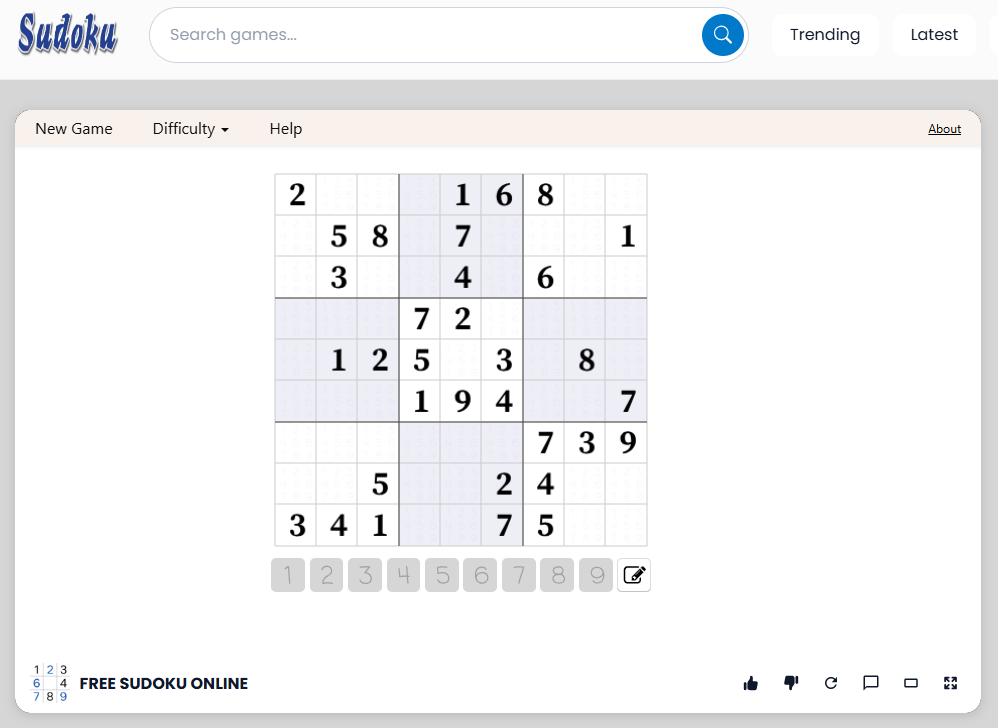
A standard Sudoku puzzle contains a 9x9 grid divided into nine smaller 3x3 sections. The objective is simple: fill every empty cell with a number from 1 to 9. Each row, each column, and each 3x3 section must contain every number exactly once.
The straightforward rules make Sudoku easy to learn, while the increasing difficulty levels keep players engaged for years. From beginners solving simple grids to experts tackling advanced challenges, Sudoku provides endless opportunities for improvement and enjoyment.
The History Behind Sudoku
Early Origins of Number Logic Puzzles
The concept behind Sudoku can be traced back to number placement puzzles developed in the eighteenth century. Mathematicians explored various grid-based challenges that required logical deduction rather than arithmetic calculations.
These early puzzle concepts laid the foundation for the modern Sudoku experience. Although the format evolved over time, the core principle remained the same: placing numbers according to specific rules.
Development of Modern Sudoku
The modern version of Sudoku gained attention during the late twentieth century. Puzzle publishers introduced the game to newspapers and magazines, where readers quickly became fascinated by its logical structure.
As internet access expanded, Sudoku reached a global audience. Mobile applications, websites, and online puzzle communities contributed to rapid growth in popularity. Today, Sudoku remains one of the most widely played puzzle games across different age groups.
How Sudoku Works
Understanding the Basic Rules
Every Sudoku puzzle begins with several numbers already placed in the grid. These starting numbers act as clues that help players determine the correct position for the remaining values.
To solve the puzzle successfully, players must follow three essential rules:
Each row must contain numbers 1 through 9 without repetition.
Each column must contain numbers 1 through 9 without repetition.
Each 3x3 section must contain numbers 1 through 9 without repetition.
The challenge comes from identifying where each number belongs using logical deduction.
Common Solving Techniques
Many players begin by scanning rows and columns for missing numbers. This basic approach often reveals obvious placements and creates momentum during the solving process.
More advanced techniques include elimination, candidate analysis, and pattern recognition. Experienced players learn to identify relationships between cells and use those relationships to narrow possible solutions.
Regular practice helps improve speed, accuracy, and confidence when applying these techniques.
Benefits of Playing Sudoku
Strengthening Logical Thinking
One of the biggest advantages of Sudoku is the development of logical reasoning skills. Every move requires analysis and decision-making based on available information.
Players gradually learn how to evaluate possibilities, eliminate incorrect options, and identify logical conclusions. These skills can be useful in many everyday situations that require critical thinking.
Improving Concentration
Sudoku demands attention to detail. Even a small mistake can affect multiple areas of the grid, making concentration an important part of success.
Many people use Sudoku as a way to improve focus and reduce distractions. Spending time on a puzzle encourages a deeper level of mental engagement than passive entertainment activities.
Supporting Memory Development
While Sudoku primarily relies on logic, memory also plays a role. Players often keep track of possible number placements and remember patterns discovered during the solving process.
Regular engagement with mental challenges may help maintain cognitive activity and support overall brain function.
Providing Relaxation and Entertainment
Sudoku offers a calm and rewarding experience. Unlike competitive games that involve time pressure or complex controls, Sudoku allows players to progress at their own pace.
Many individuals enjoy solving puzzles during breaks, while traveling, or before bedtime. Completing a difficult puzzle often creates a strong sense of achievement and satisfaction.
Different Types of Sudoku Puzzles
Classic Sudoku
Classic Sudoku remains the most popular format. It uses the traditional 9x9 grid and follows the standard rules recognized around the world.
This version is available in multiple difficulty levels, making it suitable for both beginners and experienced players.
Mini Sudoku
Mini Sudoku uses smaller grids, often 4x4 or 6x6. The reduced size makes puzzles faster to complete and easier for newcomers to understand.
Many educational programs introduce children to logical reasoning through Mini Sudoku challenges.
Killer Sudoku
Killer Sudoku combines traditional Sudoku rules with additional arithmetic elements. Groups of cells are assigned target sums, creating an extra layer of complexity.
This variation appeals to players seeking a greater challenge and more strategic thinking opportunities.
Samurai Sudoku
Samurai Sudoku features multiple overlapping grids connected together. Solving one section influences neighboring areas, creating a large and intricate puzzle experience.
This format is especially popular among advanced puzzle enthusiasts.
Tips for Becoming Better at Sudoku
Start With Easy Levels
Beginners should focus on easy puzzles before attempting advanced challenges. Building a strong understanding of fundamental techniques creates a solid foundation for future improvement.
Look for Obvious Placements First
Scanning rows, columns, and sections for missing numbers can reveal straightforward opportunities. Solving easier cells first often uncovers additional clues throughout the puzzle.
Avoid Guessing
Sudoku is designed as a logic puzzle. Random guessing can create mistakes that become difficult to identify later. Careful analysis usually produces better results than trial and error.
Practice Consistently
Regular practice improves pattern recognition and logical reasoning. Even a few puzzles each week can lead to noticeable progress over time.
Why Sudoku Remains Popular Today
The enduring popularity of Sudoku comes from its unique combination of simplicity and depth. The rules can be learned in minutes, yet mastering advanced strategies may take years.
Digital technology has also helped Sudoku remain relevant. Mobile applications, online platforms, and printable puzzles make access easier than ever. Players can enjoy Sudoku virtually anywhere, whether at home, during travel, or while taking a short break.
Another important factor is universal appeal. Sudoku crosses language barriers because numbers provide a shared system that people around the world understand. This accessibility has helped create a global community of puzzle enthusiasts.
Conclusion
Sudoku continues to be one of the most rewarding logic puzzles available today. The game challenges the mind, improves concentration, and provides enjoyable entertainment without requiring special knowledge or equipment. From simple beginner grids to highly complex expert challenges, Sudoku offers endless opportunities for learning and growth. Anyone seeking a fun way to exercise logical thinking and mental focus can benefit from making Sudoku a regular part of daily life.

 English
 French
 Spanish
 Portuguese
 Deutsch
 Turkish
 Dutch
Dutch
 Italiano
 Russian
 Romaian
 Portuguese (Brazil)
 Greek
Greek
