
Team Task Management Software In Saudi Arabia For Multi Branch Businesses
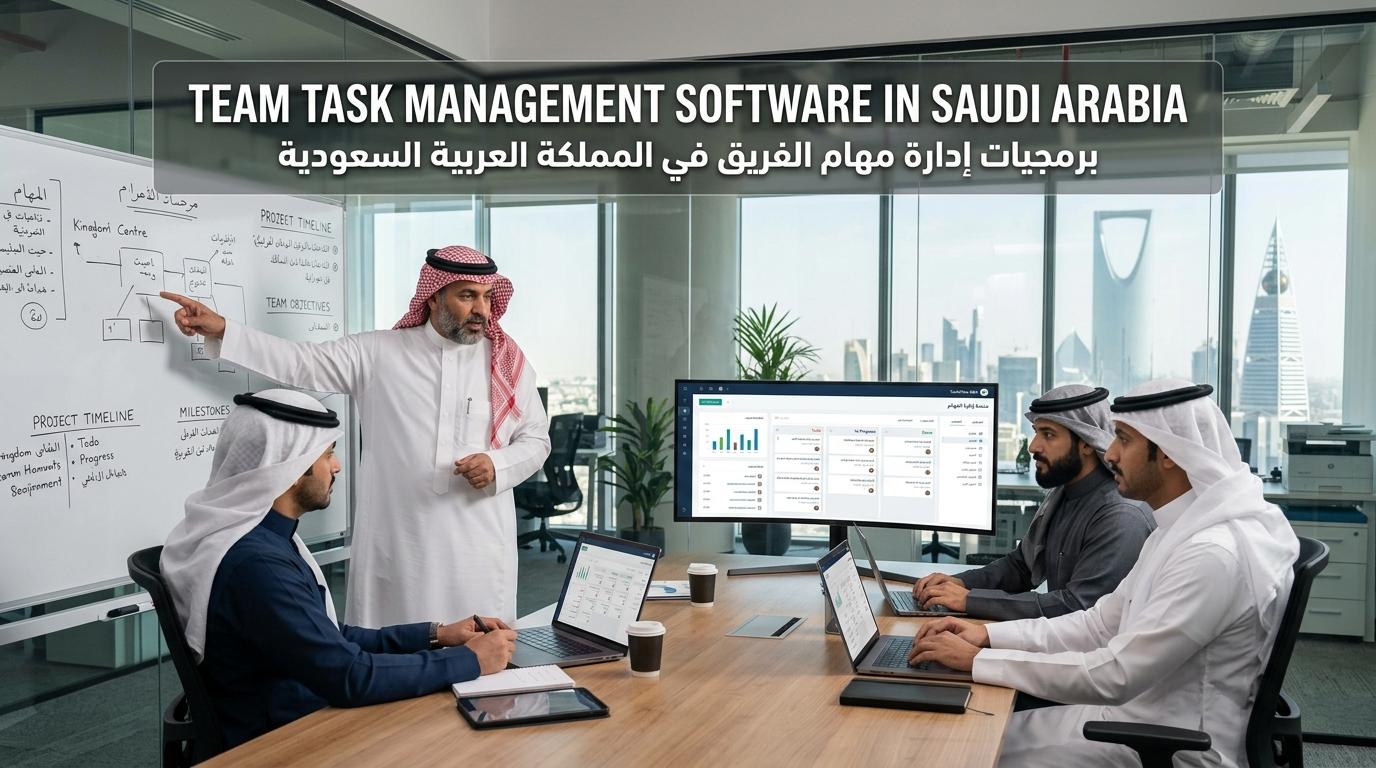
Multi branch businesses manage employees, departments, customers, projects, and daily operations across several locations. When teams work from different branches, maintaining consistent task assignment and progress tracking can become difficult. Email messages, spreadsheets, phone calls, and separate communication channels may not provide enough visibility into what each branch is handling.
Team task management software in Saudi Arabia provides a centralized environment for organizing responsibilities across multiple branches. Businesses can use it to assign tasks, set deadlines, monitor progress, coordinate teams, share documents, and review branch level activities from a connected system.
For organizations operating across Riyadh, Jeddah, Dammam, and other Saudi cities, centralized team task management can help create consistent workflows while allowing individual branches to manage their own operational responsibilities.
Multi Branch Task Management Requirements
A multi branch organization usually has two levels of task management. The first involves tasks handled by individual branches, while the second involves activities that require coordination between several locations.
A suitable task management environment can organize work according to
• Branches
• Departments
• Teams
• Employees
• Projects
• Customers
• Locations
• Deadlines
• Priorities
• Task status
This structure allows businesses to maintain a clear distinction between local branch activities and organization wide responsibilities.
Centralized Task Management Across Branches
When each branch manages tasks independently, headquarters may have limited visibility into operational performance. Managers may need to request updates manually, which can consume time and create inconsistent reporting.
Team task management software in Saudi Arabia can provide centralized visibility across branches. Authorized managers can view tasks from different locations through a common platform.
For example, a business with ten branches can create separate workspaces or task categories for each location while maintaining an overall management dashboard.
This allows management teams to monitor
• Open tasks
• Completed tasks
• Delayed activities
• Upcoming deadlines
• Branch workloads
• Department responsibilities
• Operational issues
Centralization can make branch management more structured without requiring every location to use separate systems.
Branch Based Task Assignment
Different branches often have different employees and responsibilities. Task assignment should therefore support branch specific structures.
Managers can assign activities to employees within a particular branch and define the expected completion date.
A task may contain
• Task title
• Description
• Assigned employee
• Branch
• Department
• Priority
• Deadline
• Supporting documents
• Task status
• Comments
This information gives employees a clear understanding of what needs to be completed and who is responsible for the activity.
Team Collaboration Across Multiple Locations
Communication becomes more complicated when teams are distributed across several branches.
Team task management software in Saudi Arabia can connect communication with specific tasks. Employees can add comments, upload files, provide updates, and communicate with other team members without separating the discussion from the work itself.
For example, a regional manager can create a task for a branch manager and request a monthly operational report. The branch manager can attach the completed report directly to the task and update its status.
This creates a record of the activity that authorized employees can review later.
Standardizing Workflows Across Branches
Multi branch businesses often need consistent processes. A customer request, maintenance activity, inventory check, employee onboarding process, or financial approval may need to follow the same sequence at every location.
Task management software can help standardize these workflows.
A company can create predefined task processes for recurring activities such as
• Opening branch procedures
• Closing branch procedures
• Customer complaint handling
• Equipment inspections
• Inventory checks
• Employee onboarding
• Maintenance requests
• Procurement approvals
• Financial reporting
• Marketing activities
Standardized workflows help ensure that branches follow common operational procedures.
Managing Branch Responsibilities
Every branch may have a combination of routine and non routine activities. Routine activities can be scheduled as recurring tasks, while special activities can be created whenever required.
For example, a retail branch may need daily tasks for opening procedures, stock checking, equipment inspection, and store cleanliness.
Managers can also create one time tasks for events such as
• New product launches
• Branch renovations
• Staff training
• Promotional campaigns
• Equipment replacement
• Compliance inspections
A centralized task platform can keep these activities organized according to their frequency and importance.
Task Prioritization For Branch Teams
Employees in multi branch businesses often receive several requests simultaneously. Without clear priorities, important activities may be delayed.
Team task management software in Saudi Arabia can categorize tasks according to their urgency and business impact.
Typical priorities include
• Critical
• High
• Medium
• Low
Branch managers can then focus employees on urgent activities while maintaining visibility over less urgent work.
Priority settings can also help regional managers identify branches that require immediate attention.
Deadline Management Across Branches
Deadlines are important for maintaining consistency across multiple locations. A regional office may require every branch to complete a specific activity before a certain date.
Task management software can assign deadlines to individual tasks and notify employees when deadlines are approaching.
Managers can identify overdue tasks and determine whether delays are isolated to one branch or occurring across multiple locations.
This information can help management review recurring operational problems.
Managing Recurring Branch Tasks
Many branch operations involve repetitive activities. Creating these tasks manually every day or week can be inefficient.
Recurring task functionality can automatically create scheduled activities.
Examples include
• Daily branch opening checks
• Weekly inventory reviews
• Monthly financial reports
• Equipment maintenance
• Staff meetings
• Safety inspections
• Customer feedback reviews
• Cleaning schedules
• Compliance checks
Recurring task automation can reduce administrative work and help branches maintain consistent routines.
Monitoring Branch Performance
Multi branch organizations need to compare operational performance between locations.
Team task management software in Saudi Arabia can provide branch level reports that show how work is progressing.
Management may analyze
• Completed tasks
• Pending tasks
• Overdue tasks
• Average completion time
• Employee workload
• Department performance
• Recurring task completion
• Project progress
This information can help management identify branches that consistently complete work on time and locations where additional process improvements may be required.
Regional Management And Task Visibility
Large organizations may have several management levels. A branch manager may oversee one location, while a regional manager may supervise multiple branches.
Task management systems can provide different access levels according to these responsibilities.
A branch manager may see tasks belonging to their location, while a regional manager may see information from all branches within their region.
Senior management can receive organization wide reporting without needing to review every individual task.
This hierarchical approach can make information easier to manage.
Employee Workload Management
Employee workloads can vary significantly between branches. One location may have a large number of active tasks while another has fewer responsibilities.
Workload visibility allows managers to identify these differences.
Task management platforms can show information about
• Active assignments
• Pending tasks
• Overdue activities
• Upcoming deadlines
• High priority tasks
• Completed work
Managers can use this information to redistribute responsibilities when appropriate.
Managing Cross Branch Projects
Some projects involve several branches simultaneously.
For example, a company may introduce a new operational process across twenty locations. Each branch may need to complete training, update documentation, install equipment, and submit confirmation.
A centralized project can contain branch specific tasks while maintaining an overall project structure.
This allows management to see which locations have completed the rollout and which branches still have outstanding activities.
Document Sharing Between Branches
Multi branch operations frequently require shared documentation.
Task management platforms can associate documents directly with relevant activities.
Documents may include
• Procedures
• Reports
• Training materials
• Checklists
• Product information
• Operational guidelines
• Inspection records
• Project documentation
Keeping documents connected to tasks can make information easier to locate and reduce reliance on scattered email attachments.
Notifications And Automated Reminders
Employees across multiple locations may not always monitor every communication channel. Automated notifications can help ensure that important task updates reach the correct employees.
Notifications may be triggered when
• A task is assigned
• A deadline changes
• A task becomes overdue
• A comment is added
• A document is uploaded
• A task priority changes
• A dependent activity is completed
Automated reminders can be especially useful for recurring branch responsibilities.
Mobile Task Management For Branch Employees
Employees in retail, hospitality, logistics, construction, healthcare, and field operations may spend significant amounts of time away from traditional office desks.
Mobile access allows employees to manage tasks while working at their branch or in the field.
Employees can use mobile applications to
• View assigned work
• Update task status
• Upload photos and documents
• Add comments
• Review deadlines
• Receive notifications
• Communicate with managers
Mobile task management can make centralized workflows more practical for distributed teams.
Role Based Access For Multi Branch Organizations
Multi branch businesses need to control access to operational information.
A branch employee should not necessarily have access to information belonging to another location. At the same time, regional and corporate managers may need broader visibility.
Role based permissions can help create this structure.
Access can be organized around
• Employees
• Branch managers
• Regional managers
• Department heads
• Corporate management
• System administrators
This approach allows businesses to maintain appropriate information boundaries.
Integrating Team Task Management With Business Systems
Multi branch businesses often use several software systems to manage operations.
Team task management software in Saudi Arabia can potentially integrate with systems such as
• Customer relationship management software
• Enterprise resource planning platforms
• Human resource systems
• Accounting applications
• Inventory management systems
• Communication platforms
• Document management systems
• Business intelligence platforms
Integration can reduce duplicate data entry and connect task management with existing business processes.
For example, a customer complaint recorded in a CRM system could generate a task for the relevant branch. An inventory issue could generate an operational task for the branch team.
Task Management For Retail Branches
Retail businesses often have many locations with similar operational requirements.
Task management can organize activities related to
• Store opening
• Store closing
• Inventory checks
• Product displays
• Equipment inspections
• Staff activities
• Customer service
• Maintenance
• Promotions
Corporate teams can create standardized tasks while branch managers handle local responsibilities.
Task Management For Restaurant Chains
Restaurant chains can use team task management to coordinate activities across multiple locations.
Branch tasks may include
• Opening procedures
• Kitchen inspections
• Cleaning schedules
• Inventory checks
• Staff assignments
• Equipment maintenance
• Food safety checks
• Customer service reviews
Regional managers can monitor whether branches are completing required activities according to established schedules.
Task Management For Real Estate Businesses
Real estate organizations may manage offices, properties, agents, maintenance teams, and customer activities across several locations.
Task management can organize responsibilities such as
• Property inspections
• Maintenance requests
• Client follow ups
• Property documentation
• Listing updates
• Viewing schedules
• Lease related activities
Each task can be connected to a specific property, employee, branch, or project.
Task Management For Logistics Businesses
Logistics organizations often operate through warehouses, distribution centers, offices, and transportation teams.
Task management can support activities such as
• Shipment coordination
• Warehouse inspections
• Vehicle maintenance
• Delivery issue management
• Inventory checks
• Driver documentation
• Customer service requests
Centralized task visibility can help management coordinate activities across different operational locations.
Custom Team Task Management Software
Standard task management applications may not always match the workflow requirements of large multi branch businesses.
Custom team task management software can be designed around an organization's specific structure.
Custom functionality may include
• Branch specific dashboards
• Regional management views
• Custom approval workflows
• Branch level reporting
• Employee hierarchies
• Custom task fields
• Automated escalation
• Internal request forms
• Business system integrations
• Custom notifications
Customization can be useful when an organization needs task management to follow established operational processes.
Security And Data Management
Centralizing task information creates a need for appropriate data protection.
Enterprise task management environments should consider
• Role based permissions
• Secure authentication
• Data encryption
• Activity logs
• Access monitoring
• Backup procedures
• Administrative controls
Organizations should also establish policies for how employees create, share, store, and access business information.
Measuring Multi Branch Task Management
Businesses should measure whether their task management processes are producing the expected operational results.
Useful indicators include
• Task completion rate
• Overdue task percentage
• Average completion time
• Branch performance
• Employee workload
• Project completion
• Response time
• Recurring task completion
These measurements can provide management with a clearer view of operational consistency across locations.
Common Challenges In Multi Branch Task Management
Multi branch organizations may experience several challenges when introducing centralized task management.
One challenge is employee adoption. Employees need to understand how and when tasks should be recorded and updated.
Another challenge is excessive customization. A system containing too many workflows and fields can become difficult to use.
Data consistency is also important. If different branches record information differently, management reports may become unreliable.
Businesses should therefore establish clear task naming standards, responsibility rules, status definitions, and reporting procedures.
Choosing Team Task Management Software In Saudi Arabia
Businesses should evaluate task management software according to their operational structure.
Important considerations include
• Multi branch support
• Scalability
• User permissions
• Mobile accessibility
• Workflow management
• Reporting
• Automation
• Integration
• Customization
• Security
• Data management
• Ease of administration
The system should support both branch level operations and broader organizational reporting.
Future Of Team Task Management
The future of team task management is closely connected with automation, analytics, artificial intelligence, cloud computing, and integrated business platforms.
Artificial intelligence may support task categorization, prioritization, workload analysis, deadline prediction, and automated workflow recommendations.
Analytics can help businesses identify patterns across branches and determine where delays occur most frequently.
Cloud based task management can also provide centralized access for geographically distributed teams.
As Saudi businesses continue adopting digital operating models, task management systems are likely to become increasingly connected with CRM, ERP, HR, business intelligence, and other enterprise applications.
Final Thoughts
Team task management software in Saudi Arabia can provide multi branch businesses with a centralized way to organize responsibilities across locations. It can support task assignment, collaboration, scheduling, workload management, recurring activities, reporting, document sharing, and workflow automation.
For businesses operating across multiple Saudi cities, centralized task management can also provide management with better visibility into branch performance while allowing local teams to maintain their daily responsibilities.
The most effective approach depends on the organization's branch structure, employee roles, workflows, reporting requirements, security policies, and existing business systems. By defining these requirements clearly, businesses can establish a structured task management environment that supports consistent operations across multiple locations.

 English
 Arabic
 Spanish
 Portuguese
 Deutsch
 Turkish
 Dutch
Dutch
 Italiano
 Russian
 Romaian
 Portuguese (Brazil)
 Greek
Greek
