
How to Choose the Right Tool Holder for CNC Machining Applications
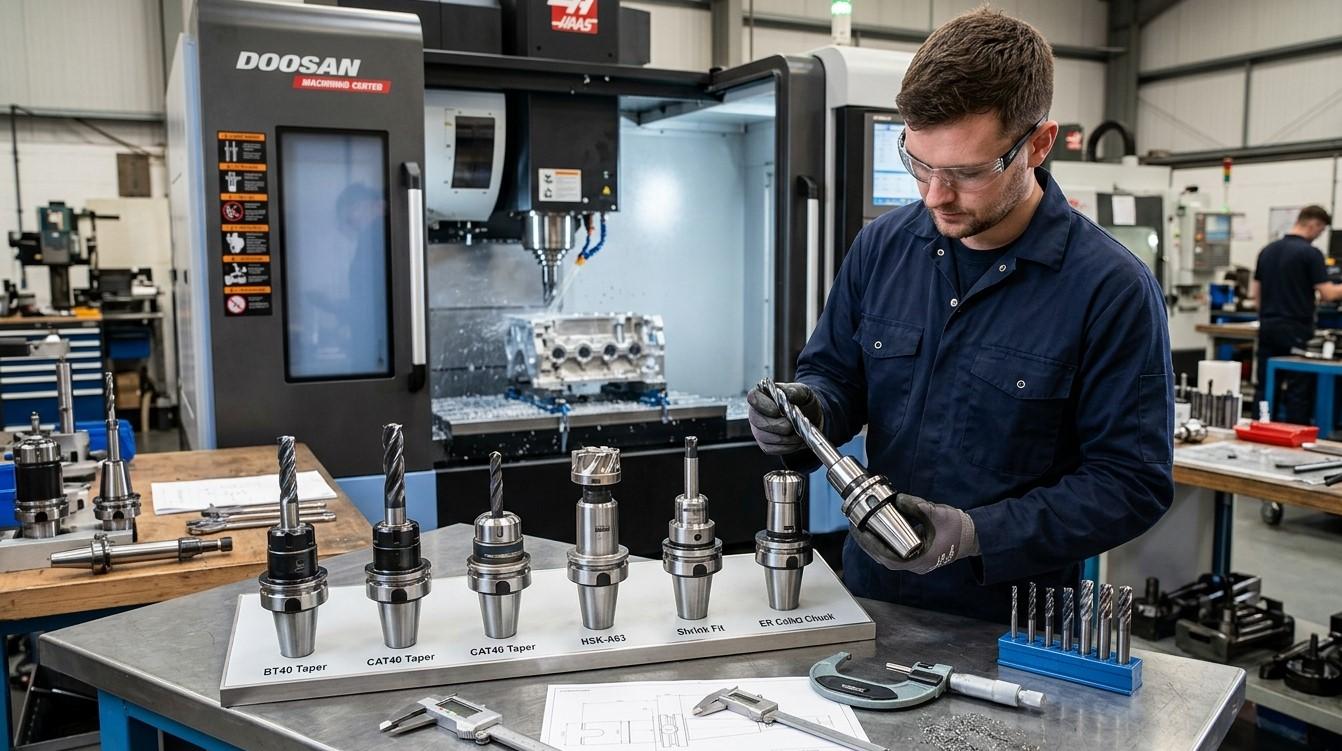
In CNC machining, selecting the right tooling system is essential for achieving precision, productivity, and consistent component quality. While much attention is often given to cutting tools, the tool holder plays an equally important role in maintaining stability and transferring cutting forces effectively. For businesses seeking dependable machining solutions, Khokhawala Trading LLC, an experienced Industrial Tools Supplier in Dubai, offers a range of industrial tooling solutions for CNC machining, engineering, manufacturing, fabrication, and maintenance applications.
A suitable tool holder can improve tool life, reduce vibration, minimize runout, and support better surface finishes. On the other hand, an unsuitable or poorly maintained holder can result in chatter, dimensional inaccuracies, premature tool wear, and even tool failure. This guide explains the different types of CNC tool holders, the factors to consider when selecting one, and how the right holder can improve overall machining performance.
What Is a CNC Tool Holder?
A CNC tool holder is a precision component used to securely hold a cutting tool in the machine spindle. It provides the connection between the machine spindle and the cutting tool while maintaining the required rigidity and accuracy during machining.
Tool holders are designed to withstand cutting forces, rotational speeds, vibration, and heat generated during machining. They are available in different designs and sizes to accommodate various cutting tools and CNC machine configurations.
Common applications include:
- CNC milling
- CNC drilling
- CNC turning
- Reaming
- Tapping
- High-speed machining
- Precision machining
- Heavy-duty cutting
The correct tool holder depends on the machine spindle, cutting tool, machining operation, material being processed, and required level of accuracy.
Why Is Tool Holder Selection Important?
A cutting tool can only perform effectively when it is securely and accurately held. Even a high-quality carbide end mill or drill can deliver poor results if the holder introduces excessive runout or lacks sufficient rigidity.
Proper CNC tool holder selection can provide several benefits:
- Improved machining accuracy
- Reduced tool runout
- Better surface finish
- Longer cutting-tool life
- Reduced vibration
- Higher machining stability
- Improved chip evacuation
- Greater production consistency
- Better performance at high spindle speeds
For high-precision manufacturing, even a small amount of tool runout can cause uneven cutting-edge loading and premature tool wear. Therefore, the holder should be considered an integral part of the complete CNC tooling system.
Common Types of CNC Tool Holders
Different machining operations require different types of tool holders. Understanding the characteristics of each type helps manufacturers select the most appropriate option.
1. Collet Chucks
Collet chucks use a collet to grip the cutting tool around its shank.
They are widely used for:
- End mills
- Drills
- Reamers
- Small-diameter tools
- General milling operations
Collet chucks offer good versatility because different collets can accommodate various tool diameters. They are commonly used in general-purpose CNC machining.
2. Hydraulic Tool Holders
Hydraulic holders use hydraulic pressure to grip the cutting tool. They are designed to provide accurate tool positioning and low runout.
These holders can be suitable for precision machining and applications where surface finish and dimensional accuracy are important.
Hydraulic holders are often used with smaller and medium-sized cutting tools and can provide good vibration-damping characteristics.
3. Shrink-Fit Tool Holders
Shrink-fit holders use thermal expansion and contraction to secure the cutting tool.
During installation, the holder is heated so that its bore expands. The cutting tool is then inserted, and as the holder cools, it contracts around the tool shank.
Advantages include:
- Excellent concentricity
- High gripping strength
- Low runout
- Slim profile
- Good access to deep or narrow machining areas
Shrink-fit systems are commonly used in high-speed and high-precision CNC machining.
4. End Mill Holders
End mill holders are specifically designed to provide strong gripping for milling cutters.
They can be particularly useful for applications involving higher cutting forces and larger-diameter milling tools.
Compared with some general-purpose collet systems, dedicated end mill holders can provide strong tool retention for suitable applications.
5. Drill Chucks
Drill chucks are commonly used for drilling applications where flexibility and quick tool changes are required.
They are available in different designs and can accommodate a range of drill sizes. However, the appropriate chuck should be selected according to spindle speed, required accuracy, and drilling conditions.
6. Face Mill Holders
Face mill holders are designed to securely mount face mills and other larger milling cutters.
They provide a stable connection between the cutter and spindle and are suitable for machining operations where substantial cutting forces are generated.
Factors to Consider When Choosing a Tool Holder
Selecting the right holder requires more than simply matching the tool diameter. Several factors should be evaluated before making a decision.
Machine Spindle Type
The first step is identifying the CNC machine's spindle interface.
Common spindle connections include different taper and flange systems. The holder must be compatible with the machine spindle to ensure correct fitment and safe operation.
Always verify the exact spindle specification before purchasing a tool holder.
Cutting Tool Size
The holder must be compatible with the cutting tool's shank diameter.
Using an incorrectly sized holder or collet can result in poor gripping, excessive runout, and tool movement during machining.
Machining Operation
Consider the type of operation being performed.
Milling, drilling, reaming, tapping, and high-speed finishing may each require different tooling characteristics.
For example, heavy roughing may prioritize gripping strength and rigidity, while precision finishing may prioritize low runout and vibration control.
Required Accuracy
Precision machining requires accurate tool positioning.
If the application involves tight dimensional tolerances or high-quality surface finishes, choose a holder designed for low runout and high concentricity.
High-quality precision tool holders can help ensure that the cutting tool remains accurately positioned relative to the spindle axis.
Spindle Speed
High-speed machining places additional demands on the tool holder.
At high RPM, imbalance and runout can become increasingly significant. For high-speed applications, the holder should be rated for the intended spindle speed and properly balanced.
Tool Overhang
Tool overhang refers to the distance between the holder and the cutting edge.
Excessive overhang can reduce rigidity and increase vibration. Whenever possible, use the shortest practical tool assembly for the application.
For deep machining operations, however, extended-reach tooling may be necessary. In such cases, the holder and tool combination should be selected carefully to maintain stability.
Tool Runout and Its Impact on Machining
Runout is one of the most important factors to consider when selecting a CNC tool holder.
Tool runout occurs when the cutting tool does not rotate perfectly around its intended axis. Excessive runout can cause some cutting edges to remove more material than others.
This can lead to:
- Uneven tool wear
- Poor surface finish
- Reduced tool life
- Dimensional variation
- Increased cutting forces
- Chatter
- Reduced machining accuracy
For precision CNC applications, selecting a low-runout holder and maintaining clean mating surfaces can significantly improve performance.
Rigidity and Vibration Control
Rigidity is another critical factor in tool holder selection.
A rigid tooling system helps resist deflection when cutting forces are applied. This is particularly important during heavy milling, roughing, slotting, and other operations involving significant material removal.
Vibration or chatter can damage both the tool and workpiece. It can also produce unacceptable surface finishes.
Choosing a holder with suitable gripping strength, minimizing tool overhang, and ensuring proper spindle and workholding conditions can help reduce vibration.
Tool Holder Balance
Balance becomes increasingly important as spindle speed increases.
An unbalanced holder can generate centrifugal forces that produce vibration and reduce machining stability. High-speed CNC machining therefore often requires balanced tooling systems.
Before using a tool holder at elevated spindle speeds, verify its recommended operating range and balancing specifications.
Material and Construction Quality
The material and manufacturing quality of a tool holder influence its durability, accuracy, and performance.
A high-quality holder should provide:
- Stable tool retention
- Accurate dimensions
- Good concentricity
- Suitable hardness
- Resistance to wear
- Reliable performance under machining loads
Choosing tooling from a reputable industrial tools supplier can help manufacturers obtain holders that are appropriate for their machines and applications.
How to Maintain CNC Tool Holders
Proper maintenance is essential for keeping tool holders accurate and reliable.
Keep Contact Surfaces Clean
Dirt, chips, coolant residue, and other contaminants can prevent proper contact between the holder and spindle.
Clean the spindle interface, tool holder, collets, and tool shanks regularly.
Inspect for Damage
Check holders for:
- Dents
- Scratches
- Corrosion
- Wear
- Damaged threads
- Deformed collets
- Other visible defects
Damaged components should be evaluated before being returned to service.
Check Runout Regularly
Periodic runout measurement can help identify damaged or worn holders before they affect production.
Store Holders Properly
Tool holders should be stored in a clean and protected environment. Avoid placing precision holders directly on hard surfaces where their taper or nose can become damaged.
Common Mistakes to Avoid
Several common mistakes can reduce tool holder performance.
Using the Wrong Collet
A collet must match the tool shank correctly. Improper sizing can result in poor gripping and excessive runout.
Excessive Tool Extension
Long tool extensions reduce rigidity and can increase vibration.
Ignoring Holder Wear
Continuing to use a damaged or worn holder can negatively affect machining accuracy.
Poor Cleaning
Even small amounts of contamination between mating surfaces can affect tool positioning.
Exceeding Recommended Speed
Using a holder beyond its specified operating range can create safety and performance problems.
How the Right Tool Holder Improves CNC Machining
A properly selected tool holder supports the complete machining process.
It can help manufacturers achieve:
Better accuracy: Stable tool positioning supports consistent dimensions.
Longer tool life: Reduced runout and vibration help distribute cutting loads more evenly.
Improved surface finish: Stable cutting reduces chatter and unwanted tool movement.
Higher productivity: Reliable tooling allows machines to operate more consistently.
Lower costs: Longer tool life and fewer rejected components can reduce overall production expenses.
Conclusion
Choosing the right tool holder is an important part of building an efficient and accurate CNC machining system. The ideal holder depends on the machine spindle, tool shank, machining operation, spindle speed, required accuracy, cutting forces, tool overhang, and production requirements.
Collet chucks, hydraulic holders, shrink-fit holders, end mill holders, drill chucks, and face mill holders each have specific advantages. Selecting the right option and maintaining it properly can reduce runout, vibration, tool wear, and machining errors while improving productivity and surface quality.
For businesses looking for reliable CNC tooling solutions, Khokhawala Trading LLC, an experienced Industrial Tools Supplier in Dubai, provides industrial tooling solutions for manufacturing, engineering, CNC machining, fabrication, and workshop applications. Along with CNC tool holders, businesses can benefit from selecting the right industrial cutting tools, carbide tools, precision measuring tools, milling accessories, chucks, and machining accessories for their specific requirements.
Ultimately, a tool holder should not be treated as just a tool-clamping accessory. It is a critical part of the CNC machining system. By choosing the correct holder, maintaining accurate tool interfaces, minimizing runout, and matching the holder to the machining application, manufacturers can achieve greater precision, longer tool life, improved surface finish, and more efficient production.

 English
 French
 Spanish
 Portuguese
 Deutsch
 Turkish
 Dutch
Dutch
 Italiano
 Russian
 Romaian
 Portuguese (Brazil)
 Greek
Greek
