
Common Myths About Thread Lift in Dubai Debunked
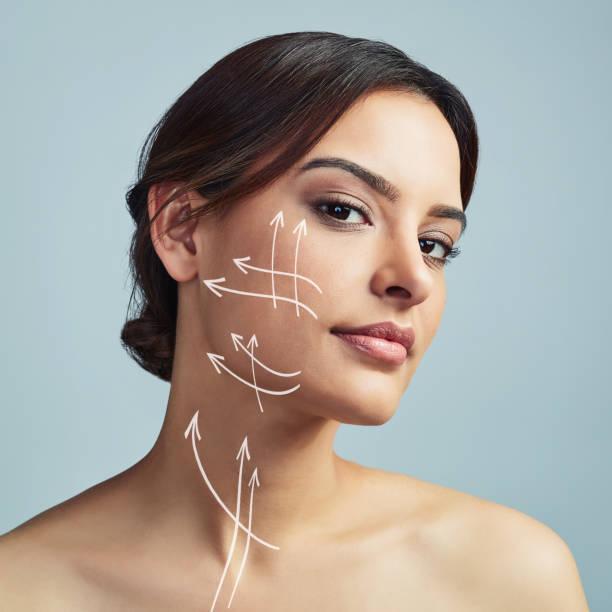
Before most patients book a thread lift in Dubai consultation, they have already formed opinions about it. Some from friends who have had it done. Some from social media. Some from clinics with more interest in converting a booking than in giving accurate information. By the time they sit across from a practitioner, they often carry a set of beliefs about thread lift that are partly true, mostly oversimplified, and occasionally completely wrong.
Misinformation about thread lift does real damage. It causes suitable patients to avoid a procedure that would genuinely benefit them. It causes unsuitable patients to pursue one that won't. And it creates unrealistic expectations that no technically sound procedure can satisfy.
This article addresses the most common myths about thread lift in Dubai — directly, honestly, and without the promotional framing that keeps these myths circulating.
Myth One: Thread Lift Is Basically the Same as a Surgical Facelift
This is the most damaging myth in the thread lift conversation — and it circulates in both directions. Some patients believe thread lift delivers facelift-level results and are disappointed when it doesn't. Others dismiss thread lift entirely because they assume it can't compete with surgery, without understanding that they don't need surgery yet.
Thread lift and surgical facelift are fundamentally different procedures. Facelift involves incisions, skin excision, SMAS repositioning, and results that last five to ten years. Thread lift uses dissolvable sutures to reposition descended tissue without incisions, with results lasting twelve to eighteen months. They are not versions of the same thing.
For a patient with mild to moderate facial descent, thread lift delivers results that are genuinely meaningful — and appropriate for their stage of ageing. For a patient with significant skin laxity, thread lift is the wrong tool regardless of how skillfully it is applied.
The comparison itself is the problem. Thread lift should be evaluated on its own merits, for the patients it actually suits, not measured against a procedure designed for a different patient population.
Myth Two: Thread Lift Results Are Immediate and Fully Visible on Day One
Partially true — and the partial truth is what makes this myth so persistent. The mechanical lift from thread placement is visible immediately after the procedure. Patients can see a difference in the mirror before they leave the clinic. This is real.
What is not real is the assumption that the day-one result is the final result. It isn't. In the first 48 to 72 hours, swelling causes the result to look overcorrected in some areas and obscured in others. By week two, the swelling resolves and the lift settles into a more natural resting position. Between months two and six, collagen synthesis builds progressively, improving skin quality and the structural support around the threads.
The best composite result from thread lift in Dubai occurs at four to six months post-procedure. Patients who judge their outcome at day three — and many do — are evaluating a work in progress. The final chapter is months away.
Myth Three: Thread Lift Is Painless
This myth is promoted by clinics trying to reduce patient hesitation and consistently results in patients who feel betrayed when reality doesn't match the promise.
Thread lift in Dubai is not painless. It is well-tolerated. There is a meaningful difference.
Local anaesthetic makes the procedure manageable for the vast majority of patients. But the anaesthetic injections themselves produce a brief sharp sensation. Thread insertion involves pressure and the feeling of movement beneath the skin, which is unusual and can be uncomfortable even when pain is adequately controlled. The first two to three days of recovery involve tenderness, tightness, and in some cases genuine soreness at entry points.
None of this is unbearable. Most patients describe the experience as less painful than they anticipated — but that anticipation was set against an accurate baseline, not the false promise of a completely painless procedure. Patients who are told it will be painless and find it is not lose trust in their practitioner at the exact moment they need it most.
Myth Four: Thread Lift Results Last Five Years or More
This claim appears on clinic websites and in social media content with troubling regularity. It is not supported by clinical evidence.
Thread lift in Dubai results, using current Silhouette Soft sutures, last twelve to eighteen months for most patients. Some patients with excellent skin quality, strong collagen response, and consistent post-treatment care maintain visible improvement up to twenty-four months. Five years is not a realistic expectation for any currently available thread lift system.
The confusion sometimes arises from conflating the duration of the thread itself with the duration of the result. Silhouette Soft sutures take eighteen months to fully resorb. The collagen scaffold built around them provides some ongoing structural benefit after resorption. But this does not produce a visible lift for five years. Patients should go into thread lift understanding that maintenance — whether through repeat thread lift or complementary treatments — will be part of sustaining their results over time.
Myth Five: Anyone Can Perform Thread Lift
Dubai's aesthetics market is large, competitive, and variably regulated. The result is a significant range in practitioner skill, training, and experience across clinics offering thread lift. The myth that thread lift is a simple procedure that any trained aesthetic practitioner can perform competently is contradicted by the complication patterns that emerge when it is performed by those without adequate training.
Thread lift outcome is deeply technique-dependent. Incorrect vector planning produces a lift that looks unnatural. Threads placed too superficially become visible through the skin. Inadequate anchoring leads to early thread migration. Poor patient selection — accepting candidates who are not anatomically suitable — produces results that reflect badly on the procedure rather than the practitioner's error.
Patients considering thread lift in Dubai should specifically verify that the practitioner performing their procedure has dedicated, documented training in thread lift technique. General aesthetics training does not confer thread lift competency. The practitioner's experience with the specific suture system being used matters. So does the volume of thread lift procedures they perform regularly — not as a standalone metric, but as an indicator of maintained skill.
Myth Six: Thread Lift Looks Fake or Overdone
This myth typically originates from poorly performed procedures or from unsuitable patient selection — not from thread lift as a technique. When threads are placed along incorrect vectors, or when too much traction is applied for the degree of laxity present, the result can look pulled or unnatural. This is a practitioner error, not an inherent characteristic of the procedure.
In experienced hands, with correct patient selection and accurate vector planning, thread lift in Dubai produces a refreshed, natural-looking lift. The tissue is repositioned along its original anatomical lines — not pulled sideways or upward beyond its natural position. Patients look like younger versions of themselves, not like different people.
The patients who achieve natural-looking results are those who were correctly assessed as suitable candidates and treated by practitioners who understand facial anatomy well enough to lift tissue in the direction it actually needs to go.
Myth Seven: Thread Lift Is Only for Women
The demographics of thread lift in Dubai have shifted considerably. Male patients now represent a growing proportion of thread lift consultations, driven by the same motivations that bring female patients — a desire for visible improvement without surgical commitment or prolonged social downtime.
Male facial anatomy differs from female in several clinically relevant ways. Men typically have heavier, denser tissue, stronger platysmal muscle activity, and different fat pad distribution. Thread placement vectors and the number of threads used are adjusted accordingly. The procedure is the same. The application is adapted.
Men considering thread lift in Dubai are assessed using the same candidacy criteria as female patients. Results in male patients, when the procedure is adapted correctly for their anatomy, are consistently natural and appropriate for their facial structure.
Myth Eight: Thread Lift Prevents Future Surgical Options
Patients sometimes avoid thread lift out of concern that having it will complicate or preclude a future surgical facelift. This concern is not supported by clinical evidence.
Dissolvable PLLA sutures are fully resorbed within eighteen months. By the time a patient who had thread lift in their forties reaches the stage where surgical facelift becomes appropriate, the threads are long gone. The collagen changes that thread lift induces in the tissue are not disruptive to surgical anatomy.
Surgeons who perform facelifts on patients with previous thread lift history are familiar with the tissue presentation and adjust their approach accordingly. The presence of previous thread lift does not make facelift surgery more difficult in experienced surgical hands. Patients should not allow this myth to delay a procedure that is genuinely appropriate for their current stage of ageing.
Myth Nine: Thread Lift Is a New, Unproven Procedure
Thread lift has been performed for over two decades. Earlier generations of thread lift used non-dissolvable sutures that carried higher complication rates and fell out of favour. Modern thread lift systems — particularly Silhouette Soft, which uses fully resorbable PLLA sutures with bidirectional cone anchors — represent the evolved, evidence-based version of a technique that has been progressively refined through clinical experience and material science advancement.
Silhouette Soft sutures are CE marked in Europe and have been studied in peer-reviewed clinical literature across multiple patient populations. The safety and efficacy data supporting current thread lift techniques is robust. The procedure is not experimental. It is a mature, well-studied minimally invasive intervention with a clearly defined patient population, outcome profile, and risk spectrum.
Myth Ten: If It Goes Wrong, Nothing Can Be Done
This myth discourages patients who might otherwise be good candidates and creates unnecessary anxiety about a procedure with a well-documented and manageable complication profile.
The reality is that the vast majority of thread lift complications are minor and self-resolving. Swelling, bruising, and mild asymmetry in the early post-procedure window resolve without intervention in most cases. Visible dimpling or minor surface irregularity often responds to gentle massage under practitioner guidance.
In cases where a thread needs to be removed — which is rare — it can typically be retrieved through the original entry point under local anaesthetic in a simple in-clinic procedure. Serious, irreversible complications from thread lift in Dubai, when performed by a trained practitioner on a suitable patient, are uncommon.
Knowing that a clear management pathway exists for complications, and that most resolve naturally, should reassure rather than alarm patients who are considering the procedure.
Patient Perspectives: When Myths Almost Changed the Decision
"I had read that thread lift results could last up to five years and based my whole decision partly on that. When my consultant told me honestly it was more like twelve to eighteen months, I was initially disappointed. But she explained the collagen benefit and the maintenance approach clearly — and I went ahead. I am glad I had the accurate information before, not after." — Aisha, 46, Springs
"My husband was convinced thread lift would make me look pulled and strange. He came to the consultation and the practitioner showed him the facial mapping and explained the vectors. He understood that it follows the natural anatomy. He actually encouraged me to go ahead after that." — Lubna, 51, Umm Suqeim
Why Choose Tajmeels Clinic for Thread Lift in Dubai?
Tajmeels Clinic approaches every thread lift consultation with a commitment to accuracy over persuasion. Patients receive honest information about what thread lift can and cannot achieve, realistic outcome timelines, and a clear picture of the recovery process before any decision is made. Board-certified specialists with specific thread lift training perform every procedure using Silhouette Soft sutures exclusively, with structured follow-up at every stage of recovery.
FAQ: Thread Lift Myths in Dubai
Is it true that thread lift stimulates collagen permanently?
No. The collagen stimulation triggered by PLLA thread dissolution is significant but finite. New collagen builds progressively over the months during which threads dissolve, peaking around month six. The collagen scaffold that remains after full thread resorption provides ongoing structural benefit, but it does not permanently halt the ageing process. The skin continues ageing after thread lift, which is why maintenance planning is part of any honest thread lift conversation.
Do threads ever break inside the skin?
Thread breakage is uncommon with modern PLLA sutures, which are designed with tensile strength appropriate for the tissue forces they encounter. If a thread does break during its resorption phase, the fragments continue dissolving and are metabolised by the body. This does not typically produce clinical symptoms or require intervention.
Will I feel the threads under my skin permanently?
No. In the first few weeks, some patients can palpate the threads as a subtle cord-like structure when pressing the skin over the thread pathway. This sensation resolves as swelling decreases and surrounding tissue settles around the thread. By six to eight weeks post-procedure, the threads are not palpable in the vast majority of patients. They are fully resorbed within eighteen months.
Is thread lift suitable for patients who have had Botox recently?
Yes. Recent Botox treatment does not contraindicate thread lift. Botox and thread lift address different aspects of facial ageing — muscle relaxation versus structural lifting — and are commonly combined as part of a comprehensive non-surgical rejuvenation plan. Your practitioner will advise on the optimal timing if both treatments are being planned together.
Can thread lift cause nerve damage?
Permanent nerve damage from thread lift is extremely rare. Temporary sensory changes — mild numbness or altered sensation at or near entry points — occur in some patients and resolve within weeks as the local anaesthetic clears and tissue settles. Practitioners with thorough knowledge of facial nerve anatomy minimise this risk through precise needle placement along safe anatomical corridors.
Does thread lift affect facial expressions?
Immediately after the procedure, patients often notice that certain facial expressions feel different — smiling or talking produces a pulling sensation as the threads settle. This resolves within one to two weeks as tissue adapts to the new lifted position. Thread lift does not restrict facial expressions or alter natural movement once fully healed.

 English
 Arabic
 Spanish
 Portuguese
 Deutsch
 Turkish
 Dutch
Dutch
 Italiano
 Russian
 Romaian
 Portuguese (Brazil)
 Greek
Greek