
How to comply with HSE's "risk-based" rather than "interval-based" PAT approach
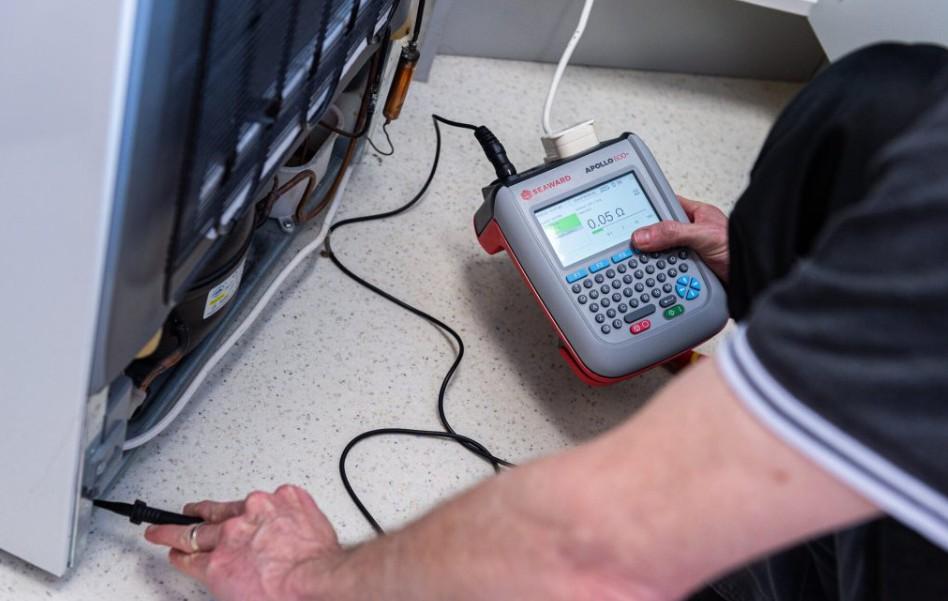
For decades, business owners, facilities managers, and safety officers across the UK operated under a persistent misunderstanding: the belief that every electrical appliance in a commercial property must undergo Portable Appliance Testing (PAT) every 12 months. This "blanket annual testing" rule was treated as standard practice, leading many organizations to spend thousands of pounds sticking green "passed" stickers on low-risk equipment like desktop monitors, computer chargers, and office lamps.
However, the Health and Safety Executive (HSE) has repeatedly clarified that rigid, calendar-driven intervals are neither mandated by law nor considered best practice. Instead, the UK regulatory framework mandates a risk-based approach. This strategy focuses time, effort, and financial resources where electrical hazards are genuinely present. Shifting from a fixed annual interval schedule to a tailored risk-assessment methodology satisfies statutory compliance while optimizing operational efficiency.
The Fallacy of the Annual PAT Testing Myth
The belief in mandatory 12-month testing stems from a misinterpretation of statutory obligations. The primary governing regulation for electrical safety in British workplaces is the Electricity at Work Regulations 1989 (EAWR), specifically Regulation 4(2). This regulation states that all electrical systems and equipment must be maintained in a safe condition to prevent danger. Noticeably absent from the legislation is any reference to explicit testing timeframes, annual checks, or even the phrase "PAT testing."
When the HSE updated its guidance document HSG107 (Maintaining portable electrical equipment), it actively challenged the routine annual testing culture. The authority emphasized that sticking to arbitrary 12-month intervals often leads to over-testing low-risk items in benign environments while under-inspecting high-risk equipment operating in harsh conditions. Compliance is not measured by the number of stickers applied to cables, but by whether an employer can prove they have established a systematic, proportionate method for controlling electrical risks.
Understanding Risk-Based Inspection vs. Fixed Intervals
A risk-based approach requires assessing electrical items according to their operational environment, usage intensity, and construction classification. Instead of treating a heavy-duty angle grinder on a construction site the same as an IT server rack in a climate-controlled office, duty holders must evaluate risk factors across several distinct dimensions:
-
Equipment Type and Class: Class I equipment (which relies on earth bonding for safety, such as kettles, microwaves, and extension leads) carries a significantly higher risk than double-insulated Class II appliances (such as phone chargers or laptops).
-
Operational Environment: Equipment used in wet, dirty, outdoor, or cramped industrial environments degrades exponentially faster than equipment sitting undisturbed under an office desk.
-
Mobility and User Handling: Handheld power tools that are frequently flexed, coiled, moved, or unplugged experience physical wear and strain, whereas stationary appliances (like a kitchen refrigerator) remain unmolested for years.
-
User Competency and Vulnerability: Equipment made available to the general public or inexperienced contractors requires tighter inspection regimes than items used exclusively by trained personnel.
By combining these factors, organizations construct a realistic matrix. A laptop charger in a standard office might only require a formal visual inspection every 2 to 4 years, whereas a portable pressure washer in a commercial car wash might require user checks before every shift and full testing every 3 months.
Practical Steps to Implement a Risk-Based PAT Strategy
Transitioning your workplace from an interval-driven system to a proportionate risk-based regime involves a structured, step-by-step workflow:
1. Conduct an Equipment Inventory
Create a comprehensive register of all portable and transportable electrical assets within your facilities. Record details such as serial numbers, equipment categories (Class I or Class II), locations, and primary users.
2. Establish Equipment Risk Tiers
Categorize items into clear risk bands (Low, Medium, High). For example:
-
Low Risk: Stationary IT equipment, desktop monitors, double-insulated lamps.
-
Medium Risk: Floor polishers, kitchen kettles, extension leads used in office areas, vacuum cleaners.
-
High Risk: Handheld power tools, site transformers, portable heaters, appliances used outdoors or in commercial kitchens.
3. Implement User Checks and Visual Inspections
The HSE estimates that up to 95% of electrical faults can be detected through thorough visual inspection alone before an appliance is even plugged into a PAT tester. Implement a culture where employees perform quick user checks (looking for frayed cables, damaged plugs, or loose outer casings) prior to operation.
4. Invest in In-House Competency
To legally defend your risk-based inspection frequencies, the person determining those schedules and performing the checks must be competent. Completing an accredited pat testing course equips facility teams with the practical knowledge needed to assess risk levels, perform formal visual inspections, use testing instruments accurately, and correctly interpret test readings.
Documenting Compliance & Maintaining Auditable Records
A common fear among facility managers is that departing from 12-month testing leaves them exposed during an HSE inspection or insurance claim. To maintain full legal defensibility, your risk-based PAT strategy must be clearly documented.
You should maintain an active safety log containing:
-
A written risk assessment policy outlining why specific testing frequencies were chosen for different equipment tiers.
-
An asset register detailing inspection dates, test results (pass/fail values), and assigned re-test schedules.
-
A clear procedure for immediately taking failed or damaged equipment out of service, tagging it out, and routing it for repair or disposal.
If an inspector asks why a desktop computer has not undergone a combined inspection and test in 18 months, presenting a written risk assessment justifying a 3-year frequency for Class II office IT equipment demonstrates far greater statutory compliance than an arbitrary stack of annual test certificates.
Conclusion: Balancing Safety, Efficiency, and Cost
Moving away from outdated, blanket annual PAT testing allows UK businesses to build a smarter, safer workplace environment. By adopting the HSE’s recommended risk-based approach, organizations reduce unnecessary maintenance overheads and prevent operational downtime caused by over-testing low-risk assets. More importantly, it focuses critical attention where it belongs: on high-risk, heavily used equipment that presents a real hazard to human life. Investing time into proper risk evaluation, staff competency, and tailored record-keeping ensures full compliance with the Electricity at Work Regulations while modernizing your safety practices.

 English
 French
 Spanish
 Portuguese
 Deutsch
 Turkish
 Dutch
Dutch
 Italiano
 Russian
 Romaian
 Portuguese (Brazil)
 Greek
Greek
