
Heavy Duty Tow: What Happens When a Big Truck Breaks Down?
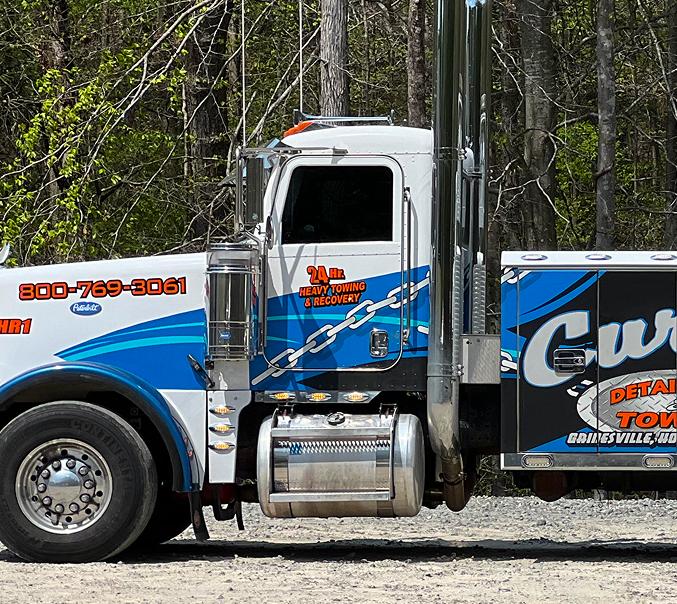
There is a big difference between a car breaking down and a commercial truck coming to a stop on the side of the road.
If a car needs a tow, a typical roadside towing company may be able to handle the job. But when the vehicle is a loaded semi-truck, tractor-trailer, bus, RV, or large piece of equipment, the situation calls for something different.
A Heavy Duty Tow service is built around these larger and more demanding situations.
For truck drivers and businesses, knowing what to expect can make a roadside emergency feel a little less overwhelming. More importantly, knowing whom to call can save valuable time when a commercial vehicle is no longer able to move.
A Commercial Truck Breakdown Can Disrupt More Than a Trip
Truck drivers often work around tight delivery schedules. A mechanical problem can quickly create a chain reaction.
A truck sitting on the shoulder may delay a delivery. Cargo may remain at the location longer than planned. A fleet manager may need to rearrange another route. If the vehicle is stopped in a busy area, it can also create problems for passing traffic.
The first step is not to panic. The driver should focus on safety and then contact a towing provider equipped to handle the vehicle.
That distinction matters. A towing company that primarily handles passenger cars may not have the equipment needed for a heavy commercial truck.
What Vehicles Can Require Heavy-Duty Towing?
Heavy-duty towing is commonly associated with large commercial and industrial vehicles.
Depending on the towing company, services may be available for:
- Semi-trucks
- Tractor-trailers
- Commercial buses
- RVs and motorhomes
- Heavy trailers
- Construction equipment
- Industrial machinery
- Disabled fleet vehicles
The size of the vehicle is only part of the equation. Its condition and location also affect what kind of towing or recovery equipment is needed.
A truck sitting upright on a paved road may be relatively straightforward to tow. A loaded truck stuck in a ditch is a different situation altogether.
Mechanical Problems Are Not the Only Reason for a Tow
Engine trouble is an obvious reason to call a towing company, but commercial vehicles can need recovery for many other reasons.
Transmission problems, overheating, electrical faults, tire failures, and other mechanical issues can leave a truck unable to continue.
Road conditions can also cause trouble. A heavy vehicle may lose traction on muddy ground or slide into a roadside ditch. Construction equipment can become stuck at a jobsite after rain or while working on uneven terrain.
Accidents create another set of challenges. A tractor-trailer may jackknife, roll over, or end up partially off the roadway. The vehicle may need to be repositioned before it can be transported.
Each situation calls for careful consideration of the vehicle's weight, position, and surroundings.
Why Specialized Towing Equipment Matters
Large trucks are not simply oversized cars. Their weight and dimensions require equipment designed specifically for heavy recovery work.
A Heavy Duty Tow truck provides the capacity needed for many commercial vehicle towing situations. The equipment used must match the vehicle being recovered.
Cargo is another important factor. A loaded tractor-trailer can weigh considerably more than an empty one. The towing provider needs useful information about the vehicle before sending equipment to the scene.
The operator also needs to account for the roadway, traffic, terrain, and the position of the disabled vehicle.
This is why heavy-duty towing involves both specialized equipment and experience.
What Information Should You Give the Towing Company?
When you call for help, try to provide as much accurate information as possible.
Start with your location. Give the highway or road name, direction of travel, nearby exit, mile marker, or recognizable landmark.
Then describe the vehicle. Is it a semi-truck, tractor-trailer, bus, RV, or piece of construction equipment? Is it loaded? Do you know its approximate weight?
Next, explain the problem.
If the truck has mechanical trouble, describe what happened. If it is stuck, tell the operator whether it is in mud, a ditch, or another difficult location. If there has been an accident, explain the vehicle's position.
These details help the towing provider determine what type of equipment may be appropriate.
Staying Safe While Waiting for a Tow
A disabled commercial truck can be a hazard, especially on a busy highway.
If the vehicle can be moved safely, get it away from active traffic as much as possible. Turn on hazard lights and use warning equipment when appropriate.
Be cautious when leaving the vehicle. Passing traffic can be unpredictable, particularly near large trucks stopped on the shoulder.
Once you are in a safe position, wait for the towing crew and follow their instructions when they arrive.
Avoid attempting to pull a heavy commercial vehicle with equipment that is not designed for the load. A recovery that appears simple can become dangerous without the right tools.
Heavy-Duty Recovery After an Accident
Accident recovery often requires more planning than a normal tow.
A large truck can block several lanes or rest at an unusual angle after a collision. An overturned tractor-trailer may require specialized recovery procedures before it can be moved.
The towing operator needs to assess the scene and determine how to handle the vehicle. Depending on the circumstances, winching or repositioning may be necessary.
Cargo can also affect the process. If the trailer is loaded, the total weight and condition of the cargo may need to be considered during recovery.
Professional heavy-duty towing helps address these situations with equipment intended for large vehicles.
Businesses Can Prepare Before Trouble Happens
For fleet owners and commercial businesses, having a towing plan is worth considering.
Keep a heavy-duty towing company's contact details where drivers can access them quickly. Make sure drivers know the basic information about their vehicles and understand what details to provide during a roadside call.
It can also help to know which types of vehicles a towing provider handles and what areas it serves.
This preparation can save time when a truck unexpectedly becomes disabled.
Heavy-Duty Towing for North Georgia
Curt's Heavy Towing provides heavy-duty towing and recovery services for commercial vehicles and equipment in North Georgia.
The company handles semi-trucks, buses, RVs, construction equipment, accident recovery, winch-outs, and load transfers. Its services are intended for situations where ordinary towing equipment may not be suitable for the size or condition of the vehicle.
For drivers and businesses dealing with a disabled commercial vehicle, having a dependable towing provider available can make a stressful roadside situation easier to manage.
When the Roadside Plan Changes
A truck breakdown can happen without warning. What matters is how you respond once it does.
Prioritize safety, provide accurate information to the towing company, and make sure the recovery is handled with equipment suited to the vehicle.
A Heavy Duty Tow service is designed for large commercial vehicles and challenging recovery situations. Whether a truck has mechanical trouble, is stuck in difficult terrain, or has been involved in an accident, professional towing can provide the equipment and experience needed to move it.
For North Georgia drivers and businesses, having a trusted towing contact ready before trouble occurs can make a major difference when a large vehicle suddenly stops moving.

 English
 Arabic
 French
 Spanish
 Portuguese
 Deutsch
 Dutch
Dutch
 Italiano
 Russian
 Romaian
 Portuguese (Brazil)
 Greek
Greek
