
How Non-Woven Materials Affect Nicotine Pouch Performance
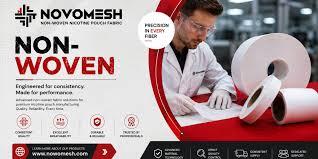
The fabric material of a nicotine pouch can affect its performance during manufacturing and use. While this may seem like a minor aspect of the finished product, its physical properties can impact liquid control, comfort, strength, sealability, and consistency.
Nicotine pouch manufacturers can use knowledge of how non-woven materials work to make better choices when building or improving their products.
Understanding Non-Woven Materials Used in Nicotine Pouches
Non-woven materials are fabrics created by bonding or interlocking fibers, rather than weaving them together in a traditional manner. Several methods can produce non-woven fabrics with specific properties like softness, strength, absorbency, and porosity.
Non-woven fabrics have various applications based on these properties. When used in nicotine pouches, the material must function consistently while matching the demands of both production and usage.
Certain applications may require changing parts of the fabric’s structure. Fiber thickness, weight, material type, and manufacturing method all play a role in a material’s performance.
Considerations for Nicotine Pouch Material Selection
Many different material properties must work together to make a successful nicotine pouch. While it is a small product, the material needs to hold its contents while providing the desired amount of interaction with moisture.
If a material isn’t suited to the application, production issues like inconsistency, poor handling, and/or inefficiency can arise. On the flip side, using the right non-woven material can help promote consistency throughout manufacturing.
User experience can also be impacted by different material characteristics. This is why most manufacturers consider multiple attributes before choosing a fabric for their nicotine pouches.
Absorption Rate
One attribute to consider is absorption. While nicotine pouches need to interact with saliva, the material cannot let too much moisture compromise the physical pouch.
If a fabric has the right absorption qualities, it can help distribute moisture evenly within the pouch. This allows for consistent interactions throughout the product.
Keep in mind that absorption should be considered along with other attributes. Strength, porosity, thickness, and content compatibility are just some of the other factors to consider when selecting a nicotine pouch material.
Strength and Durability
Nicotine pouches also need to be durable enough to survive manufacturing, packaging, transportation, and use. Strength is another material specification that manufacturers should look at before making a final decision.
If a non-woven material has suitable strength levels, it can help the pouch retain its shape and resist damage. This is especially important for consistency when manufacturing products in high volumes.
Thickness and fiber structure can play a role in material strength. However, thicker does not always mean better. Manufacturers should choose specifications that work well with their existing equipment, pouch design, and production speeds.
Sealability
Material choice also plays a role in how nicotine pouches are sealed during production. The fabric should pair well with the method used to seal each pouch.
Some production systems may use heat sealing, while others could use ultrasonic sealing. A material’s composition and structure can affect how well it works with these processes.
Using the right fabric can allow manufacturers to achieve more consistent seals and minimize production issues. Testing different materials with sealers before manufacturing large quantities is usually recommended.
Thickness and Basis Weight
Fabric thickness and basis weight can affect various factors relating to nicotine pouch performance. A thinner nicotine pouch may feel different than one with a heavier or thicker fabric.
Manufacturers can typically select whatever thickness works best for their production line and pouch design. There is no one-size-fits-all thickness specification for all nicotine pouches.
Finding the correct thickness requires looking at the overall product. Ideally, the material provides enough strength and handling properties without wasting resources.
Consistency and Production
Last but not least, consistency is critical for manufacturers producing nicotine pouches at scale. Small variances in fabric properties can impact the manufacturing process and final product.
That is why most manufacturers look for consistent specs like width, thickness, weight, fiber composition, and physical properties. Keeping these specs consistent can make controlling the production process much easier.
Establishing repeatable production conditions becomes possible with reliable material specifications. This is even more crucial when manufacturing more products.
Food-Grade Materials
Another factor of material suitability is whether the material is actually suitable for its use. Food-grade materials can be crucial for nicotine pouches that will have contact with substances meant for oral consumption.
Reviewing available documentation can help manufacturers determine whether a particular fabric meets their needs. The specific requirements will vary from business to business.
Working with a non-woven material supplier that offers detailed technical data makes selecting a material easier. NoWoMesh can provide that information for our customers.
Selecting the Correct Material for Your Nicotine Pouches
When reviewing non-woven materials for nicotine pouch manufacturing, consider several factors to identify what may work best for your business.
Review the material’s physical properties, like thickness, weight, strength, and softness. Porosity and absorption can also matter based on the type of nicotine pouch you are making.
Next, evaluate how well the material works with your equipment and sealing method. Just because a material works well for one production line doesn’t mean it will work for another.
Finally, look at the consistency of the material, customization options, technical support, and compliance documentation provided by the material supplier. Considering every facet of working with a material supplier can help you make a more informed decision.
How Material Selection Can Help Manufacturing
Providing that the rest of the production process is optimized, the right fabric can allow manufacturers to run smoother operations. Predictable material specs allow manufacturers to create repeatable production conditions.
Things like consistent sealing, controlled material dimensions, and suitable strength can improve production conditions.
However, material selection should always be considered alongside the rest of the production process. Equipment settings, pouch design, moisture content, and production speeds can also make or break a production run.
Conclusion
Nicotine pouch materials can affect many factors during manufacturing and usage. While absorption, strength, thickness, and sealability are important on their own, manufacturers should consider how multiple properties may impact each other.
Here at NoWoMesh, we offer multiple non-woven material solutions that can be customized to your nicotine pouch specifications. Reviewing the technical properties of our materials can allow you to find the best fabric for your production requirements.
FAQs
What is non-woven material used for in nicotine pouches?
Non-woven material can be used as the pouch fabric that holds the contents while providing enough interaction with moisture. Properties like strength, absorption, and sealability can be affected by the material choice.
Why is absorption important?
Absorption can affect how moisture is transferred through the pouch material. The right absorption levels can create a more consistent user experience.
Will fabric thickness impact my nicotine pouches?
Yes, fabric thickness can impact strength levels, flexibility, and how the pouch handles. Find a thickness that works with your design and production speeds.
What kinds of sealing methods are compatible with non-woven materials?
Both heat sealing and ultrasonic sealing can be used to seal nicotine pouches. However, not every material is compatible with every sealing method.
How do I choose a material for my nicotine pouches?
You should consider fiber composition, thickness, weight, strength levels, absorption rates, porosity, sealing method, consistency, and documentation when selecting a material.

 English
 Arabic
 French
 Portuguese
 Deutsch
 Turkish
 Dutch
Dutch
 Italiano
 Russian
 Romaian
 Portuguese (Brazil)
 Greek
Greek
