
The Scale of Operations and the Asia-Pacific Warehouse Automation Market Magnitude
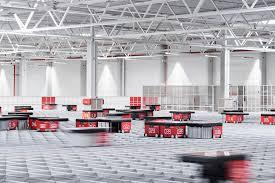
The sheer volume of goods moving through Asian ports and warehouses necessitates a scale of automation that is often difficult to comprehend. The Asia-Pacific Warehouse Automation Market Size is a testament to the region's role as the "world's factory" and its burgeoning status as a primary consumer hub. In group discussions, logistics analysts often point out that the massive scale of projects in countries like China—where a single warehouse might span several million square feet—requires a different approach to systems architecture. These "mega-warehouses" utilize thousands of robots in synchronized movement, creating a level of complexity that demands advanced swarm intelligence and robust network infrastructure. The sheer magnitude of these operations drives down the unit cost of automation, making it more accessible to the broader market and setting a global benchmark for what is possible in modern logistics.
However, the size of the market also brings challenges related to standardization and global competition. As the market expands, there is a constant push and pull between proprietary systems and open-source standards. Discussion groups often debate the long-term implications of being "locked in" to a single vendor's ecosystem versus the potential inefficiencies of a multi-vendor approach. The scale of the Asia-Pacific market gives it the power to dictate global standards; if the major players in this region adopt a specific communication protocol or safety standard, the rest of the world is likely to follow. This makes the region a critical battlefield for international technology providers who are vying for a piece of this massive and fast-growing pie. The outcome of these competitive dynamics will shape the future of the global supply chain for decades to come, as the efficiencies gained here ripple out to every corner of the global economy.
How does "swarm intelligence" work in a warehouse? It is a type of AI where individual robots communicate with each other to navigate and share tasks without needing a single central controller for every move.
Why do mega-warehouses drive down costs? High-volume purchasing of robots and standardized software across a massive facility creates economies of scale that lower the cost per individual unit or transaction.
➤➤➤Explore MRFR’s Related Ongoing Coverage In Semiconductor Industry:
High Speed Fiber Optic Sensor Market
Hosted Video Surveillance Market
Hybrid Wireless Fire Detection System Market
Inductive And Lvdt Sensor Market
Inductors Cores And Bead Market

 English
 Arabic
 French
 Spanish
 Portuguese
 Deutsch
 Turkish
 Dutch
Dutch
 Italiano
 Romaian
 Portuguese (Brazil)
 Greek
Greek