
Safety and Standards: Establishing a Regulatory Framework for the Global Autonomous Mobile Robot Market to Ensure Human-Robot Synergy
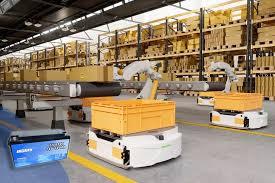
As the presence of autonomous machines grows in shared spaces, the Autonomous Mobile Robot Market is facing a critical need for standardized safety protocols and regulatory frameworks. Unlike industrial robots that operate behind cages, AMRs are designed to work in close proximity to humans, which introduces unique safety challenges. International standards organizations are working to define the requirements for "collaborative" robots, focusing on aspects like collision avoidance, emergency stop functions, and data security. Companies are closely following the Autonomous Mobile Robot Market Size to gauge how regulatory changes might impact their expansion into new territories. Ensuring that these machines can predictably interact with humans and other vehicles is essential for maintaining public trust and preventing accidents. This involves not only the physical safety features of the robots but also the cyber-security measures needed to prevent unauthorized access to the robot's control systems, which could pose a significant risk in sensitive environments like hospitals or warehouses.
The development of these standards is a collaborative effort between manufacturers, insurers, and government bodies. For manufacturers, adhering to recognized standards is a competitive advantage, as it simplifies the certification process for international sales and reduces liability risks. For end-users, these standards provide peace of mind that the technology they are deploying is safe and reliable. As the robots become more autonomous—moving from basic obstacle avoidance to complex decision-making—the regulatory landscape will need to evolve accordingly. This includes addressing the "ethical" programming of robots, such as how they should prioritize safety in split-second scenarios. Furthermore, as 5G and edge computing become more prevalent, the regulations will also need to cover how data is transmitted and stored to ensure privacy. The goal is to create a predictable environment where humans and robots can coexist productively, with clear rules that foster innovation while prioritizing the well-being of the workforce and the general public in an increasingly automated world.
Are there specific international safety standards for AMRs? Yes, standards like ISO 3691-4 and ANSI/RIA R15.08 provide specific safety requirements for the design and integration of industrial mobile robots.
How do robots handle cybersecurity threats? Modern AMRs use encrypted communication channels, secure boot processes, and regular software patches to protect against hacking and unauthorized remote control.
➤➤➤Explore MRFR’s Related Ongoing Coverage In Semiconductor Industry:
Inertial Systems Land Based Applications Market
Inertial Systems Transportation Market
Insurance Bpo Services Industry Market
Integrated Quantum Optical Circuit Market
Intellectual Property Fraud Market

 English
 Arabic
 French
 Spanish
 Deutsch
 Turkish
 Dutch
Dutch
 Italiano
 Russian
 Romaian
 Portuguese (Brazil)
 Greek
Greek