
Why Construction & Infrastructure Companies in India Can't Afford to Ignore SEO in 2026
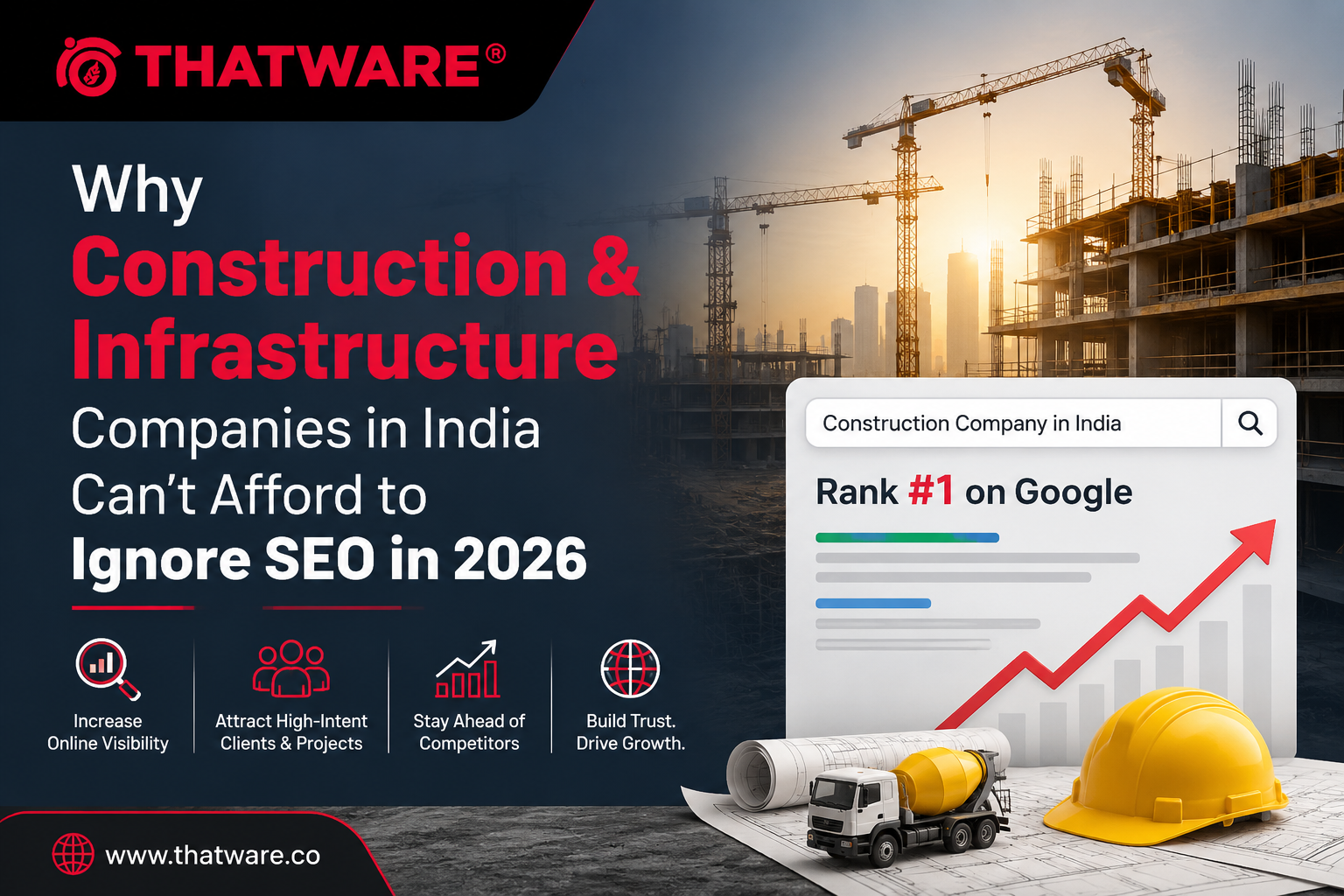
India's construction sites are busier than ever — but a growing share of the decisions that fill those sites now start on a screen, not a phone call. A procurement officer shortlisting EPC contractors, a developer scouting a structural consultant, an NRI investor comparing builders — all of them are Googling first. Firms like Thatware LLP have built their SEO approach specifically around this shift, treating search visibility as part of the sales pipeline rather than a branding exercise. If your company isn't visible in that moment, you're not even in the conversation — which is exactly why Construction & Infrastructure SEO has become a pipeline requirement, not a marketing add-on, in 2026.
India's Construction Boom Is Also a Digital Battleground
The numbers explain why competition for visibility has intensified. India's construction market was valued at roughly $685 billion in 2025 and is on track to grow at a compound annual rate of nearly 6.9% through the next decade, while the infrastructure segment specifically is expected to expand around 8% a year through 2031, according to Mordor Intelligence's industry research. Government capital expenditure is a major driver of that growth — the FY2026-27 union budget allocated over ₹12 trillion toward capital projects, fueling a wave of new highway, metro, energy, and industrial-corridor tenders.
More contractors chasing the same pool of projects means more websites competing for the same searches. And buyers aren't waiting for a sales call to start evaluating: research on B2B purchasing behavior consistently shows the majority of a buyer's journey happens before they ever contact a vendor, with search engines cited as one of the most common starting points. A company invisible in that early research phase is often eliminated before it gets the chance to pitch.
What Makes Construction & Infrastructure SEO Different
Generic SEO advice doesn't map cleanly onto this sector. A few things set it apart:
-
Long, multi-stakeholder buying cycles — a single tender or project can involve engineers, finance teams, and compliance officers, each searching for different proof points.
-
Heavy, document-based websites — tender PDFs, project galleries, and technical specs create crawl and indexing challenges most SEO checklists don't address.
-
Regional fragmentation — a firm bidding in Maharashtra needs different local signals than one bidding in Tamil Nadu or Telangana.
-
Trust-first content needs — certifications, safety records, and completed-project evidence matter more here than in most B2C categories.
Core Elements of a Working SEO Strategy for This Sector
1. Technical SEO foundations
Before content or links matter, the site has to be crawlable and fast. That means clean site architecture, schema markup for projects and certifications, and page-speed fixes on media-heavy pages — the kind of technical SEO audit work that construction sites tend to neglect the longest because the site "already exists" and nobody revisits the backend.
2. Local SEO for multi-region operations
For firms operating across several states or cities, Google Business Profile optimization, city-specific landing pages, and location-tagged project write-ups do more for lead quality than broad national keywords ever will.
3. Authority-building content
Detailed case studies, whitepapers on regulatory compliance, and project retrospectives outperform generic "our services" pages because they answer the specific questions a procurement or engineering audience is actually asking.
4. Credible link building
Coverage from construction trade publications, industry directories, and government-adjacent infrastructure news sources carries more weight than volume-based backlink tactics, and it reinforces the trust signals this sector's buyers look for.
Common SEO Mistakes Construction Companies Make
-
Treating the website as a static brochure instead of an evolving asset.
-
Ignoring mobile performance, even though a growing share of research happens from job sites and mobile devices.
-
Publishing project photos without descriptive file names or alt text, losing potential image-search traffic entirely.
-
Skipping schema markup, so search engines can't tell the difference between a completed project and a service page.
-
Chasing rankings for broad terms like "construction company" instead of the specific, high-intent searches buyers actually use.
Getting This Right Takes Sector Context, Not Just SEO Skill
A generalist SEO vendor can fix broken meta tags. Getting real results in this sector means understanding how procurement officers search, what compliance documentation needs to look like online, and how to structure a multi-location site without cannibalizing rankings across regions. That's the gap firms like Thatware LLP, which works specifically with technical, AI-driven SEO for B2B and infrastructure-adjacent sectors, are built to close.
Final Thoughts
SEO in the construction and infrastructure space isn't about chasing traffic — it's about being present at the exact moment a decision-maker starts comparing vendors, often weeks before they pick up the phone. With India's infrastructure spending accelerating through 2026 and beyond, the firms that invest in technical visibility now will be the ones shortlisted later. If you're evaluating where your own site stands, a Construction & Infrastructure SEO audit is a reasonable place to start — Thatware LLP offers local SEO and technical SEO assessments that map directly onto this sector's needs.
FAQs
1. How is SEO for construction companies different from regular SEO?
It leans more heavily on technical fixes for document-heavy sites, regional/local targeting for multi-city operations, and trust-building content like certifications and case studies rather than typical consumer-focused tactics.
2. How long does it take to see results from construction industry SEO?
Most firms see meaningful movement in 4–6 months, though competitive keywords tied to large tenders or specific regions can take longer given the sector's long buying cycles.
3. Does local SEO matter if my company operates nationally?
Yes — even national firms win more qualified leads with city- or region-specific pages, since most procurement searches include a location.
4. What's the biggest technical SEO issue on construction websites?
Heavy, unoptimized project galleries and PDFs that slow load times and hurt crawlability are the most common and most overlooked issue.
5. Can SEO help with government tender visibility?
Indirectly — SEO won't win a tender, but a well-optimized site with documented project history and certifications builds the credibility that due-diligence teams check before shortlisting.
#ConstructionSEO #InfrastructureMarketingIndia #TechnicalSEO #LocalSEOIndia #B2BSEOStrategy

 English
 Arabic
 French
 Spanish
 Portuguese
 Deutsch
 Turkish
 Dutch
Dutch
 Italiano
 Russian
 Romaian
 Greek
Greek
