
Biometric System Market Drivers Supporting Adoption Across Banking, Healthcare and Government
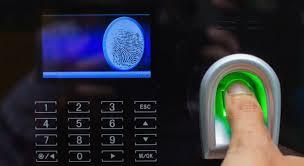
The global identity management market is undergoing rapid transformation, propelled by the relentless expansion of smart mobile devices, financial technology applications, and stringent corporate data protection protocols. End-users today expect instant, zero-friction authentication for daily activities ranging from unlocking personal smartphones to authorizing high-value electronic fund transfers. This fundamental shift in consumer behavior has compelled enterprise software architects and physical security teams to prioritize contactless biometric solutions over traditional password-based mechanisms. Fingerprint scanning, facial geometry analysis, and palm vein mapping are no longer specialized security features reserved for high-security government facilities; they have become baseline consumer expectations. To understand how these behavioral shifts translate into quantifiable multi-sector expansion, enterprise strategists analyze key financial indicators detailed in the Biometric System Market growth documentation. Understanding these dynamic expansion vectors allows security vendors and corporate decision-makers to align their product roadmaps with broader enterprise technology investments.
Beyond consumer applications, the integration of advanced biometric systems into corporate physical infrastructure is redefining perimeter control, workforce management, and compliance auditability. Organizations are actively replacing traditional physical access keycards—which can be easily lost, stolen, or shared—with non-transferable biological metrics to ensure strict compliance with internal security policies. Furthermore, modern time-and-attendance systems utilize facial and fingerprint recognition to eliminate buddy punching and streamline payroll processing accuracy in large manufacturing plants and distribution centers. However, achieving maximum system reliability requires addressing complex environment variables such as ambient lighting fluctuations, physical sensor wear, and diverse user demographics. Engineering teams are continually refining sensor sensitivity and incorporating advanced liveness detection algorithms to prevent spoofing via high-resolution photographs or 3D synthetic masks. As these technologies mature, their seamless integration into unified security ecosystems will remain a cornerstone of modern organizational risk management.
How do biometric attendance systems benefit large enterprise operations? Biometric workforce management systems eliminate time-fraud practices like "buddy punching," ensure accurate audit trails for compliance reporting, and streamline automated payroll integration by precise tracking of staff movements.
What is liveness detection, and why is it critical for biometric security? Liveness detection is an algorithmic security technique used to verify whether the submitted biometric sample originates from a living human being present at the sensor, effectively blocking presentation attacks using static photos, video playback, or 3D masks.
➤➤➤Explore MRFR’s Related Ongoing Coverage In Semiconductor Industry:
Distributed Acoustic Sensing Market
Fiber Optic Test Equipment Market
Flexible Hybrid Electronics Market
Merchant Banking Services Market

 English
 Arabic
 French
 Spanish
 Portuguese
 Deutsch
 Turkish
 Dutch
Dutch
 Russian
 Romaian
 Portuguese (Brazil)
 Greek
Greek
