
Pet Wearable Market Drivers Supporting Adoption of Smart Devices for Companion Animals
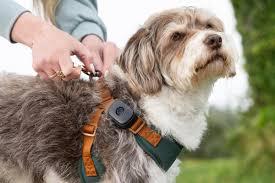
The technical capabilities of contemporary tracking devices are defined by rapid advancements in micro-electronics, sensor fusion, and edge computing architectures. Modern smart collars combine low-power accelerometers, gyroscopes, photoplethysmography sensors, and GPS receivers into compact, weather-sealed enclosures. Processing high-frequency motion data directly on the device enables precise categorization of routine behaviors, such as drinking, walking, resting, or localized scratching, without draining the battery through constant server transmissions. Machine learning models running on cloud networks analyze millions of aggregated data points to build highly accurate normal health baselines for individual animals. When subtle physical variations deviate from established baselines, the software sends automated risk notifications directly to pet owners and linked veterinary teams. Engineering teams focus heavily on antenna optimization to maintain stable network connections through dense urban concrete and thick rural foliage. Comprehensive details on technical device specs and hardware components can be explored at the Pet Wearable Market Research hub.
Battery management remains a key engineering benchmark, prompting ongoing research into kinetic power harvesting, adaptive transmission frequencies, and optimized power states. Modern devices dynamically adjust GPS refresh intervals based on whether an animal is moving rapidly outdoors or resting within range of a home Wi-Fi base station. Material selection is equally critical; hypoallergenic silicone compounds, high-impact polycarbonate shells, and corrosion-resistant metallic contacts ensure performance during intense outdoor activity. Furthermore, secure, end-to-end data encryption protects sensitive location histories and user profiles from unauthorized access, satisfying growing consumer data privacy demands. As hardware components continue to shrink, manufacturers are developing non-invasive form factors, such as ultra-light tags, embedded harness modules, and specialized equine attachments. These technical breakthroughs form the foundation for next-generation automated pet management tools.
Frequently Asked Questions
-
How does edge computing prolong the operational battery span of smart collars? By processing motion data locally on the device, the collar only transmits meaningful summary events rather than raw, energy-intensive continuous data streams.
-
Are current optical heart rate sensors accurate through thick animal fur layers? Advanced photoplethysmography arrays use targeted green or infrared wavelengths coupled with mechanical contact pressure to read pulse signals through fur.
➤➤➤Explore MRFR’s Related Ongoing Coverage In Semiconductor Industry:
Automatic Speech Recognition App Market
Automatic Tube Cleaning System Market
Automotive Sensor Camera Technologie Market
Autonomous Delivery Robots Market
Cloud Computing Banking Market
Commercial Auto Insurance Market
Digital Transformation In Bfsi Market

 English
 Arabic
 French
 Portuguese
 Deutsch
 Turkish
 Dutch
Dutch
 Italiano
 Russian
 Romaian
 Portuguese (Brazil)
 Greek
Greek
