
Gaming Laptop Market Emerging Trends in OLED Displays, High Refresh Rates and AI Integration
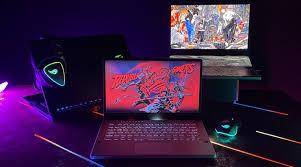
E-Sports Ecosystem Expansion and the Surging Demand for Competitive Hardware Specifications
The global rise of e-sports has fundamentally transformed competitive gaming from a niche hobby into a multi-billion-dollar mainstream industry. Professional tournaments, university-level leagues, and local gaming circuits have created a massive base of aspiring competitive players who demand high-tier hardware. In fast-paced competitive games, frame rates and latency directly influence player performance. Consequently, demand has spiked for portable hardware featuring high refresh rate screens, ultra-low response times, and robust mechanical-style keyboards. This shift has altered the product development cycles of top hardware manufacturers, compelling them to continuously update specs to match the requirements of modern competitive gaming engines.
The business implications of this e-sports expansion extend far beyond end-user consumer sales. Sponsorship deals, hardware partnerships, and branded team editions have become primary marketing vectors for major technology manufacturers. Furthermore, as live streaming on platforms like Twitch and YouTube Gaming becomes a viable career path, the need for dual-purpose setups capable of running heavy titles while simultaneously encoding live video feeds has surged. Strategic decision-makers analyzing these continuous operational shifts regularly review industry research to benchmark hardware demand curves. To review long-term industry projections and growth trajectories, examine the comprehensive Gaming Laptop Market forecast. Tracking these performance benchmarks helps businesses align product development with evolving player demands.
Frequently Asked Questions
-
Why are high refresh rate displays critical for competitive gamers?
High refresh rates (such as 144Hz, 240Hz, or higher) reduce motion blur and input lag, providing smoother visual feedback that allows players to react faster in competitive scenarios.
-
How does live streaming impact hardware requirements for modern laptops?
Streaming requires high multi-core CPU and GPU performance to handle real-time video encoding alongside game processing without dropping frames or suffering from system thermal throttling.
➤➤➤Explore MRFR’s Related Ongoing Coverage In Semiconductor Industry:
Financial Crime Fraud Management Solution Market
Foreign Exchange Service Market
Generative Ai In Insurance Market
Robotic Process Automation Market

 English
 Arabic
 French
 Spanish
 Portuguese
 Deutsch
 Turkish
 Dutch
Dutch
 Italiano
 Romaian
 Portuguese (Brazil)
 Greek
Greek
