
FSG Networks: MPO Connector Solutions for Data Center Connectivity
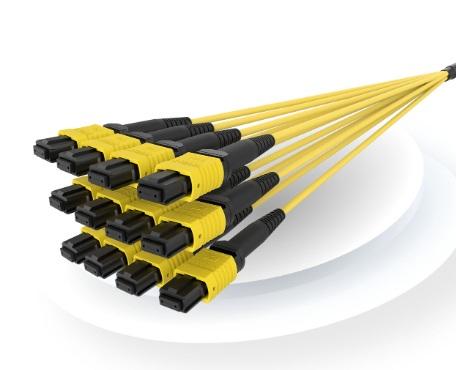
Modern data centers demand unprecedented speed, density, and reliability. As data traffic surges due to cloud computing, artificial intelligence, and 5G deployment, traditional fiber cabling systems often struggle to keep pace. Network architects and IT managers continuously seek infrastructure solutions that maximize space efficiency while minimizing deployment time. FSG Networks addresses these critical challenges head-on through advanced optical connectivity solutions designed for high-performance enterprise environments.
At the heart of high-density infrastructure lies the mpo connector, a multi-fiber push-on interface that revolutionizes how enterprise networks handle massive bandwidth. By accommodating up to 24 fibers within a single compact ferrule, these connectors drastically reduce the physical footprint required in server racks and patch panels. FSG Networks delivers precision-engineered solutions that integrate these advanced multi-fiber interfaces seamlessly, ensuring low insertion loss and superior return loss for mission-critical operations.
The Evolution of Data Center Cabling
The landscape of data center architecture has shifted dramatically over the past decade. Legacy LC and SC connectors, while reliable for lower-density applications, quickly create cable congestion when scaled to support 40G, 100G, 400G, and emerging 800G Ethernet speeds. Managing thousands of individual fiber strands becomes a logistical nightmare for technicians, increasing the risk of human error during maintenance or upgrades.
Multi-fiber push-on technology emerged to solve this exact bottleneck. By consolidating multiple optical paths into a single housing, data centers can deploy trunk cables that snap into place securely and efficiently. This transition not only streamlines physical cable management but also optimizes airflow within server cabinets, preventing thermal hotspots and improving overall energy efficiency.
Technical Advantages of FSG Networks Solutions
Implementing robust optical infrastructure requires components engineered to strict international standards. FSG Networks focuses on delivering hardware that guarantees long-term durability and signal integrity.
-
High-Density Design: Significantly reduces the physical space needed for patching, freeing up valuable rack units for active networking gear.
-
Rapid Deployment: Pre-terminated trunk cables equipped with precision connectors cut installation and migration times by up to 70 percent.
-
Polarity Management: Simplifies complex parallel optics configurations, ensuring correct transmit-to-receive alignment across switches and transceivers.
-
Durability and Reliability: Utilizes high-grade composite housings and precision guide pins to withstand repeated mating cycles without performance degradation.
-
Future-Proof Scalability: Supports smooth transitions from lower speeds to 100G/400G architectures without requiring a complete infrastructure overhaul.
Streamlining Installation and Maintenance
Time is money in enterprise IT operations. Traditional fiber splicing and field termination are labor-intensive, requiring specialized technical skills and expensive testing equipment. Furthermore, every manual splice introduces potential points of failure and signal attenuation.
Pre-terminated solutions from FSG Networks eliminate these variables. Factory-terminated assemblies arrive ready for plug-and-play deployment, tested rigorously for optical performance before leaving the manufacturing floor. When maintenance or expansion is required, push-pull mechanisms allow technicians to release and connect high-density arrays in tight spaces where traditional latches are inaccessible. This ease of use directly translates to reduced operational expenditures and maximized network uptime.
Applications Across Modern Enterprise Networks
High-performance connectivity is no longer restricted to massive hyperscale cloud facilities. Enterprise data centers, colocation providers, and high-performance computing (HPC) environments all benefit from structured fiber pathways.
Enterprise Data Centers
Internal server-to-switch connections require low latency and high throughput. Multi-fiber trunking allows IT teams to interconnect core switches and distribution frames cleanly, supporting virtualization and heavy database traffic without physical bottlenecks.
Colocation Facilities
Colocation providers manage diverse client workloads in shared spaces. Standardized, high-density patching solutions allow facility operators to provision new cross-connects rapidly, ensuring strict Service Level Agreements (SLAs) are met consistently.
Telecommunications and 5G Hubs
Edge computing and mobile switching centers process massive volumes of data instantaneously. Reliable optical channeling ensures that backhaul networks remain stable, handling surges in user demand effortlessly.
Best Practices for Fiber Infrastructure Management
Maximizing the lifespan and efficiency of an optical network requires adherence to industry best practices during installation and routine upkeep.
-
Strict End-Face Inspection: Always inspect connector end-faces with a fiber microscope before mating to prevent microscopic dust particles from causing permanent damage.
-
Proper Cleaning Protocols: Use lint-free optical wipes and approved cleaning solvents specifically formulated for fiber optics.
-
Adhere to Bend Radius Limits: Never exceed the minimum bend radius specified by the manufacturer to prevent signal leakage or fiber fracture.
-
Maintain Accurate Documentation: Label all trunk cables and cassette modules clearly to simplify troubleshooting and future capacity expansions.
Conclusion: Empowering the Future of Connectivity
As network demands continue to evolve, the underlying physical layer must remain adaptable, resilient, and efficient. FSG Networks provides the essential hardware foundation required to support next-generation workloads. By combining high-density engineering with rigorous quality control, these solutions empower organizations to scale their operations confidently, ensuring seamless communication across every node in the enterprise ecosystem.
What specific bandwidth or speed requirements is your current data center infrastructure trying to support?

 English
 Arabic
 French
 Spanish
 Portuguese
 Deutsch
 Dutch
Dutch
 Italiano
 Russian
 Romaian
 Portuguese (Brazil)
 Greek
Greek
