
How Mechanization Is Transforming Agricultural Practices Across Africa
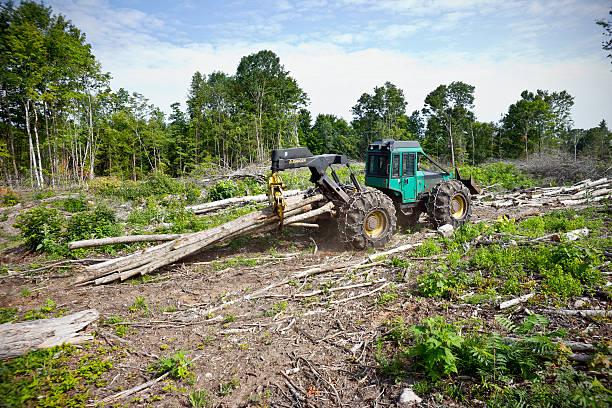
Agricultural machinery is becoming an increasingly important component of efforts to improve farming operations across Africa. Equipment used for land preparation, planting, crop maintenance, harvesting, processing, and transportation can reduce labor-intensive tasks and help farmers complete time-sensitive activities more efficiently. At the same time, machinery adoption requires consideration of affordability, technical skills, maintenance networks, infrastructure, environmental conditions, and the specific needs of different farming systems.
According to a Vyansa Intelligence report, Africa's agricultural machinery industry was valued at USD 4.3 billion in 2025 and is projected to reach USD 7.19 billion by 2032, representing a CAGR of 7.62% from 2026 to 2032. These figures provide a quantitative perspective on an industry shaped by mechanization, agricultural productivity requirements, equipment accessibility, technology adoption, farm structures, and the development of supporting service networks.
Mechanization Can Reduce Labor-Intensive Farm Work
Agricultural activities across Africa include a wide range of production systems, from smallholder farms to larger commercial operations. Many activities remain physically demanding, particularly where farmers have limited access to powered machinery.
The Food and Agriculture Organization explains that sustainable mechanization can reduce hard labor, address labor shortages, improve the timeliness of agricultural operations, and support more efficient resource use. It covers technologies ranging from basic tools to sophisticated motorized equipment.
The industry analysis of agricultural machinery therefore involves more than tractors and large equipment. It also includes smaller machines and technologies that can address specific operational needs.
Equipment Needs Differ Across Farming Systems
Africa does not have a single agricultural production model. Farming conditions, land structures, crops, terrain, infrastructure, and access to services can differ substantially between countries and regions.
This diversity affects machinery requirements. Large equipment may be appropriate for some commercial farms, while compact and scale-appropriate machinery may be more suitable for smaller agricultural operations.
The appropriate machine also depends on the task. Equipment used for land preparation may have different requirements from machinery used for planting, harvesting, irrigation, or post-harvest processing.
According to this agricultural machinery industry report, equipment selection therefore needs to reflect the practical conditions of individual farming systems.
Timely Operations Are Important for Agricultural Productivity
Agricultural activities often need to be completed within specific periods. Delays in land preparation, planting, harvesting, or post-harvest processing can affect the organization of farm operations.
FAO's work on agricultural mechanization identifies improved timeliness of agricultural operations as one of the benefits associated with sustainable mechanization.
Machinery can help farmers complete labor-intensive activities within available operating windows. However, the effectiveness of mechanization depends on access to suitable equipment, operators, maintenance services, and financing.
Access to Machinery Remains a Key Consideration
Owning agricultural machinery is not always practical for every farmer. Equipment acquisition, maintenance, storage, and operator requirements can make individual ownership challenging for some agricultural businesses.
Machinery-hire and service-provider models can provide another route to mechanization. Farmers can access equipment when required without necessarily owning the machinery themselves.
Recent FAO work on Africa's mechanization challenges emphasizes the importance of machinery services, appropriate equipment, financing, repair services, and local supply chains.
This creates opportunities for specialized machinery-service businesses that connect equipment with farmers who need it.
Maintenance and Spare Parts Are Essential
Agricultural machinery needs dependable maintenance support to remain operational. Equipment can be exposed to dust, heat, moisture, uneven terrain, crop residue, and long operating periods, depending on its application.
Access to spare parts and repair services can therefore be as important as the machinery itself.
FAO's recent work on sustainable mechanization in Africa highlights the need for local supply chains covering maintenance, spare parts, and repair services. It also emphasizes that equipment without appropriate support systems can remain underutilized.
The latest industry analysis therefore needs to consider the wider ecosystem surrounding machinery ownership and use.
Operator Training Supports Better Equipment Use
Modern agricultural equipment can include electronic controls, hydraulic systems, sensors, digital interfaces, and automated functions. Operators need suitable technical knowledge to use these systems effectively.
Training can also reduce the risk of improper equipment use and help operators recognize maintenance requirements.
FAO has highlighted skills development, technical training, and local service ecosystems as important components of sustainable mechanization in Africa.
This means the development of agricultural machinery is closely connected with the development of human capabilities.
Digital Technologies Are Expanding Agricultural Mechanization
Agricultural machinery is increasingly connected with digital tools. GPS-based systems, mobile applications, equipment-monitoring technologies, digital platforms, and automated functions can support more informed agricultural operations.
FAO research on agricultural digitalization and automation identifies opportunities for digital solutions to address labor bottlenecks, improve productivity and efficiency, and strengthen environmental sustainability. At the same time, access, investment costs, digital skills, and enabling conditions can influence adoption.
For Africa, digital technologies can therefore complement physical machinery rather than operate separately from it.
Smallholder Agriculture Requires Scale-Appropriate Solutions
Smallholder farmers represent an important part of agricultural production across many African countries. Their machinery requirements can differ from those of large commercial farms.
Smaller tractors, planters, threshers, harvesters, irrigation equipment, and post-harvest machinery can provide alternatives to large-scale equipment where landholdings or operating conditions make conventional machinery unsuitable.
FAO's recent work on Africa emphasizes the importance of compact, context-appropriate machinery and service-based access for smallholder systems.
The market research report can therefore be considered within a broader transition toward machinery solutions designed for different scales of agricultural production.
Sustainable Mechanization Requires More Than Machines
Mechanization can provide operational benefits, but sustainable adoption requires consideration of economic, environmental, social, and technical factors.
FAO defines sustainable mechanization as an approach that considers technological, economic, social, environmental, and cultural factors. It can cover activities throughout the agricultural value chain, including land preparation, planting, crop management, harvesting, storage preparation, processing, transportation, and marketing.
This broader perspective is important for Africa, where machinery strategies need to address both productivity requirements and local operating realities.
Policy Supports the Development of Mechanization
Agricultural mechanization has increasingly become part of broader policy discussions across Africa. The African Union Commission's Framework for Sustainable Agricultural Mechanization in Africa provides countries with priority elements for developing national strategies and focuses on mechanization across agri-food chains.
The framework reflects the importance of coordinated approaches involving governments, farmers, equipment suppliers, service providers, financial institutions, research organizations, and other stakeholders.
Such coordination can help create conditions in which machinery is supported by appropriate policies, infrastructure, skills, and service networks.
Local Supply Chains Can Strengthen Equipment Access
Agricultural machinery depends on more than manufacturing and distribution. Local availability of spare parts, technicians, training, financing, and repair facilities can influence whether equipment remains useful over its working life.
FAO's recent Africa-focused mechanization work emphasizes local manufacturing and service ecosystems as part of a sustainable approach to machinery adoption.
Developing these supporting systems can make agricultural machinery more practical for farmers and agricultural enterprises.
Agriculture Is Moving Toward More Connected Operations
The role of machinery is expanding as agriculture incorporates more digital technologies and service-based models. Equipment can increasingly become part of a connected production system rather than functioning as an isolated mechanical asset.
Digital platforms can facilitate machinery hiring, while monitoring systems can provide information about equipment operation. At the same time, technical service networks can support maintenance and repair.
The agricultural machinery industry report reflects an industry that is increasingly connected with technology, financing, skills, infrastructure, and agricultural services.
Understanding Africa's Agricultural Machinery Landscape
Africa's agricultural machinery sector is developing within a complex agricultural environment where mechanization needs differ across countries, crops, farm structures, and production systems.
The industry analysis provides a quantitative perspective on the sector, while research from FAO and the African Union highlights the importance of appropriate equipment, financing, technical skills, maintenance networks, digital technologies, and sustainable mechanization strategies.
The future role of agricultural machinery is therefore not simply about increasing the number of machines in use. Effective mechanization depends on whether equipment is appropriate for local conditions and supported by the services, infrastructure, knowledge, and policies required for long-term use.
As African agriculture continues to evolve, machinery can contribute to more efficient and timely operations when combined with practical technology choices, skilled operators, reliable support systems, and sustainable agricultural practices.

 English
 French
 Spanish
 Portuguese
 Deutsch
 Turkish
 Dutch
Dutch
 Italiano
 Russian
 Romaian
 Portuguese (Brazil)
 Greek
Greek
