
How Advanced Memory Architectures Are Transforming the SSD Controller Market
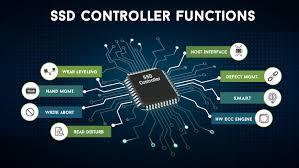
Modern enterprise data center environments face continuous pressure to increase read and write throughput while maintaining stringent operational latency targets. Transitioning server arrays from older bus interfaces to modern PCIe Gen 5 and emerging PCIe Gen 6 standards requires radical updates to memory controller silicon. These high-speed connectivity interfaces allow storage platforms to bypass system bottlenecks, enabling massive data streaming directly to enterprise processors and graphics accelerators. Maintaining signal integrity at ultra-high transfer speeds, however, creates non-trivial challenges for hardware designers. Analyzing these hardware transition dynamics requires reviewing the SSD Controller Market Forecast. Without upgraded controller architecture capable of managing fast packet serialization and deserialization, high-speed storage buses remain underutilized.
Beyond raw bus speeds, modern multi-core controllers must manage non-volatile memory host controller interface pipelines to ensure low-latency performance across concurrent compute threads. Hardware designers implement dedicated hardware engines to handle command decoding, packet parsing, and physical queue management without burdening the primary processing cores. This shift allows enterprise storage nodes to process millions of input/output operations per second while maintaining predictable performance curves under heavy queue depths. As hyper-scaler architectures shift toward composable disaggregated infrastructure, storage silicon designs will remain central to maintaining predictable system latency and maximize total storage efficiency.
Frequently Asked Questions
Why is the shift to newer PCIe bus standards crucial for solid-state storage systems?
Newer PCIe bus generations double available bandwidth per lane, allowing controllers to support higher throughput requirements for intensive applications like artificial intelligence training, real-time analytics, and large database operations.
How do high-speed interface controllers maintain data integrity across host connections?
Controllers integrate dedicated hardware serialization-deserialization components, forward error correction algorithms, and dynamic link equalization protocols to clear high-frequency signal noise and prevent transmission packet loss.
➤➤➤Explore MRFR’s Related Ongoing Coverage In Semiconductor Industry:
Asia-Pacific Warehouse Automation Market
Piezoelectric Materials Market
Extended Reality Xr Hardware Market

 English
 Arabic
 French
 Spanish
 Portuguese
 Deutsch
 Turkish
 Dutch
 Italiano
 Russian
 Romaian
 Greek
