
Gold Refinery Services: Understanding Smelting, Refining, Minting and Bullion Trading
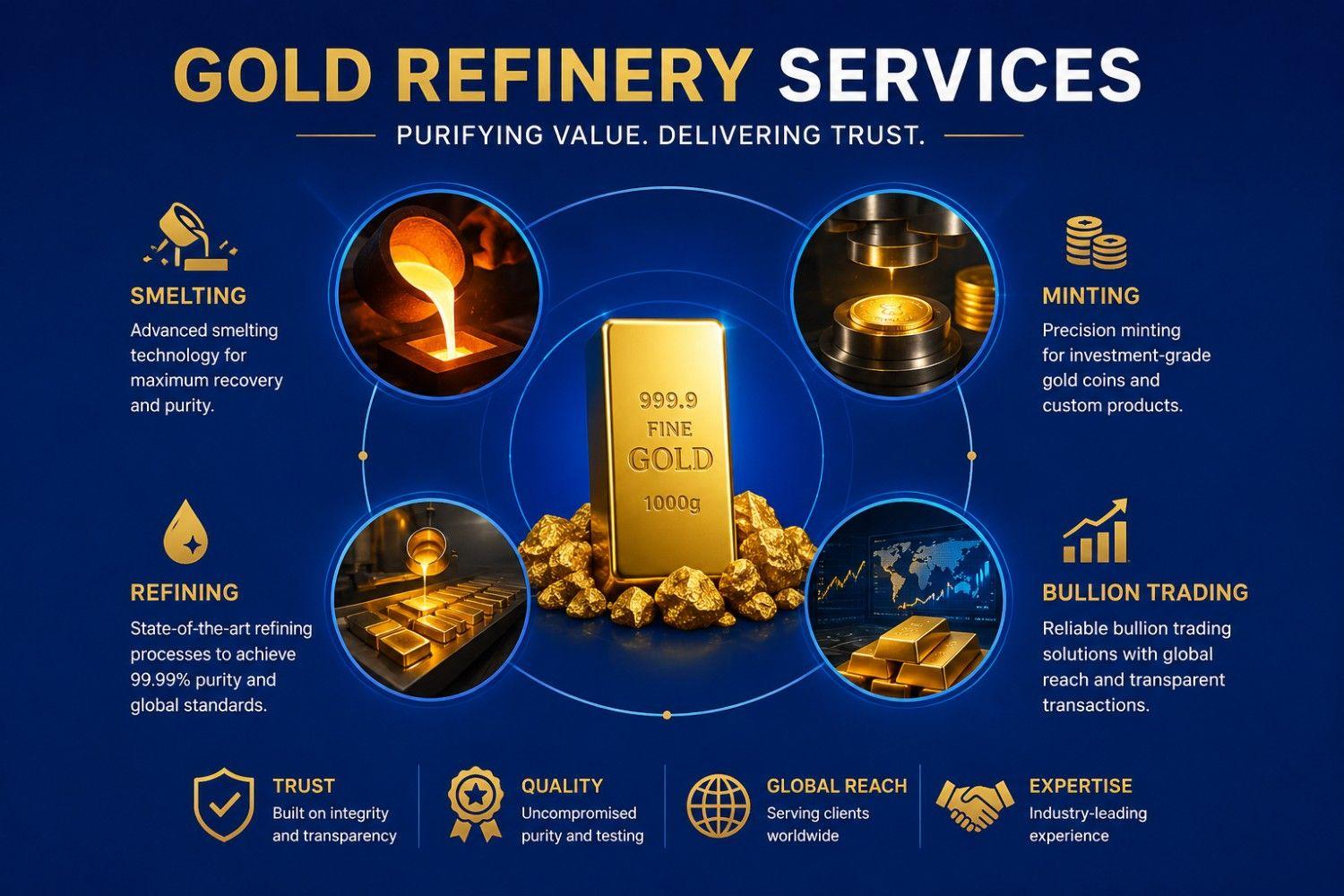
Gold has a long journey before it becomes a refined bar, coin, or bullion product. From raw material processing to purity testing and final distribution, every stage plays an important role in maintaining the quality and value of physical gold. Gold Refinery Services are a key part of this ecosystem because they help transform gold-bearing materials into refined metal suitable for manufacturing, minting, and bullion markets.
Understanding how gold moves through the physical value chain can help businesses, investors, and industry professionals make more informed decisions about gold quality, processing, and sourcing.
What Are Gold Refinery Services?
Gold Refinery Services involve specialized processes used to recover, purify, test, and prepare gold for further use. Depending on the material being processed, a refinery may handle mined gold, recycled gold, doré bars, scrap, or other gold-bearing materials.
The objective is to separate gold from unwanted metals and impurities while accurately determining its purity and weight. The refined material can then move into applications such as bullion production, minting, manufacturing, or trading.
A professional refinery typically combines metallurgical expertise, controlled processing, quality testing, and documented procedures to maintain consistency throughout the refining cycle.
How Does Gold Refining Work?
Gold refining generally involves several stages, although the exact process can vary according to the feed material and required output.
1. Gold Smelting
Smelting is an important early stage in many gold-processing operations. Gold-bearing material is heated to a high temperature so that metals can be melted and separated according to their physical and chemical properties.
The resulting material may be cast into an intermediate form, such as a doré bar, before undergoing further purification.
2. Gold Refining
The refining stage focuses on removing impurities and increasing the purity of the gold. Refineries use specialized metallurgical techniques and controlled processes according to the type and composition of the material.
Purity is then verified through appropriate testing methods. Accurate testing is essential because gold value depends heavily on factors such as fineness, weight, and market standards.
3. Gold Minting
After refining, gold may be converted into standardized products through minting. This can include coins, rounds, medals, or other precision products.
Minting requires careful control of dimensions, weight, design, and finishing. High-quality production helps ensure that the final product meets its intended specifications.
4. Bullion Trading
Refined gold can ultimately enter the bullion market. Bullion trading involves the buying and selling of standardized precious-metal products based on factors such as weight, purity, market price, and applicable commercial terms.
A well-developed gold value chain connects refining and processing capabilities with established bullion markets.
Why Are Gold Refinery Services Important?
The importance of Gold Refinery Services extends beyond simply producing refined metal. Refineries contribute to the wider physical gold ecosystem by supporting quality control, material recovery, purity assessment, and product standardization.
For businesses working with physical gold, understanding the refinery process can help when evaluating suppliers, processing partners, bullion products, and sourcing practices.
Responsible operations are also important. Businesses should consider factors such as traceability, responsible sourcing policies, compliance requirements, testing procedures, and documentation when selecting a gold-processing or refining partner.
What Should You Look for in a Gold Refinery?
When evaluating Gold Refinery Services, consider several factors:
-
Experience in gold processing and precious metals
-
Transparent testing and weighing procedures
-
Appropriate refining and smelting capabilities
-
Quality control throughout the processing cycle
-
Clear documentation and reporting
-
Responsible sourcing practices
-
Ability to support bullion or minting requirements
-
Understanding of applicable industry and regulatory requirements
These factors can help businesses distinguish between basic gold processing and professional refinery operations.
Frequently Asked Questions About Gold Refinery Services
What are Gold Refinery Services used for?
Gold Refinery Services are used to process and purify gold-bearing materials, assess their purity and weight, and prepare refined gold for applications such as bullion, minting, manufacturing, and trading.
What is the difference between gold smelting and refining?
Gold smelting primarily involves heating and melting gold-bearing materials to facilitate processing and separation. Gold refining focuses on removing impurities and producing gold with a higher and controlled level of purity.
Why is gold purity testing important?
Purity testing helps determine the actual gold content of a material or product. Accurate purity and weight information are important for valuation, quality control, manufacturing, and bullion transactions.
Can refined gold be used for minting?
Yes. Refined gold can be processed into suitable forms for minting coins, rounds, medals, and other products, provided it meets the required specifications and production standards.
How are Gold Refinery Services connected to bullion trading?
Refining converts processed gold into standardized forms that can enter the bullion market. Purity, weight, documentation, and product specifications are important factors in bullion transactions.
Conclusion
Gold Refinery Services form an essential link between raw gold materials and the finished physical gold products used across global markets. Smelting helps process gold-bearing materials, refining improves purity, minting creates standardized products, and bullion trading connects refined gold with commercial markets.
For anyone researching the physical gold industry, understanding this complete value chain provides a clearer picture of how gold moves from processing to market. A strong focus on quality, responsible sourcing, accurate testing, transparency, and professional expertise can help build greater confidence across the gold ecosystem.

 English
 Arabic
 French
 Spanish
 Portuguese
 Deutsch
 Turkish
 Dutch
Dutch
 Russian
 Romaian
 Portuguese (Brazil)
 Greek
Greek
