
AI Transformation Strategies That Help Businesses Scale Faster Without Increasing Operational Complexity
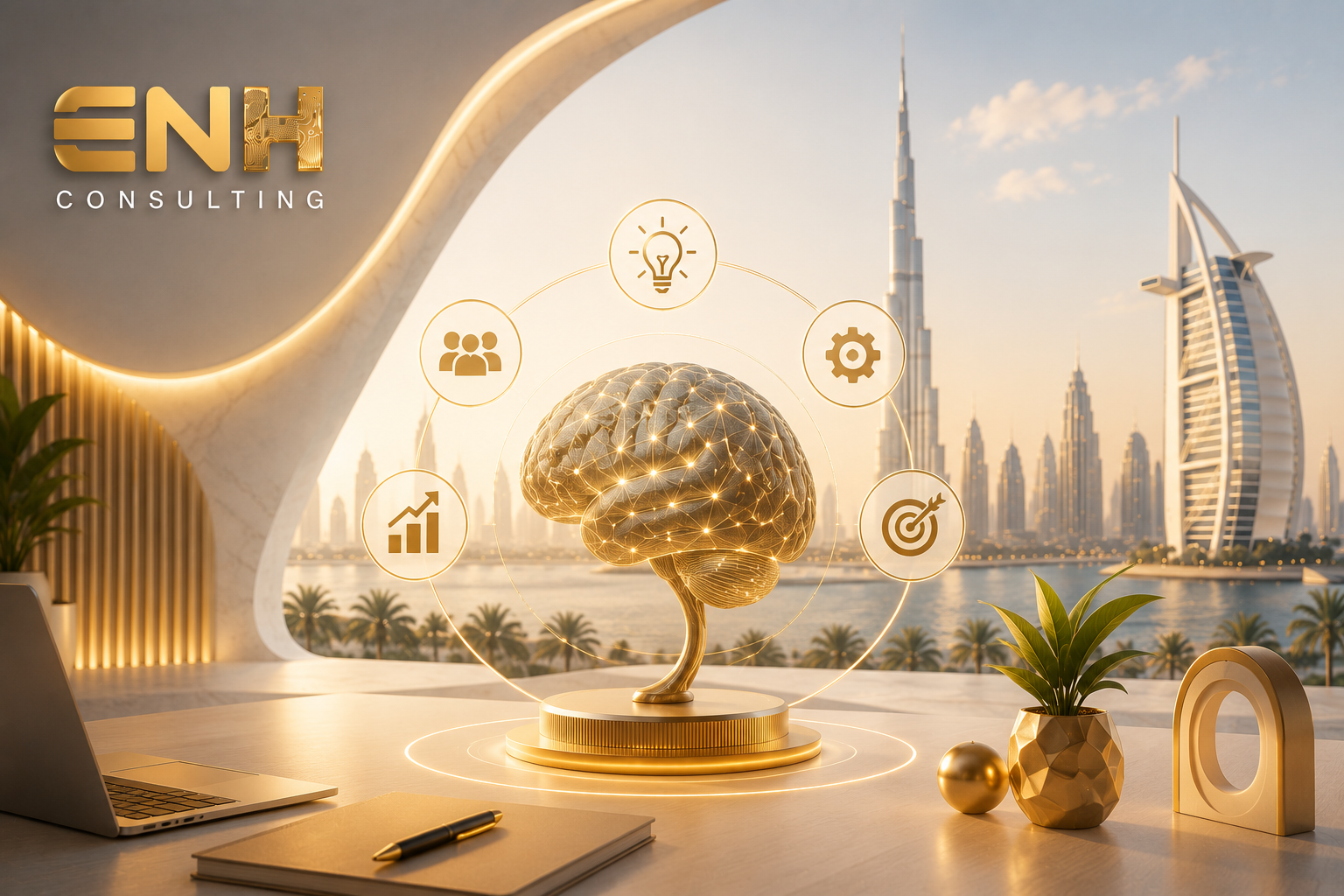
Business growth often brings an unexpected challenge: the more a company expands, the more complicated its operations become. More customers create more support requests. More sales create more administrative work. More employees require more coordination. Additional markets bring new data, systems, suppliers, and compliance requirements.
Artificial Intelligence can help businesses scale without allowing operational complexity to grow at the same pace.
When implemented strategically, AI can automate repetitive processes, improve decision-making, connect fragmented systems, predict demand, and give employees intelligent tools that increase productivity.
However, simply adding AI tools to an existing technology environment can actually make operations more complicated. Businesses need a structured transformation strategy that focuses on simplifying workflows rather than adding another layer of technology.
What Is AI Transformation?
AI transformation is the process of integrating Artificial Intelligence into business operations, decision-making, customer experiences, and organizational workflows to create measurable improvements.
It goes beyond deploying individual AI applications.
A successful AI transformation may involve:
-
Process redesign
-
Intelligent automation
-
Data integration
-
AI-powered analytics
-
Enterprise application integration
-
Employee enablement
-
Governance
-
Continuous optimization
The goal is to create a more intelligent operating model rather than simply increase the number of technologies a company uses.
Why Business Growth Creates Operational Complexity
Scaling businesses often experience several problems simultaneously.
More Manual Work
Higher transaction volumes can increase administrative workloads.
More Data
Businesses collect information from increasingly diverse sources.
More Systems
Different departments may adopt separate software platforms.
More Employees
Larger teams require additional coordination and management.
More Customers
Customer service and communication requirements increase.
More Decisions
Leadership must evaluate more variables when making strategic decisions.
Without process improvement, these factors can slow growth.
AI can help businesses handle increasing complexity by automating suitable activities and improving visibility across operations.
Start With Business Goals, Not AI Tools
One of the biggest mistakes businesses make is selecting AI technology before identifying the problem they want to solve.
Instead of asking:
"What AI tool should we implement?"
Leaders should ask:
-
Where are our biggest operational bottlenecks?
-
Which processes consume the most time?
-
Where are employees performing repetitive work?
-
Which decisions require better forecasting?
-
Where are customers experiencing friction?
This business-first approach helps organizations avoid unnecessary technology investments.
For companies aligning AI initiatives with broader growth objectives, ENH Consulting Business Solutions can help connect business strategy, process improvement, and AI opportunities.
Simplify Processes Before Automating Them
Automation does not automatically make a process better.
If an inefficient process is automated without redesigning it, the organization may simply perform the same inefficient process faster.
Businesses should first identify:
-
Unnecessary steps
-
Duplicate approvals
-
Manual data entry
-
Repeated tasks
-
Bottlenecks
-
Unclear responsibilities
Then AI and automation can be applied to the redesigned workflow.
This principle is essential for reducing complexity while scaling.
Prioritize High-Impact AI Use Cases
Businesses do not need to transform everything simultaneously.
A better strategy is to identify use cases that combine:
High business value + manageable complexity + measurable outcomes
Examples include:
-
Customer-service automation
-
Sales forecasting
-
Invoice processing
-
Lead qualification
-
Demand forecasting
-
Document processing
-
Internal knowledge management
Starting with focused projects allows organizations to prove value before expanding AI adoption.
Use AI to Automate Repetitive Work
As organizations grow, repetitive work can become a major operational burden.
AI-powered automation can support:
-
Data entry
-
Document processing
-
Email classification
-
Report generation
-
Customer queries
-
Scheduling
-
Invoice processing
-
Workflow routing
This allows employees to spend more time on activities requiring judgment, creativity, and customer interaction.
The objective is not simply to reduce headcount.
It is to increase organizational capacity.
Build a Single Source of Business Intelligence
Fragmented information can create significant complexity.
Executives may receive one set of numbers from finance, another from sales, and another from operations.
AI-powered business intelligence can help consolidate information from multiple systems.
Relevant data may come from:
-
ERP
-
CRM
-
Finance systems
-
Marketing platforms
-
Customer-service applications
-
Supply-chain systems
A connected data environment can provide leadership with a more consistent view of business performance.
Use AI for Predictive Planning
Scaling becomes easier when businesses can anticipate future demand.
AI-powered forecasting can analyze:
-
Historical sales
-
Customer behavior
-
Seasonality
-
Market conditions
-
Product demand
-
Marketing performance
This can help organizations plan:
-
Inventory
-
Workforce
-
Production
-
Budgets
-
Marketing campaigns
Better forecasting can reduce the need for reactive decisions.
AI-Powered Customer Service at Scale
Customer support can become one of the biggest operational challenges during rapid growth.
AI can help businesses handle increased demand through:
-
Intelligent chatbots
-
Automated ticket classification
-
Knowledge retrieval
-
Response suggestions
-
Customer sentiment analysis
-
Automated escalation
Routine questions can be handled automatically, while complex issues can be routed to human employees.
This creates a scalable customer-service model without sacrificing human support where it matters.
AI for Sales and Marketing Scalability
Growing businesses need to manage increasing numbers of prospects and customers.
AI can help sales and marketing teams with:
-
Lead scoring
-
Customer segmentation
-
Personalization
-
Sales forecasting
-
Content generation
-
Campaign analysis
-
Customer journey analysis
Instead of treating every prospect the same, teams can prioritize opportunities based on data-driven indicators.
This can improve productivity without requiring proportional increases in staff.
Connect AI With Existing Enterprise Systems
Adding separate AI tools for every department can create technology fragmentation.
A better strategy is to integrate AI with existing enterprise platforms.
These may include:
-
CRM
-
ERP
-
HR systems
-
Finance platforms
-
Supply-chain applications
APIs and integration layers can allow AI systems to exchange information with existing applications.
Businesses can therefore add intelligent capabilities without creating entirely separate technology environments.
ENH Consulting Technology Experts can help organizations evaluate enterprise architecture, APIs, integrations, data platforms, and infrastructure needed for scalable AI transformation.
Create Reusable AI Capabilities
Businesses should avoid building every AI project from scratch.
Reusable components can include:
-
Data pipelines
-
APIs
-
AI models
-
Security controls
-
Governance policies
-
Analytics infrastructure
-
Integration frameworks
A reusable architecture can make future AI projects faster and less expensive to implement.
This is particularly important for enterprises planning multiple AI initiatives.
Build an AI-Ready Data Foundation
AI transformation depends heavily on data quality.
Organizations should address:
-
Duplicate data
-
Inconsistent formats
-
Missing information
-
Data silos
-
Poor data governance
A strong data foundation can support multiple AI applications.
Instead of preparing data separately for every AI project, businesses can develop shared data capabilities.
This reduces duplication and technical complexity.
Establish Lightweight AI Governance
Governance is important, but excessive bureaucracy can slow transformation.
Businesses should create risk-based governance.
Low-risk applications can follow simplified approval processes.
Higher-risk applications may require:
-
Security reviews
-
Data assessments
-
Human oversight
-
Model validation
-
Monitoring
This allows employees to experiment responsibly without requiring every small AI use case to pass through a lengthy approval process.
Train Employees to Work With AI
Technology alone cannot create scalable operations.
Employees need to understand how to use AI effectively.
Training may cover:
-
AI literacy
-
Prompting
-
Data handling
-
AI-assisted workflows
-
Responsible AI
-
Role-specific applications
Employees who understand AI can identify opportunities that leadership may not see from the top down.
Create AI Champions Across Departments
Organizations can establish a network of AI champions.
These employees can:
-
Identify useful AI opportunities
-
Help colleagues adopt new workflows
-
Share feedback
-
Identify implementation problems
-
Support responsible AI usage
This decentralized approach can accelerate adoption while maintaining organizational coordination.
Measure AI Transformation Through Business Outcomes
AI transformation should not be measured by the number of AI tools deployed.
Businesses should track:
-
Processing time
-
Cost per transaction
-
Employee productivity
-
Customer response time
-
Revenue
-
Conversion rates
-
Error rates
-
Customer satisfaction
For example, if an AI workflow reduces a process from four hours to thirty minutes, the organization can quantify the productivity improvement.
Clear metrics make it easier to decide whether an AI initiative should be expanded.
Build AI Capabilities for Startups and Growing Companies
Startups have an opportunity to design scalable operations from the beginning.
Instead of building heavily manual processes and automating them later, startups can introduce intelligent workflows early.
Potential applications include:
-
Automated customer support
-
AI-assisted sales
-
Marketing automation
-
Financial workflows
-
Business analytics
-
Internal knowledge systems
ENH Consulting Startup Services can help growing businesses identify AI opportunities and build technology foundations that support expansion without unnecessary operational complexity.
Common AI Transformation Mistakes
Implementing Too Many Tools
Using multiple disconnected AI platforms can increase complexity.
Automating Poor Processes
Automation should follow process improvement, not replace it.
Ignoring Data Quality
AI cannot consistently deliver reliable results from poor data.
Focusing Only on Technology
AI transformation requires organizational and process changes as well.
Scaling Too Quickly
Businesses should validate AI solutions before expanding them across critical operations.
Ignoring Employees
People need training, communication, and support throughout the transformation.
A Practical AI Transformation Roadmap
Step 1: Define Growth Objectives
Identify where the organization needs additional capacity.
Step 2: Map Operational Processes
Identify repetitive work, bottlenecks, and unnecessary complexity.
Step 3: Assess Technology and Data
Review systems, integrations, infrastructure, and data quality.
Step 4: Prioritize AI Use Cases
Select projects based on business impact, feasibility, and scalability.
Step 5: Redesign Processes
Simplify workflows before introducing automation.
Step 6: Implement a Pilot
Test the solution in a controlled environment.
Step 7: Measure Results
Track financial, operational, employee, and customer outcomes.
Step 8: Create Reusable Infrastructure
Develop shared data, integration, security, and AI capabilities.
Step 9: Scale Successful Solutions
Expand proven applications across departments and business units.
Step 10: Continuously Optimize
Monitor performance and improve processes as business needs evolve.
Pro Tips for Scaling With AI
Businesses should:
-
Start with business objectives.
-
Simplify workflows before automating.
-
Focus on high-value use cases.
-
Build reusable technology capabilities.
-
Maintain strong data governance.
-
Integrate AI with existing systems.
-
Train employees continuously.
-
Use risk-based governance.
-
Measure ROI.
-
Scale only what has been validated.
The objective should be more business capacity without proportionally more operational complexity.
The Future of AI-Driven Business Scaling
As AI technology develops, businesses will increasingly move toward intelligent operating models.
Future organizations may combine:
AI + Automation + Data + Cloud + APIs + Enterprise Applications + Human Expertise
AI systems will increasingly monitor workflows, identify bottlenecks, predict demand, support employees, and recommend actions.
This could allow businesses to scale faster while maintaining greater operational visibility.
The key will be designing AI into the operating model rather than adding disconnected tools around existing processes.
Conclusion
AI transformation can help businesses scale faster without allowing operational complexity to grow at the same pace. By combining intelligent automation, predictive analytics, integrated enterprise systems, strong data foundations, and employee enablement, organizations can increase capacity while improving efficiency.
The most effective approach begins with business objectives rather than technology. Businesses should simplify processes, identify high-value use cases, test solutions, measure results, and then scale successful capabilities.
For companies in India, the UAE, and other fast-growing markets, this approach can turn AI from an experimental technology into a practical growth engine.
The ultimate goal is not simply to implement more AI. It is to build an organization that can grow faster, operate smarter, and remain manageable as complexity increases.

 English
 Arabic
 French
 Spanish
 Portuguese
 Turkish
 Dutch
Dutch
 Italiano
 Russian
 Romaian
 Portuguese (Brazil)
 Greek
Greek
