
Retail Point of Sale Terminals Market Insights: Digital Payments and Smart Retail Adoption
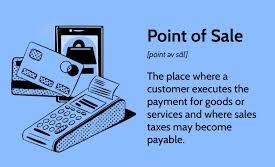
Implementing the right balance between fixed countertop checkout installations and flexible mobile payment solutions has become a core strategy for modern departmental stores and supermarkets. Fixed terminals remain the backbone of high-volume environments where physical throughput speed and heavy-duty durability are non-negotiable. These robust units are typically integrated with barcode scanners, cash drawers, customer-facing displays, and scales, making them ideal for grocery stores and large wholesale clubs. On the flip side, mobile solutions are rapidly gaining ground in apparel boutiques, specialty stores, and pop-up venues where floor space is at a premium and line-busting capabilities are essential. By empowering sales associates to process transactions directly on the shop floor, retailers can eliminate long queues, decrease cart abandonment rates, and foster more intimate, consultative sales interactions. The decision-making process for hardware acquisition involves analyzing specific store layouts, peak foot traffic patterns, and the average number of items per transaction to build a hybrid environment that maximizes operational efficiency and employee productivity.
From a technical and operational perspective, the dual management of fixed and mobile hardware presents unique challenges regarding wireless network reliability, battery longevity, and device security. Mobile units require robust enterprise-grade Wi-Fi networks and secure docking stations to ensure uninterrupted operation during peak business hours. Moreover, centralizing data from various endpoints demands a unified backend platform that prevents inventory discrepancies and mismatched sales logs. Industry experts tracking these deployment patterns often utilize comprehensive valuation metrics found in the Retail Point Of Sale Terminals Market forecast to project capital expenditure requirements over five-year cycles. This financial planning is vital as businesses must factor in the depreciation of mobile batteries and the eventual wear-and-tear of touchscreen interfaces. Striking the perfect equilibrium between these two hardware forms ensures that a retail brand remains agile enough to handle seasonal shopping spikes while maintaining a stable, predictable foundation for daily transaction processing and back-office bookkeeping.
What are the main security concerns associated with mobile payment units? Mobile units are more susceptible to physical theft, unauthorized device access, and wireless interception. To mitigate these risks, businesses employ strict end-to-end encryption, mobile device management (MDM) software to lock down configurations, and immediate data-wiping protocols if a device leaves the store perimeter.
Can small retailers effectively combine both fixed and mobile setups? Yes, many small businesses adopt a hybrid approach by using a main countertop unit for cash handling and heavy tag scanning, supplemented by a tablet-based mobile unit during high-traffic weekend hours or promotional events to prevent long customer lines.
➤➤➤Explore MRFR’s Related Ongoing Coverage In Semiconductor Industry:
Customer Experience (Cx) Consulting Services Market
Custom Software Development And Consulting Services Market
Cybersecurity Risk Assessment Consulting Services Market
Data Driven Marketing Consulting Services Market
Debt Advisory And Restructuring Services Market
Devops Consulting Services Market
Digital Identity And Access Management Services Market
Digital Transformation Consulting Services Market
Eco Friendly Construction Consulting Services Market
E Commerce And Online Business Legal Consulting Market

 Arabic
 French
 Spanish
 Portuguese
 Deutsch
 Turkish
 Dutch
Dutch
 Italiano
 Russian
 Romaian
 Portuguese (Brazil)
 Greek
Greek
