
Track Geometry Measurement System Market 2025–2035: Enhancing Accuracy in Railway Track Assessment
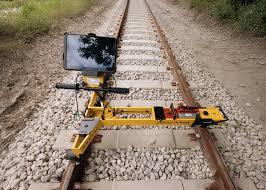
The next decade of railway engineering will be defined by the seamless convergence of physical infrastructure and digital intelligence. As governments allocate billions toward sustainable transit initiatives, the focus is squarely on maximizing the longevity and efficiency of existing assets. Predictive modeling is replacing static asset management, enabling railway engineers to forecast the exact degradation rate of tracks based on tonnage, environmental factors, and historical wear. This shift requires a robust hardware layer capable of capturing granular spatial data without disrupting busy commercial schedules. The deployment of optical track inspection systems, contact-less sensors, and real-time telemetry arrays represents a paradigm shift in how infrastructure health is monitored. By establishing a digital twin of the rail network, operators can simulate stress points and plan major capital renewals with surgical precision, ensuring minimal disruption to the millions of passengers and tons of freight moving through global corridors daily.
A clear indicator of this trajectory can be seen in the Track Geometry Measurement System Market forecast, which maps out a steady climb in adoption rates across both developed and emerging economies. The driving force behind this projected growth is the compounding cost of deferred maintenance; waiting for a component to fail is exponentially more expensive than executing targeted, data-driven interventions. As automation hardware becomes more ruggedized and cost-effective, even smaller regional transit authorities are beginning to phase out manual hand-cart inspections in favor of vehicle-mounted systems. This widespread democratization of high-tech diagnostic tools ensures a more uniform standard of safety and reliability across interconnected international networks. Ultimately, these predictive projections underscore a broader industrial consensus: the future of rail transit relies entirely on building a self-diagnostic, resilient infrastructure that protects human life while optimizing public and private financial investments.
What specific parameters do automated systems measure to evaluate track health?
Automated systems continuously calculate critical metrics including track gauge (distance between rails), crosslevel (relative elevation of the rails), alignment (lateral straightness), and longitudinal profile (vertical smoothness) to identify structural wear.
How does artificial intelligence enhance predictive forecasting in railway maintenance?
AI algorithms analyze historical geometry data alongside environmental variables to predict when and where a track section will exceed safe operational thresholds, allowing maintenance crews to schedule targeted repairs precisely when needed.
➤➤➤Explore MRFR’s Related Ongoing Coverage In Semiconductor Industry:
Chemical Packaging And Labeling Services Market
Chronic Disease Management Services Market
Climate Risk And Resilience Consulting Services Market
Cloud Security Consulting Services Market
Compensation And Benefits Consulting Services Market
Construction Management And Planning Services Market
Consulting, Legal, And Management Services Market

 English
 Arabic
 French
 Spanish
 Portuguese
 Deutsch
 Turkish
 Dutch
Dutch
 Italiano
 Russian
 Portuguese (Brazil)
 Greek
Greek
