
Social Media Marketing Agency Sydney: How to Choose the Right Agency for Your Business
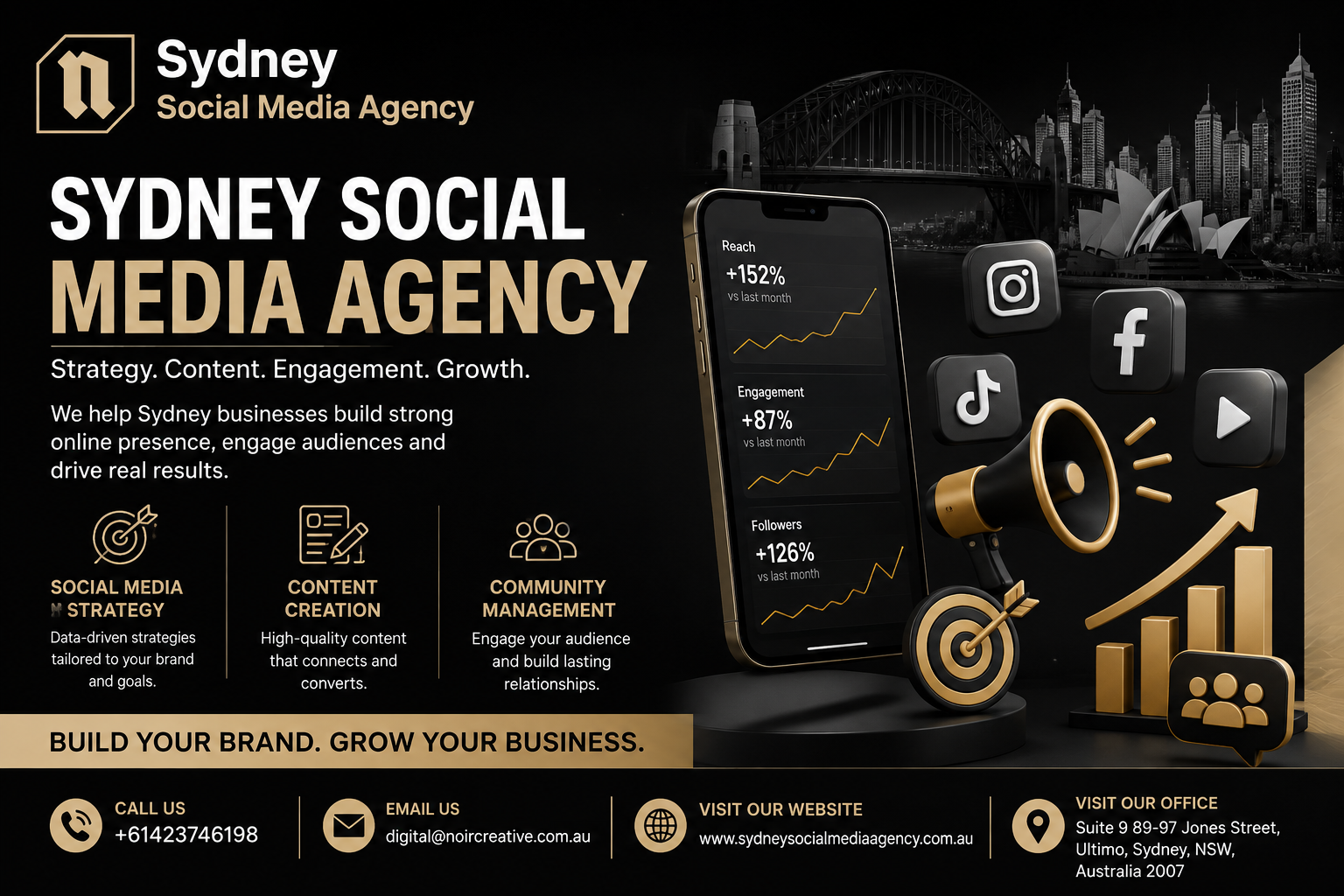
For many Australian businesses, social media has moved well beyond simply posting photos and updates. It can influence how people discover a brand, assess its credibility, engage with a business and ultimately decide whether to enquire or buy.
The challenge is that effective social media marketing requires more than keeping accounts active. Businesses need a clear strategy, quality content, audience insight, consistent execution and reliable measurement. This is where choosing the right social media marketing agency sydney can make a meaningful difference.
However, not every agency works in the same way. Some specialise in creative content, others focus heavily on paid advertising, while some provide an integrated approach covering strategy, content, community management and performance marketing.
For businesses considering external support, understanding what to look for can help avoid wasted budgets and ensure social media activity contributes to genuine business objectives.
Start With Your Business Goals
Before comparing agencies, establish what you actually want social media to achieve.
A business might be looking to:
· Increase brand awareness
· Generate qualified enquiries
· Drive website traffic
· Promote products or services
· Build an engaged community
· Improve customer communication
· Support recruitment
· Increase online sales
These goals require different strategies.
For example, a local professional service provider may prioritise lead generation and reputation, while an ecommerce business may focus on product discovery, remarketing and conversions. A hospitality business could place greater emphasis on visual content, local engagement and customer reviews.
An agency should therefore begin by understanding your business rather than immediately presenting a standard package.
What Should a Good Social Media Agency Provide?
A professional social media agency sydney should offer more than a calendar of scheduled posts. While content publishing remains important, effective social media management usually combines several disciplines.
Strategy and Audience Research
A strong strategy starts with understanding the target audience, competitors, industry positioning and customer journey.
The agency should be able to explain which platforms are appropriate and why. Being active on every major platform is not necessarily beneficial. A business may achieve better results by concentrating resources on two or three channels where its audience is genuinely engaged.
Content Planning and Creation
Content should have a purpose.
A balanced content strategy might include educational posts, product or service information, customer stories, behind-the-scenes content, frequently asked questions and relevant industry commentary.
Visual quality matters, but so does substance. Attractive graphics cannot compensate for content that does not answer customer questions or provide a reason to engage.
Paid Social Advertising
Organic social media and paid advertising serve different purposes.
Paid campaigns can help businesses reach carefully defined audiences, test different messages and scale campaigns when the economics make sense. However, simply increasing advertising spend does not guarantee better results.
A capable agency should monitor metrics such as cost per lead, conversion rate, return on advertising spend and audience quality rather than focusing solely on impressions or clicks.
Community Management
Social media is a two-way communication channel.
Responding to comments and messages, identifying customer concerns and participating appropriately in conversations can influence how people perceive a brand. Good community management should be professional, timely and consistent with the company's tone of voice.
Look Beyond Follower Counts
One of the easiest mistakes when comparing agencies is judging performance primarily by follower growth.
A larger audience can be useful, but followers alone do not necessarily create commercial value.
Imagine a local Sydney business gains 10,000 followers but receives very few enquiries. Another business grows by only 1,000 relevant followers but generates consistent website visits and qualified leads. The second strategy may be considerably more valuable.
Ask prospective agencies how they define success.
Useful performance indicators may include:
· Qualified leads
· Website traffic
· Engagement from relevant audiences
· Conversion rates
· Cost per acquisition
· Revenue attributed to campaigns
· Content reach and retention
· Growth in relevant audience segments
The right metrics depend on the original business objectives.
Examine Their Strategic Process
When evaluating agencies, ask how they move from research to execution.
A credible process might include an initial audit, competitor research, audience analysis, content strategy, creative development, campaign implementation and ongoing performance review.
Be cautious if an agency promises guaranteed viral content or dramatic results without first understanding your market.
Social media performance can be influenced by many factors, including competition, seasonality, offer quality, creative execution, platform changes and the strength of the website or landing page receiving traffic.
A realistic agency should acknowledge these variables.
Review Their Previous Work Carefully
Portfolios can reveal a great deal, but look beyond attractive designs.
Ask:
· Was the agency responsible for the strategy or only the creative work?
· What business objective was the campaign targeting?
· What type of audience was involved?
· How was success measured?
· Are the examples relevant to your industry or business model?
Case studies are particularly useful because they can demonstrate the reasoning behind a campaign rather than simply showing finished posts.
For example, if an agency explains how it identified an audience problem, changed the messaging, tested creative variations and improved lead quality, that provides more useful evidence than a collection of polished Instagram graphics.
Consider Communication and Reporting
Good communication is often overlooked when choosing a marketing partner.
You should know who will manage your account, how often you will receive reports and how strategic decisions will be communicated.
Monthly reports should ideally provide context rather than a collection of numbers. A useful report explains what happened, why it happened and what should happen next.
If engagement increased but enquiries fell, for instance, the agency should investigate the reason rather than simply celebrate higher engagement.
Clear communication also makes it easier for the business owner to provide timely feedback and share important information about promotions, customer questions and industry developments.
Understand Pricing Before Signing a Contract
Social media marketing costs can vary substantially depending on the scope of work.
Pricing may be influenced by the number of platforms, content volume, creative requirements, paid advertising management, community management, strategy, reporting and campaign complexity.
Instead of asking only, "How much does it cost?", ask what is included.
A lower monthly fee may not represent better value if it excludes important services or requires significant internal work from your team.
Similarly, an expensive package is not automatically superior. The important question is whether the proposed activity is proportionate to your goals and has a reasonable path towards measurable business value.
Look for Local Market Understanding
Sydney is a diverse and competitive market. Understanding local audiences can be particularly useful for businesses serving specific suburbs, industries or customer segments.
Local knowledge can influence content themes, seasonal campaigns, audience targeting, partnerships and messaging.
For example, a restaurant, trades business and professional services firm may all operate in Sydney but require completely different social strategies.
An organisation such as Sydney Social Media Agency can be considered by businesses looking for a provider with a local-market perspective, but the same evaluation principles should apply: examine its strategy, experience, communication, reporting and ability to connect social activity with business outcomes.
Questions to Ask Before Hiring an Agency
Before signing an agreement, consider asking:
1. What would you recommend for our business and why?
2. Which platforms would you prioritise?
3. How will you research our audience?
4. What content will you create?
5. Will you manage paid advertising?
6. How will leads and conversions be tracked?
7. What will our monthly reporting include?
8. Who will manage our account?
9. How often will we review strategy?
10. What do you need from our internal team?
The answers can reveal whether an agency is genuinely thinking about your business or simply selling a predefined package.
The Right Agency Should Feel Like a Strategic Partner
Choosing a marketing provider should not be based solely on the number of posts promised each month.
The stronger question is whether the agency can understand your customers, communicate your value proposition, produce useful content and continually improve its approach using meaningful performance data.
A good social media agency should be willing to challenge assumptions when necessary, explain its recommendations clearly and adapt when audience behaviour or business priorities change.
Social media is not a guaranteed shortcut to growth. It works best when integrated with the broader marketing strategy, website, sales process and customer experience.
Frequently Asked Questions
What does a social media marketing agency do?
A social media marketing agency typically develops social strategies, creates and publishes content, manages communities, runs paid campaigns and analyses performance. The exact services depend on the business's objectives and chosen platforms.
How do I choose the right agency for my business?
Start by defining your goals, then compare agencies based on relevant experience, strategic approach, communication, reporting, services and pricing. Look for evidence of measurable outcomes rather than relying solely on follower counts or visual portfolios.
Is hiring an agency better than managing social media in-house?
It depends on the business. An internal team may have strong industry knowledge, while an external agency can provide specialised skills, additional creative resources and broader platform experience. Some businesses use a hybrid approach.
How much should a business spend on social media marketing?
There is no universal figure. Costs depend on the number of platforms, content requirements, advertising budget, creative production and strategic support. Businesses should assess the expected scope and value rather than selecting an agency based solely on the lowest price.
Can Sydney Social Media Agency help with both organic and paid social media?
An agency such as Sydney Social Media Agency may provide support across organic content and paid campaigns, depending on its current service offering. Businesses should confirm exactly what is included in the proposed package before committing.
How long does it take to see results from social media marketing?
Results vary according to the business, industry, audience, offer, platform and strategy. Some paid campaigns can produce measurable activity relatively quickly, while organic audience development and brand building generally require consistent effort over a longer period. The most useful approach is to establish realistic benchmarks and monitor progress against business objectives.
Final Thoughts
Finding the right agency is ultimately about finding the right fit.
Businesses should look for a provider that combines strategic thinking, creative capability, platform knowledge, transparent reporting and an understanding of commercial objectives. Strong communication and realistic expectations are equally important.
Whether your priority is awareness, engagement, lead generation or sales, the agency should be able to explain how its work contributes to that goal.
Taking the time to compare capabilities, question assumptions and review evidence can help businesses make a more informed decision and build a social media strategy that delivers value beyond vanity metrics.

 English
 Arabic
 French
 Spanish
 Portuguese
 Deutsch
 Dutch
Dutch
 Italiano
 Russian
 Romaian
 Portuguese (Brazil)
 Greek
Greek
