
soc audit: Overlooked Healthcare Security Priority in India
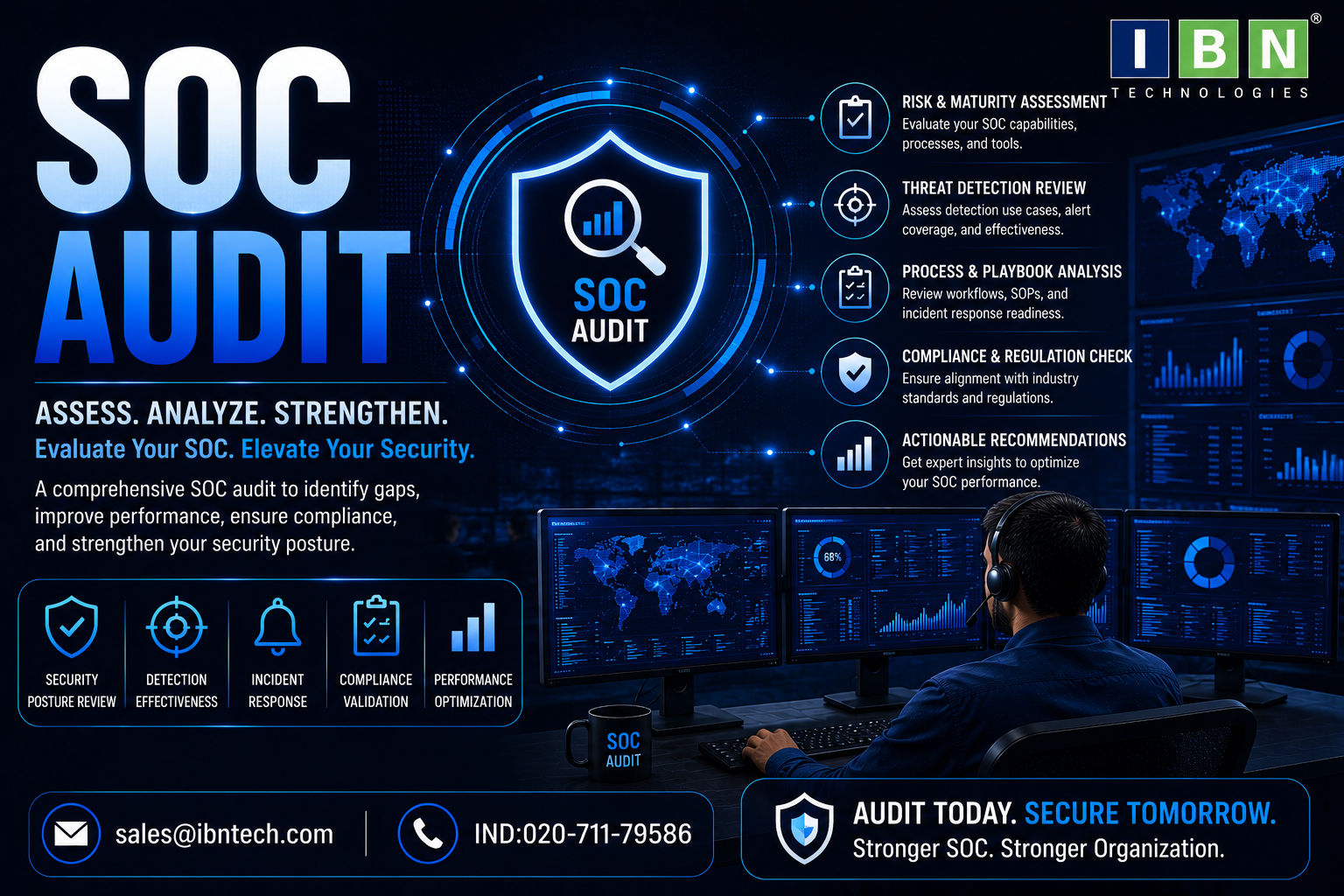
Why healthcare organisations should look beyond the audit document
Healthcare organisations operate an unusually sensitive technology environment. Patient records, diagnostic information, billing systems, connected devices, clinical applications and third-party platforms can all become part of the security perimeter.
An soc audit in this environment is not simply an exercise in collecting documents. It is an opportunity to examine whether security controls surrounding sensitive information and critical systems are properly designed, consistently operated and supported by reliable evidence.
For Indian hospitals, clinics, healthtech companies and healthcare service providers, that distinction matters. A control that exists on paper but fails during an operational disruption offers limited protection to patients or the organisation.
What a healthcare security audit should examine
A healthcare security audit should examine the controls used to protect sensitive information and critical systems, while also considering how those controls operate in everyday clinical and administrative workflows. The assessment should connect governance, access management, monitoring, incident response and technical safeguards rather than examining each in isolation.
The objective is to identify weaknesses early, establish accountable remediation and create evidence that demonstrates how security requirements are being maintained.
The healthcare security audit starts with the data
Healthcare organisations need to understand where sensitive information is created, processed, stored and transmitted. That can include electronic health records, laboratory systems, imaging platforms, patient portals, revenue-cycle applications and cloud services.
Third-party access is another important consideration. Vendors, technology partners and outsourced service providers can interact with healthcare data or systems, making access governance and supplier oversight important parts of the overall security picture.
Why the threat environment changes the equation
Healthcare cannot easily tolerate prolonged technology disruption. If an administrative platform becomes unavailable, the impact may extend beyond lost productivity. Clinical operations, appointments, communications, diagnostics and other workflows can also be affected depending on the systems involved.
Ransomware, credential compromise, phishing and exploitation of vulnerable systems therefore create both security and operational concerns. A healthcare security audit should consider how an organisation would detect suspicious activity, investigate it and respond without creating unnecessary disruption.
Legacy infrastructure can add another layer of complexity. Healthcare organisations may need to connect newer cloud or digital services with systems that were not originally designed for today's threat environment.
Why a generic compliance exercise is insufficient
Healthcare teams are often balancing patient care, operational demands and technology transformation. Asking the same internal staff to manually assemble audit evidence while maintaining daily operations can result in gaps.
A generic checklist can also miss the relationship between clinical workflows and security controls. For example, an access policy may appear appropriate until it is examined against emergency access requirements, shared workstations, rotating staff or third-party support arrangements.
The better approach is to assess controls within their operational context. That makes it easier to distinguish theoretical compliance from practical security.
Building an audit-ready healthcare environment
The first step is establishing scope. Organisations should identify critical applications, sensitive data repositories, important integrations and external services that influence the security environment.
The next step is evaluating controls around identity, access, monitoring, vulnerability management, incident response, data protection and governance. Evidence should demonstrate not only that policies exist but also that required activities are being performed consistently.
Monitoring and incident visibility
Continuous security monitoring can help organisations identify suspicious activity sooner than periodic reviews alone. Managed SOC and SIEM services can provide ongoing visibility, threat detection, incident response and audit-ready reporting.
For healthcare organisations with limited internal security capacity, this model can provide a way to extend security operations without requiring every monitoring and response function to be built internally.
Evidence should follow operations
Evidence collection works best when it is integrated into normal security processes. Access reviews, incident records, vulnerability remediation, monitoring activity and policy acknowledgements should produce traceable records as part of routine operations.
This reduces the risk of discovering shortly before an assessment that an organisation performed an important activity but cannot demonstrate when, how or by whom it was completed.
Compliance considerations for Indian healthcare
Healthcare organisations in India may need to consider multiple overlapping obligations and contractual requirements. Depending on the organisation and its operating relationships, privacy, information security and sector-specific requirements can influence the controls that need to be implemented.
IBN Technologies identifies healthcare-focused security and compliance capabilities including SOC and SIEM monitoring, VAPT and compliance support. Its healthcare offering also references standards and frameworks such as HIPAA, ISO 27001 and SOC 2, alongside Indian requirements including DPDPA.
The important point is that a SOC 2 assessment does not automatically establish compliance with every healthcare or privacy requirement. Organisations should map their controls to the specific obligations that apply to their operations and data.
A realistic healthcare scenario
Imagine a multi-location healthcare provider modernising its patient-facing technology while continuing to operate several established clinical systems. The organisation has cybersecurity tools in place, but different departments manage access and security records in different ways.
A structured assessment finds inconsistent evidence for access reviews, limited central visibility across some systems and an incident response process that has not been exercised recently. None of these findings necessarily means the organisation lacks security controls altogether; the problem is that control operation and evidence are inconsistent.
The provider can address the gaps by defining ownership, improving central monitoring, formalising review schedules and testing its response procedures. A subsequent assessment then becomes a measure of an improving security programme rather than a last-minute documentation exercise.
Practical healthcare audit-readiness checklist
Map sensitive information across clinical and business systems
Identify applications that are critical to patient and operational workflows
Review employee, administrator and third-party access
Separate privileged access from routine user permissions
Maintain evidence for periodic access reviews
Centralise relevant security logs where practical
Test incident response procedures against realistic scenarios
Track vulnerabilities through remediation rather than identification alone
Document security responsibilities for technology suppliers
Keep policies aligned with actual clinical and administrative practices
Review audit evidence before an external assessment begins
Where managed security can support the process
A healthcare organisation does not necessarily need to build every security capability internally. Managed security can provide additional monitoring and specialist operational support while internal teams retain responsibility for business decisions and governance.
IBN Technologies offers managed SOC and SIEM services with continuous monitoring, threat intelligence, incident response and compliance-ready reporting. Its broader cybersecurity portfolio also includes VAPT, MDR and vCISO services, allowing organisations to consider security operations, assessment and strategic oversight as connected functions.
The right service model depends on the organisation's size, internal expertise, technology landscape and risk profile. A useful evaluation should therefore focus on coverage, escalation procedures, reporting, integration with existing systems and how effectively the provider supports the organisation's own security responsibilities.
What healthcare leaders should ask before selecting support
Healthcare decision-makers should ask how a provider will define audit scope and how findings will be prioritised. They should also understand how evidence will be maintained between assessments rather than assuming that preparation begins only when an auditor is scheduled.
Questions around 24/7 monitoring, incident escalation, vulnerability assessment, compliance reporting and integration with existing security infrastructure can reveal whether a service is designed for operational use or primarily for documentation.
A provider should also be able to explain the boundary between its responsibilities and those retained by the healthcare organisation. Clear accountability prevents gaps when a security event or audit request requires rapid action.
Healthcare security is ultimately strongest when audit preparation reflects the way the organisation actually operates. A well-executed soc audit can help healthcare leaders identify weaknesses in patient-data protection, strengthen operational controls and create a more defensible security posture before an incident or external assessment exposes the gaps.
Contact Us:
IND- 02067680404
IBN Technologies Ltd.
E-mail: - sales@ibntech.com

 English
 Arabic
 French
 Spanish
 Portuguese
 Deutsch
 Dutch
Dutch
 Italiano
 Russian
 Romaian
 Portuguese (Brazil)
 Greek
Greek
