
Managed SOC Provider in India: A Safer Healthcare Defense
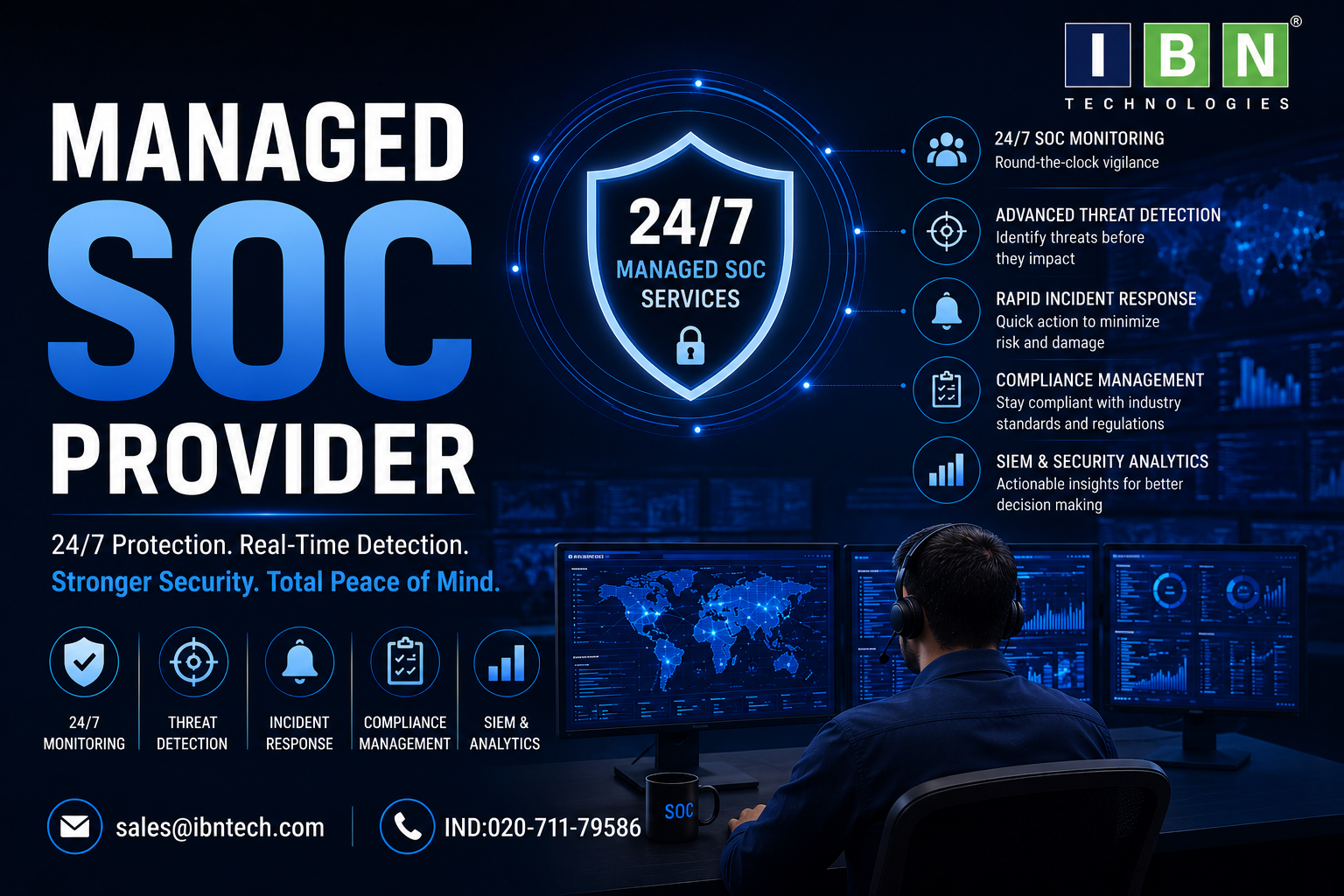
Why Healthcare Organizations Need a Managed SOC Provider in India
Healthcare organizations face a security challenge that is different from many other industries. They must protect sensitive information while keeping digital systems available for employees, clinicians, patients, laboratories, administrators, and business teams.
Hospitals, clinics, diagnostic providers, health-tech companies, and pharmaceutical organizations increasingly depend on connected applications, cloud platforms, endpoints, networks, and digital workflows.
In this environment, managed soc provider services can give healthcare organizations continuous security monitoring and specialist support without requiring them to build every security operations capability internally.
The objective is straightforward: identify suspicious activity, investigate potential threats, support timely response, and improve security visibility without disrupting essential operations.
What Is a Managed SOC Provider for Healthcare?
A managed SOC provider operates security monitoring and response capabilities on behalf of an organization.
For healthcare, this means security events from relevant infrastructure can be monitored and analyzed by a dedicated security operations function. Potential threats can be investigated and escalated according to agreed procedures.
Healthcare cybersecurity services are especially valuable when an organization has sensitive data, distributed systems, limited security staffing, or a need for continuous monitoring.
A managed SOC does not replace healthcare IT leadership. Instead, it gives internal teams additional security operations capacity.
Why Healthcare Security Requires Continuous Visibility
Healthcare systems often need to remain available even when security risks are increasing.
A hospital may rely on digital systems for patient administration, scheduling, communication, documentation, billing, and other operational functions.
A diagnostic organization may operate technology across multiple locations.
A health-tech company may support customer-facing applications that handle sensitive information.
This creates a difficult balance.
Security controls must prevent unauthorized activity while legitimate users retain appropriate access.
An incident affecting a healthcare environment can create operational disruption in addition to data-security concerns.
For healthcare leaders, cybersecurity should therefore be connected to business continuity and operational resilience.
IBN Technologies' healthcare security offering addresses data-breach risks, ransomware threats, legacy-system vulnerabilities, and healthcare compliance challenges, with 24/7 SOC and SIEM monitoring among its security capabilities.
The Growing Threat to Healthcare Technology
Healthcare organizations can be attractive targets because their environments combine valuable information with systems that often need to remain available.
Attackers may attempt to compromise user accounts, exploit vulnerable systems, deploy malicious software, steal sensitive information, or disrupt operations.
Legacy technology can add complexity.
Healthcare organizations may also have multiple locations, third-party integrations, cloud applications, connected endpoints, and users with different levels of access.
The result is a security environment where visibility matters.
A single security product may identify an individual event. A SOC can help analyze events together to determine whether they represent a larger pattern.
Why Traditional Security Approaches May Not Be Enough
Healthcare organizations may already have firewalls, endpoint protection, access controls, vulnerability-management tools, and other security technologies.
The challenge is often coordination.
A suspicious login may not appear serious by itself. An unusual endpoint connection may have a legitimate explanation. A network alert may be routine.
But several related events can create a different picture.
Security operations need to examine context.
This is difficult for an internal IT team that is already responsible for keeping healthcare systems operational.
A managed SOC can provide a dedicated layer for monitoring, analysis, investigation, and escalation.
How a Healthcare Managed SOC Works
A typical managed SOC model begins with security information from relevant systems and infrastructure.
The information is analyzed to identify suspicious activity. Security analysts can investigate events that require additional attention. More serious incidents are escalated according to established procedures.
IBN Technologies describes its SOC and SIEM capabilities around 24/7 monitoring, threat detection, threat intelligence, incident response, audit-ready reporting, and security visibility. Its healthcare security offering also includes SOC and SIEM monitoring, VAPT, vCISO services, and MDR.
For healthcare organizations, response procedures should also consider operational priorities.
A security action that is appropriate for an ordinary office endpoint may require additional coordination when it involves technology supporting an important healthcare workflow.
That is why response authority should be defined before an incident occurs.
What Should a Healthcare Managed SOC Provider Monitor?
The answer depends on the healthcare organization's technology environment.
Relevant monitoring may include endpoints, networks, cloud assets, security devices, applications, and other systems that generate useful security information.
The organization should identify its most critical systems first.
Monitoring should then be designed around meaningful risks rather than simply collecting every possible event.
A provider should be able to explain how it distinguishes routine activity from suspicious behavior and how high-priority incidents move through investigation and response.
Protecting Patient and Business Data
Healthcare organizations need to take a broader view of security.
It is not enough to know that a security device generated an alert. Security teams also need visibility into potentially unusual user and system behavior.
IBN Technologies lists user behavior analytics among its managed SOC capabilities and describes threat intelligence, threat hunting, vulnerability management, and compliance-driven monitoring as components of its security operations approach.
This can help security teams investigate potential compromised accounts, unusual activity, and other security risks.
However, healthcare organizations should also ensure that monitoring itself follows appropriate privacy and access-governance practices.
The objective is to improve security visibility while maintaining appropriate controls around sensitive information.
A Healthcare Industry Use Case
Consider a multi-location diagnostic provider operating laboratories and patient-facing services.
Its employees access centralized applications. Different teams have different privileges. Cloud systems support selected business processes, while endpoints and network infrastructure connect locations to centralized services.
The organization has security technologies but no dedicated team available to investigate every event continuously.
An unusual authentication pattern appears for an account with elevated access.
At approximately the same time, a workstation generates unexpected network activity.
Neither event may immediately confirm a security incident.
A managed SOC can examine the events together, investigate the account activity, analyze the endpoint behavior, and determine whether escalation is necessary.
If the activity is confirmed as suspicious, the SOC can support the organization's response procedures while internal teams make operational decisions.
This model gives the healthcare organization a dedicated function focused on security investigation while allowing its internal IT team to continue managing business operations.
Choosing a Provider: What Healthcare Leaders Should Evaluate
Healthcare CIOs, CISOs, CTOs, security managers, and compliance officers should evaluate a provider based on operational fit rather than marketing claims.
|
Evaluation area |
What healthcare leaders should examine |
|
Critical systems |
Are important applications, infrastructure, endpoints, and cloud assets covered? |
|
Security visibility |
What information does the SOC collect and analyze? |
|
Threat detection |
How are suspicious events identified and prioritized? |
|
Investigation |
Who investigates potentially serious activity? |
|
Incident response |
How are escalation and containment handled? |
|
User behavior |
Can unusual activity associated with accounts be identified? |
|
Threat hunting |
Does the provider proactively look for potential threats? |
|
Vulnerability management |
How are weaknesses incorporated into the security program? |
|
Reporting |
Are reports useful for technical, executive, and compliance teams? |
|
Scalability |
Can monitoring adapt as the healthcare environment expands? |
|
Integration |
Can the SOC work alongside existing security systems? |
Healthcare organizations should also establish clear service boundaries.
A provider should explain what happens when an incident is detected, what actions it can take, what requires client authorization, and how communication will occur.
Benefits of a Managed SOC for Healthcare
The right managed SOC relationship can provide several operational advantages.
Continuous monitoring helps maintain security visibility beyond normal working hours.
Specialist security expertise can supplement internal healthcare IT teams.
Threat investigation provides a structured way to examine suspicious activity.
Threat hunting can support proactive identification of potential risks.
Incident-response support helps organizations move from detection toward action.
Security reporting gives leadership a clearer view of security activity and operational risks.
Scalability allows the security function to evolve as facilities, applications, users, and digital services grow.
IBN Technologies' healthcare security offering combines SOC and SIEM with VAPT, vCISO, and MDR capabilities, providing organizations with complementary cybersecurity services.
Healthcare Security Checklist
Before selecting a managed SOC partner, healthcare organizations should establish clear expectations.
- Map critical healthcare applications and infrastructure.
- Identify systems that process sensitive information.
- Determine which security events require immediate escalation.
- Establish contacts for IT, security, compliance, and leadership.
- Define who can authorize containment actions.
- Identify systems where security actions require operational coordination.
- Confirm which logs and security events will be monitored.
- Establish procedures for investigating unusual account activity.
- Review threat-hunting capabilities.
- Clarify vulnerability-management responsibilities.
- Define executive and technical reporting requirements.
- Confirm how incident records and evidence are handled.
- Test escalation procedures before a real security incident.
- Reassess monitoring coverage as the healthcare environment changes.
This preparation helps ensure that the SOC becomes part of the organization's security operating model rather than another disconnected service.
Compliance Should Support Security Readiness
Healthcare organizations often operate under multiple security and privacy expectations.
The specific requirements depend on the organization's activities, data, geography, contracts, and applicable regulations.
IBN Technologies' published healthcare and cybersecurity services reference compliance capabilities and frameworks including HIPAA, GDPR, PCI-DSS, ISO 27001, SOC 2, and Indian regulatory considerations.
A managed SOC can support compliance by providing monitoring, security reporting, incident documentation, and operational evidence.
However, compliance responsibility remains with the healthcare organization.
The provider should therefore be treated as a security operations partner that supports compliance objectives, not as a substitute for internal governance.
Why Incident Response Planning Matters
Detection without response planning creates limited value.
Healthcare organizations should know what happens after a potentially serious incident is identified.
Who is contacted?
Who determines severity?
Who can isolate an affected system?
Who communicates with leadership?
Who manages operational continuity?
Who handles compliance-related requirements?
These questions should be answered before an incident.
A managed SOC can support the technical investigation and escalation process, but the healthcare organization must retain clear ownership of business decisions.
Building a More Resilient Healthcare Security Strategy
A strong healthcare security program needs more than individual security products.
It requires visibility, monitoring, investigation, response, vulnerability management, governance, and continuous improvement.
A managed SOC can bring these activities together while complementing the work of internal IT and security teams.
IBN Technologies provides Managed SOC and SIEM services as part of a broader cybersecurity portfolio that includes MDR, VAPT, vCISO, Microsoft Security, Cyber Security Maturity Risk Assessment, and Compliance Management and Audit Services.
For Indian healthcare organizations, the right managed soc provider should be evaluated on its ability to deliver continuous monitoring, meaningful threat detection, specialist investigation, incident-response support, proactive threat hunting, and compliance-aware reporting. The strongest partnership is one that improves security resilience while respecting the availability, privacy, and operational requirements of healthcare environments.
Contact Us:
IND- 02067680404
IBN Technologies Ltd.
E-mail: - sales@ibntech.com

 Arabic
 French
 Spanish
 Portuguese
 Deutsch
 Turkish
 Dutch
Dutch
 Italiano
 Russian
 Romaian
 Portuguese (Brazil)
 Greek
Greek
