
Gold Bullion Trading: Understanding the Physical Gold Market and Value Chain
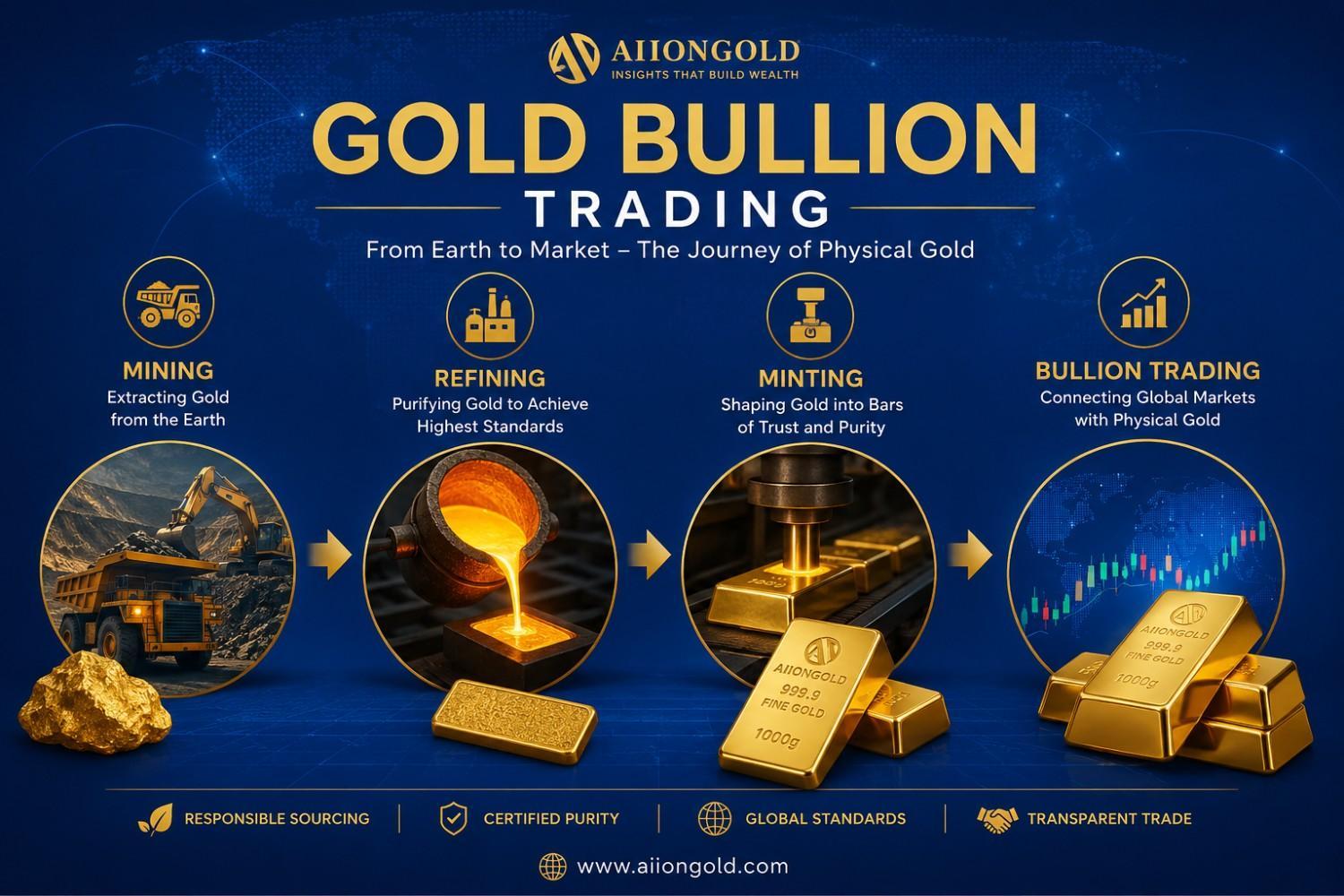
Gold has a unique place in the global commodities market because it is both a physical material and a widely traded asset. Behind every gold bar that reaches a bullion market is a complex value chain involving mining, processing, refining, quality assessment, minting, logistics, and trading.
Gold Bullion Trading refers to the buying and selling of standardized physical gold, commonly in the form of bars and other investment-grade bullion products. Understanding this market requires looking beyond the transaction itself and examining how gold moves from its original source to established markets.
AIIONGOLD focuses on the broader gold ecosystem, including mining, refining, minting, and bullion trading, helping readers understand how different stages contribute to the physical gold industry.
What Is Gold Bullion Trading?
Gold Bullion Trading is the process of buying and selling physical gold that meets defined standards for weight, purity, and quality. Unlike jewelry, bullion is primarily valued according to its gold content, market price, form, and applicable premiums.
The bullion market includes producers, refiners, traders, financial institutions, fabricators, wholesalers, and other market participants. Global gold trading operates across multiple regions and time zones, connecting physical supply with buyers and sellers around the world.
The World Gold Council describes the global gold market as highly interconnected, while also noting that local taxes, regulations, trade restrictions, and bar standards can differ between markets. This makes transparency and market infrastructure important parts of responsible bullion trading.
How Does Gold Move From Mine to Bullion Market?
The physical gold value chain can be understood through four major stages:
1. Mining
Mining is the starting point for a significant portion of newly produced gold. Gold can be recovered through different mining methods depending on the geological characteristics of a deposit.
Mining produces material that requires further processing before it can become high-purity bullion. Responsible sourcing, environmental practices, worker safety, and supply-chain controls are therefore important considerations when evaluating the origin of gold.
According to the World Gold Council, mine production generally represents the largest component of annual gold supply, while recycled gold also contributes significantly to the market.
2. Refining
Raw or partially processed gold cannot simply enter the bullion market in its original form. Refining removes impurities and increases the concentration of gold.
Refining is therefore a critical quality-control stage. It can transform mined or recycled material into gold of a purity suitable for specific commercial and bullion-market requirements.
For buyers and traders, purity is one of the fundamental characteristics used to determine the value and suitability of physical gold.
3. Minting
After refining, gold can be manufactured into standardized products such as bars, coins, and other bullion forms. Minting involves shaping, weighing, marking, and finishing gold products according to applicable specifications.
A bullion bar may carry important information such as its weight, purity, manufacturer or refiner identification, and serial number. These markings can help with identification, verification, and traceability.
4. Bullion Trading
Once gold has been refined and manufactured into acceptable bullion products, it can enter wholesale and retail markets.
Gold Bullion Trading brings together buyers and sellers while supporting price discovery and liquidity. Depending on the market, transactions can involve physical delivery, wholesale distribution, institutional trading, or other forms of market settlement.
This is why bullion trading should not be viewed as an isolated transaction. It is the commercial link between physical gold production and market demand.
What Determines the Value of Gold Bullion?
Several factors influence the value of a bullion product:
-
Gold purity: Higher-purity bullion generally contains more fine gold per unit of weight.
-
Weight: Larger bars contain more gold and are commonly used in wholesale markets.
-
Market price: International gold prices influence the underlying value of physical bullion.
-
Premiums: Fabrication, logistics, insurance, distribution, and other costs can affect the price paid above the underlying gold value.
-
Market standards: Accepted specifications can influence liquidity and marketability.
-
Provenance and documentation: Clear records can strengthen confidence in the origin and characteristics of physical gold.
The World Gold Council notes that physical gold trading involves producers, refiners, fabricators, end-users, banks, and other market participants. Transparent trading practices help maintain confidence in the integrity of the market.
Why Are Refining and Purity Important in Bullion Trading?
Purity is central to bullion because the economic value of a gold bar depends heavily on how much fine gold it contains.
Refining helps separate gold from unwanted materials and produces metal suitable for further manufacturing or trading. A reliable bullion ecosystem therefore requires appropriate testing, documentation, weighing, marking, and quality controls.
For anyone researching Gold Bullion Trading, understanding purity is more useful than looking only at the quoted gold price. The physical characteristics of a product determine how it fits into a particular market.
What Role Does Responsible Sourcing Play?
Responsible sourcing has become an important part of the modern gold supply chain. Buyers, refiners, traders, and other participants increasingly need visibility into where gold originates and how it moves through the supply chain.
Responsible sourcing can involve due diligence, supplier verification, documentation, and controls designed to identify potential risks associated with the origin and movement of gold.
For the wider gold industry, supply-chain integrity supports trust between miners, refiners, traders, institutions, and end users.
Frequently Asked Questions About Gold Bullion Trading
What is Gold Bullion Trading?
Gold Bullion Trading is the buying and selling of standardized physical gold products, such as bullion bars, based on factors including weight, purity, market value, and applicable premiums.
How is bullion different from jewelry?
Bullion is primarily valued according to its gold content and market characteristics, while jewelry also includes craftsmanship, design, making charges, and other factors.
What is the role of a gold refiner?
A gold refiner processes gold-bearing material to remove impurities and produce gold at a specified level of purity suitable for manufacturing and trading.
Why does gold purity matter?
Purity indicates the proportion of gold contained in a product. It is an important factor in determining the quantity of fine gold and therefore contributes to the product's market value.
Who participates in the bullion market?
The market can include miners, refiners, bullion dealers, banks, fabricators, wholesalers, institutional participants, and other buyers and sellers.
Is Gold Bullion Trading only about buying and selling bars?
No. The broader bullion ecosystem includes sourcing, refining, quality assessment, manufacturing, logistics, market infrastructure, price discovery, and physical settlement.
Conclusion
Gold Bullion Trading is one of the most important links in the physical gold value chain. Its foundation begins with responsible mining and continues through refining, purity verification, minting, logistics, and market distribution.
Understanding these stages gives a clearer picture of how physical gold moves from the earth to established markets. It also highlights why purity, documentation, responsible sourcing, transparency, and market standards matter when evaluating bullion.
AIIONGOLD aims to contribute to greater awareness of the gold industry by exploring the complete ecosystem of Mining, Refining, Minting, and Bullion Trading. For anyone researching the physical gold market, understanding this complete journey provides a stronger foundation than looking at bullion prices alone.

 English
 French
 Spanish
 Portuguese
 Deutsch
 Turkish
 Dutch
Dutch
 Italiano
 Russian
 Romaian
 Portuguese (Brazil)
 Greek
Greek
