
Navigating the Complexities of Global Supply Chains and the Smart Sensors Market Forecast
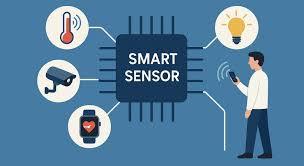
In an era defined by rapid globalization and digital connectivity, the ability to monitor logistics in real-time has become a competitive necessity. The Smart Sensors Market provides the foundational technology required to track assets across vast distances, ensuring that sensitive cargo remains within specific temperature and humidity ranges. This level of oversight is critical for pharmaceutical companies and food suppliers who must adhere to strict safety regulations. By utilizing smart sensors, companies can mitigate risks associated with theft, damage, and delays, creating a more resilient supply chain. Furthermore, the data harvested from these sensors allows logistics managers to identify bottlenecks and optimize routes, leading to significant cost savings and a reduced carbon footprint. As global trade continues to face challenges ranging from geopolitical instability to climate change, the implementation of intelligent sensing solutions offers a pathway to greater stability and transparency in the movement of goods worldwide.
Looking toward the future, the strategic implementation of these technologies is expected to accelerate as 5G networks become more prevalent. The increased bandwidth and lower latency provided by 5G will enable a higher density of sensors to communicate simultaneously without lag, unlocking the full potential of massive IoT deployments. According to the Smart Sensors Market forecast, we are likely to see a surge in the use of optical and pressure sensors within smart manufacturing environments. These tools allow for "digital twin" technology, where a virtual replica of a physical system is updated in real-time using sensor data to simulate outcomes and prevent failures before they occur. This proactive approach to industrial management is redefining productivity standards. However, the industry must also address the environmental impact of producing millions of electronic components, pushing for the development of biodegradable sensors and more efficient recycling programs to ensure that the march toward a smarter world remains ecologically responsible.
Which industries are the fastest adopters of smart sensor technology? The automotive, industrial manufacturing, and healthcare industries are currently the fastest adopters due to their urgent need for automation, safety, and real-time data monitoring.
What role does 5G play in the evolution of smart sensors? 5G technology provides the high-speed connectivity and low latency required for thousands of smart sensors to communicate instantly, enabling more complex applications like autonomous fleets and smart city grids.

 English
 Arabic
 French
 Spanish
 Portuguese
 Deutsch
 Dutch
Dutch
 Italiano
 Russian
 Romaian
 Portuguese (Brazil)
 Greek
Greek