
Technological Advancements in Thermal Printing and Their Impact on the Barcode Label Printer Market Efficiency
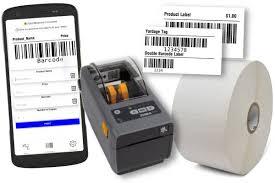
The technical landscape of the barcode label printer market is currently undergoing a significant transformation driven by breakthroughs in printhead technology and media versatility. Modern thermal printers are now capable of achieving higher dots-per-inch (DPI) resolutions, which is crucial for printing the increasingly complex 2D barcodes and QR codes required for detailed product authentication. These advancements allow manufacturers to pack more information into smaller labels without sacrificing readability by standard scanners. Additionally, the development of more resilient ribbon materials in thermal transfer printing has expanded the applications of these printers to industries such as chemical processing and automotive manufacturing, where labels must withstand extreme temperatures and chemical exposure. The move toward "smart" printers that can self-calibrate and detect media mismatches has also reduced the technical barrier for operators, leading to fewer errors and less material waste. As businesses strive for leaner operations, the efficiency gains provided by these high-performance printing solutions become a competitive advantage, enabling faster throughput in production lines and distribution centers worldwide.
In our group discussion, it is important to highlight that the value of these printers extends beyond simple label generation; they are data-entry points that bridge the physical and digital worlds. By ensuring that every item is uniquely identified at the point of origin, these printers enable the high-level data analytics that modern enterprises rely on for forecasting and inventory optimization. The convergence of wireless connectivity, such as Wi-Fi 6 and Bluetooth 5.0, into these devices has also liberated the workforce from fixed workstations, allowing for on-demand labeling at the point of application. This mobility is essential in fast-paced environments like hospital pharmacies or retail stockrooms where immediate labeling reduces the risk of misidentification. As the industry moves forward, we expect to see even greater integration with artificial intelligence to predict maintenance needs before a failure occurs. This proactive approach to hardware management ensures that the flow of goods remains uninterrupted, reinforcing the printer's role as an indispensable tool in the global economy. To better understand future trends, reviewing a Barcode Label Printer Market forecast provides clarity on where the technology is headed over the next decade.
FAQs: Why is high-resolution printing important for modern barcode labels? High-resolution printing is essential for 2D barcodes and small-scale labels, ensuring that complex data structures remain scannable even when printed on limited surface areas.
What is the difference between direct thermal and thermal transfer printing? Direct thermal printing uses heat-sensitive paper and no ink, making it ideal for short-term labels, while thermal transfer uses a ribbon to create permanent, durable images for long-term use.
➤➤➤Explore MRFR’s Related Ongoing Coverage In Semiconductor Industry:
Financial Modeling And Valuation Services Market
Financial Planning Services Market
Financial Reporting Consulting Services Market
Financial Software And Technology Consulting Services Market
Fleet Management Services Market
Forensic Accounting And Fraud Investigation Services Market
Freight And Shipping Solutions Consulting Services Market
Geotargeting And Location Based Marketing Services Market
Global Workforce And Talent Acquisition Services Market
Green Building Materials And Consulting Services Market

 English
 Arabic
 French
 Spanish
 Portuguese
 Deutsch
 Dutch
Dutch
 Italiano
 Russian
 Romaian
 Portuguese (Brazil)
 Greek
Greek