
Ecommerce Marketing Services: A Complete Guide for Traffic, Sales and Customer Growth
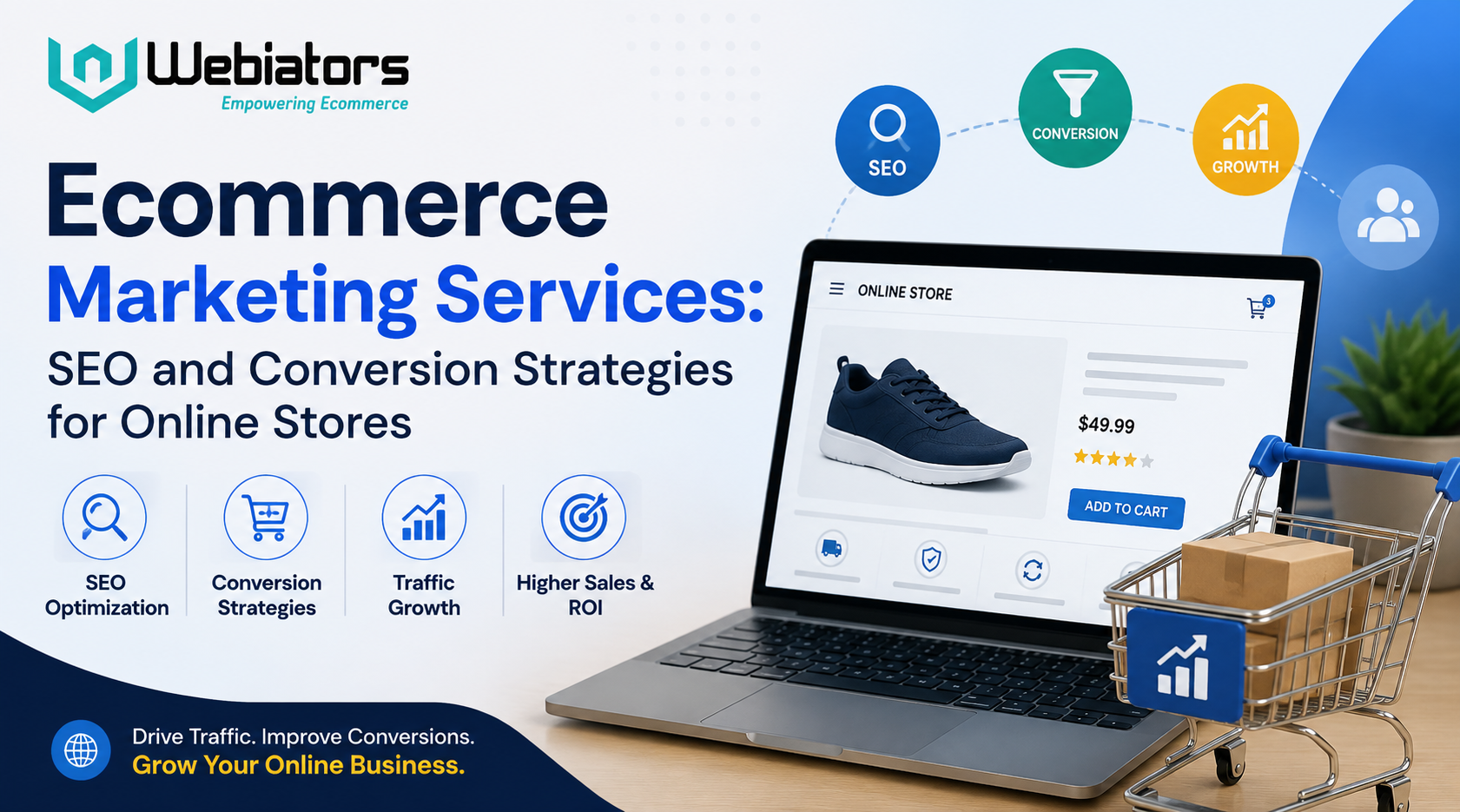
Ecommerce businesses need two things to succeed online: qualified traffic and customers who are ready to take action. Getting visitors without generating sales can waste resources, while focusing only on conversions without enough visibility limits growth.
This is why Ecommerce Marketing Services should combine informational and commercial search intent. Customers may begin with a question, compare products later, and eventually search for a specific solution or provider. A strong ecommerce strategy supports every stage of this journey.
What Are Ecommerce Marketing Services?
Ecommerce Marketing Services are digital strategies designed to increase the visibility, traffic, engagement, and sales of an online store.
A complete ecommerce marketing strategy can include:
- Ecommerce SEO
- Keyword research
- Product page optimisation
- Category page optimisation
- Content marketing
- Technical SEO
- Search Engine Optimization Services
- Conversion rate optimisation
- AEO and GEO optimisation
- Internal linking
- Mobile optimisation
- Performance tracking
The purpose is not simply to increase website visitors. The goal is to attract people with relevant intent and provide the information they need to move toward a purchase.
Understanding Informational and Commercial Search Intent
Search intent explains what a person wants when they enter a query into a search engine.
Informational intent usually means the customer is looking for knowledge. Examples include:
- How does this product work?
- How do I choose the right product?
- What features should I look for?
- What is the difference between two products?
Commercial intent indicates that the person is considering a purchase or looking for a business or product. Examples include:
- Best ecommerce products for a specific need
- Product comparison
- Product reviews
- Ecommerce marketing services
- Ecommerce SEO services
- Best ecommerce marketing company
An effective strategy should address both. Informational content can introduce a business to potential customers, while commercial pages can help users take action.
How Search Engine Optimization Services Support Ecommerce
Search Engine Optimization Services help ecommerce websites improve visibility for relevant searches.
A comprehensive ecommerce SEO strategy includes technical, on-page, content, and internal linking activities.
Technical SEO focuses on areas such as:
- Website crawling
- Indexation
- Canonical URLs
- XML sitemaps
- Redirects
- Mobile performance
- Page speed
- Structured data
On-page SEO focuses on product and category pages. Titles, headings, descriptions, images, internal links, and relevant search terms should clearly communicate the purpose of each page.
For large ecommerce stores, technical SEO is especially important because product variations, filters, and duplicate URLs can create thousands of pages.
Build Content Around Customer Questions
Informational content can capture customers before they are ready to purchase.
A useful ecommerce content strategy can include:
Buying Guides
Explain what customers should consider before purchasing a product.
Product Comparisons
Help shoppers understand differences between products, features, prices, or use cases.
How-To Content
Answer practical questions related to products and their use.
FAQs
Provide concise answers to common customer questions.
Product Education
Explain technical specifications, compatibility, materials, maintenance, or other factors that influence purchasing decisions.
This content can also link internally to relevant product and category pages, creating a natural path from information to commercial action.
Optimise Commercial Pages for Conversions
Commercial pages should make it easy for customers to evaluate products and take the next step.
A strong product page should clearly present:
- Product name
- Price
- Availability
- Key features
- Specifications
- Images
- Reviews
- Delivery details
- Returns information
- Purchase options
Avoid hiding important information behind unnecessary clicks. Customers should be able to understand the product without having to search through multiple pages.
Category pages should also make product discovery simple through useful navigation, filters, sorting options, and relevant descriptions.
Ecommerce Conversion Optimization Services
Driving traffic is only one part of ecommerce marketing. ecommerce conversion optimization services focus on improving the percentage of visitors who complete valuable actions.
The conversion journey should be reviewed from the first landing page through checkout:
Search → Landing Page → Product Discovery → Product Evaluation → Cart → Checkout → Purchase
Potential problems can include unclear calls to action, complicated navigation, unexpected costs, slow pages, limited payment options, or lengthy checkout forms.
Conversion optimisation should be based on customer behaviour, analytics, testing, and measurable results rather than assumptions.
Optimise for AEO and GEO
Search is becoming increasingly conversational. Customers can now ask questions through AI-powered search systems and expect direct answers.
Answer Engine Optimization (AEO) focuses on providing clear answers to customer questions using structured headings, concise explanations, FAQs, and well-organised information.
Generative Engine Optimization (GEO) focuses on making business, product, service, and expertise information easier for generative AI systems to understand.
For ecommerce websites, useful GEO and AEO practices include:
- Clear product information
- Consistent business details
- Direct answers
- Relevant FAQs
- Descriptive headings
- Structured product information
- Helpful supporting content
- Logical internal linking
The priority should always be useful information for customers rather than content created solely to manipulate search systems.
Connect Informational Content With Commercial Intent
One of the strongest ecommerce strategies is connecting informational content with relevant commercial pages.
For example, an article answering “How do I choose the right product?” can link to a product category. A comparison guide can link to the products being compared. A troubleshooting article can link to replacement products or accessories where relevant.
This creates a logical customer journey:
Question → Information → Comparison → Product → Purchase
It also helps search engines understand the relationship between different areas of the website.
How to Measure Ecommerce Marketing Performance
A highly optimised ecommerce strategy should be measured using business outcomes.
Track:
- Organic traffic
- Keyword visibility
- Click-through rate
- Product page traffic
- Conversion rate
- Organic revenue
- Average order value
- Cart abandonment
- Checkout abandonment
- Returning customers
Do not evaluate performance using rankings alone. A high-ranking page that attracts visitors without producing meaningful engagement or sales may need a different approach.
Conclusion
A successful ecommerce marketing strategy needs to serve customers at different stages of their decision-making process.
Ecommerce Marketing Services can connect informational content with commercial landing pages, while Search Engine Optimization Services improve organic visibility and ecommerce conversion optimization services help turn qualified visitors into customers.
By combining search intent, useful content, technically sound pages, product optimisation, AEO, GEO, and conversion analysis, ecommerce businesses can create a more complete search and shopping experience.
The objective is simple: answer the customer's question, provide the right product, remove purchasing barriers, and make the next step clear.

 English
 Arabic
 French
 Spanish
 Portuguese
 Deutsch
 Dutch
Dutch
 Italiano
 Russian
 Romaian
 Portuguese (Brazil)
 Greek
Greek
