
How to Insulate Pipes under Bathroom Subfloor?
Insulating pipes under a bathroom subfloor is a very important home task because water pipes that stay cold or hot for long hours often lose heat, make noise, freeze in winter, or cause damage that leads to high repair bills, and in many homes the cost of pipe insulation work under a bathroom floor starts from around 150$ and may reach 800$ or more depending on pipe length, floor type, labour needs, and material choice, which makes early planning and proper insulation a smart money saving step for every homeowner who wants a warm, quiet, and safe bathroom space.
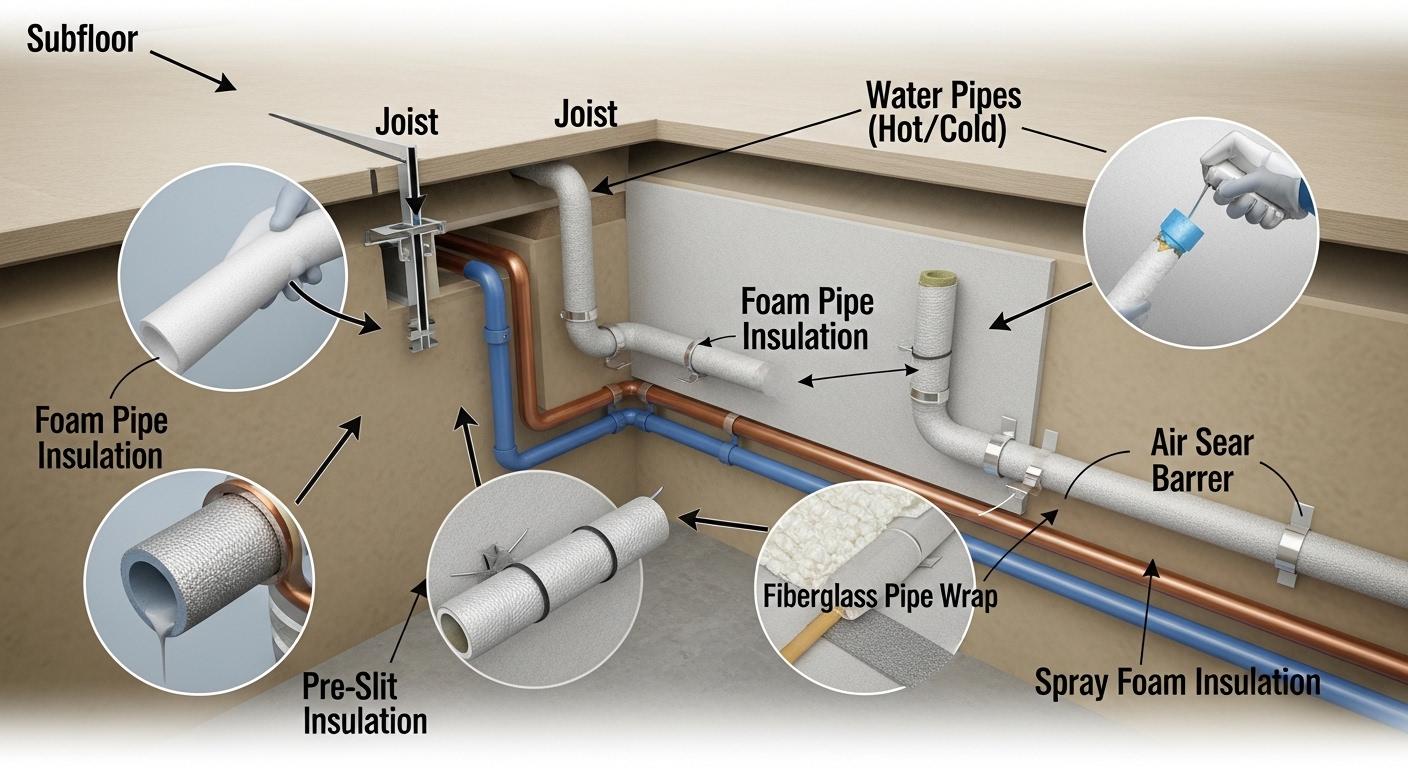
Different insulation types are compatible with different pipes and conditions under the floor. Selecting the right material will make insulation last longer. For bathroom subfloors, foam pipe insulation can fit around pipes and is easily installed.
When used for pipes that contain hot water, the fiberglass wrap offers good heat insulation and can be handled with care. Rubber insulation has a high resistance to humidity and is suitable for a bathroom with high humidity. Spray foam fills in the gaps around pipes or joists to block air flow.
Understanding Bathroom Subfloor Pipe Layout
Bathroom subfloors hide many pipelines that carry hot water, cold water, and sometimes drain water, and knowing how these pipes run under the floor helps plan insulation in the right way.
Pipes usually run between wooden joists or through concrete spaces, and the location depends on house design, floor height, and plumbing plan, which means each bathroom has a different layout that needs careful checking before insulation starts.
In the second paragraph of this section, budget planning becomes important because many homeowners review a precise insulation takeoff prepared through professional estimating services to understand how insulation fits into the complete bathroom floor scope. When renovation, pipe replacement, or flooring upgrades take place at the same time, a detailed quantity takeoff and cost breakdown clearly define material quantities, labor components, and project scope. This structured estimating approach reduces financial uncertainty and helps avoid unexpected expenses later.
Some bathrooms have pipes close to outside walls, which raises the risk of cold exposure, while others have pipes near vents or crawl spaces where air moves freely, making insulation even more important.
Why Pipes Below the Bathroom Subfloor Need Insulation
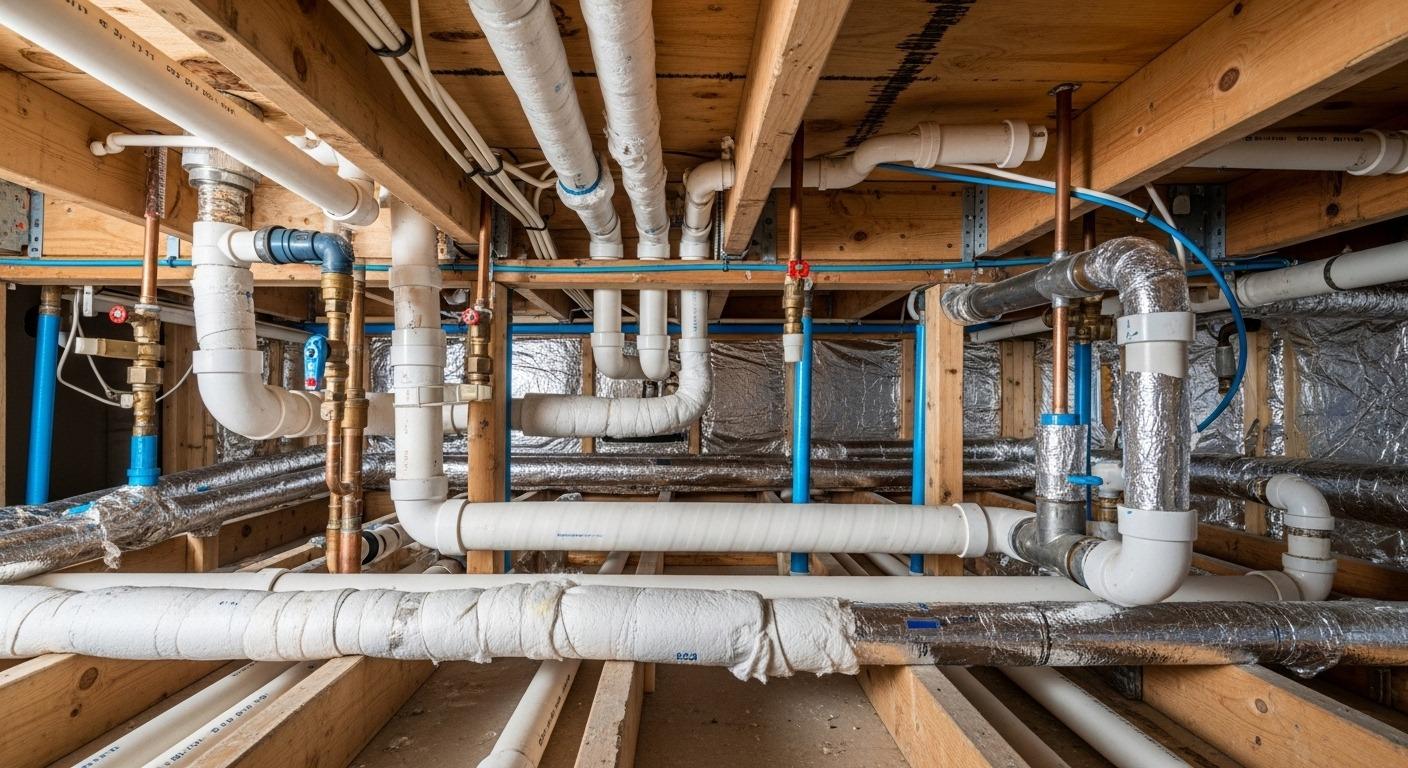
Bathroom pipes often sit where cold air meets moisture and floor gapping, creating a potentially dangerous space. Insulation can act as a warming blanket by keeping the water temperature at its ideal level while protecting it from damage, noise, and early wear.
It is important to protect your pipes from cold air during the winter. Without protection, water will lose its heat and cause a sluggish warm flow. You may also experience uncomfortable showers or higher electricity bills, as it takes longer for heaters to warm the water.
A big part of the reason why insulation is needed, however, is to control moisture. In bathrooms, there is often steam and moist air. And pipes in the basement collect rainwater that can damage concrete, metals, and wood.
As pipes contract and expand when using hot and cold water, noise can be a major problem. However, insulation will soften the sound, keeping your bathroom peaceful and quiet.
Water pipes beneath the floor of a bathroom
Homeowners can act now to prevent costly and time-consuming repairs by identifying the signs that there is a problem with their home's pipe insulation. It is common to see slow water flow. This occurs when warm water doesn't reach the shower or taps for a very long time.
The coldness of the floors is another indication that the plumbing system needs to be upgraded. Unusual pipe sounds, such as rattling, clicking, or crackling noises when water is used, can indicate temperature stress. In homes with water heaters located away from bathrooms, high water heating costs are often due to heat loss.
Tools and safety items
Before starting insulation, it is important that you have the appropriate tools and items to keep the job safe. Included in the basic set of tools are a utility blade, gloves, safety glasses, and a flashlight.
The use of moisture barriers, such as plastic sheets or barrier films, can be used to prevent insulation damage from exposure to water in high-humidity bathrooms. While safety glasses protect eyes during cutting and installation, wearing gloves helps to keep hands safe from insulation fibers or sharp pipes.
Bathroom Drainage Pipe Insulation
The drain pipe also needs insulation, even if it does not transport hot water. Exposure to cold air leads to moisture, sound, and condensation. Foam wrap can reduce the noise of water flow when using a toilet or shower. By sealing around pipe openings, you can block cold air while protecting subfloors from water dripping on the pipe surface.
In order to prevent water leaks or any accidents while working, you should turn off the main water supply. First, you can reach the subfloor by crawling through an open space in your basement or removing a floor panel, depending on how it is designed.
It is important to clean your pipes of dust, dirt, and moisture. Clean pipes will allow insulation to adhere more effectively. As you measure, cut your insulation material so that it matches each pipe section. Use insulation tape or ties to wrap or slide the insulation around pipe ends. Fill in any gaps between pipes by using sealant or spray foam to prevent airflow that can reduce insulation.
Cost to Insulate Pipes under Bathroom Subfloor
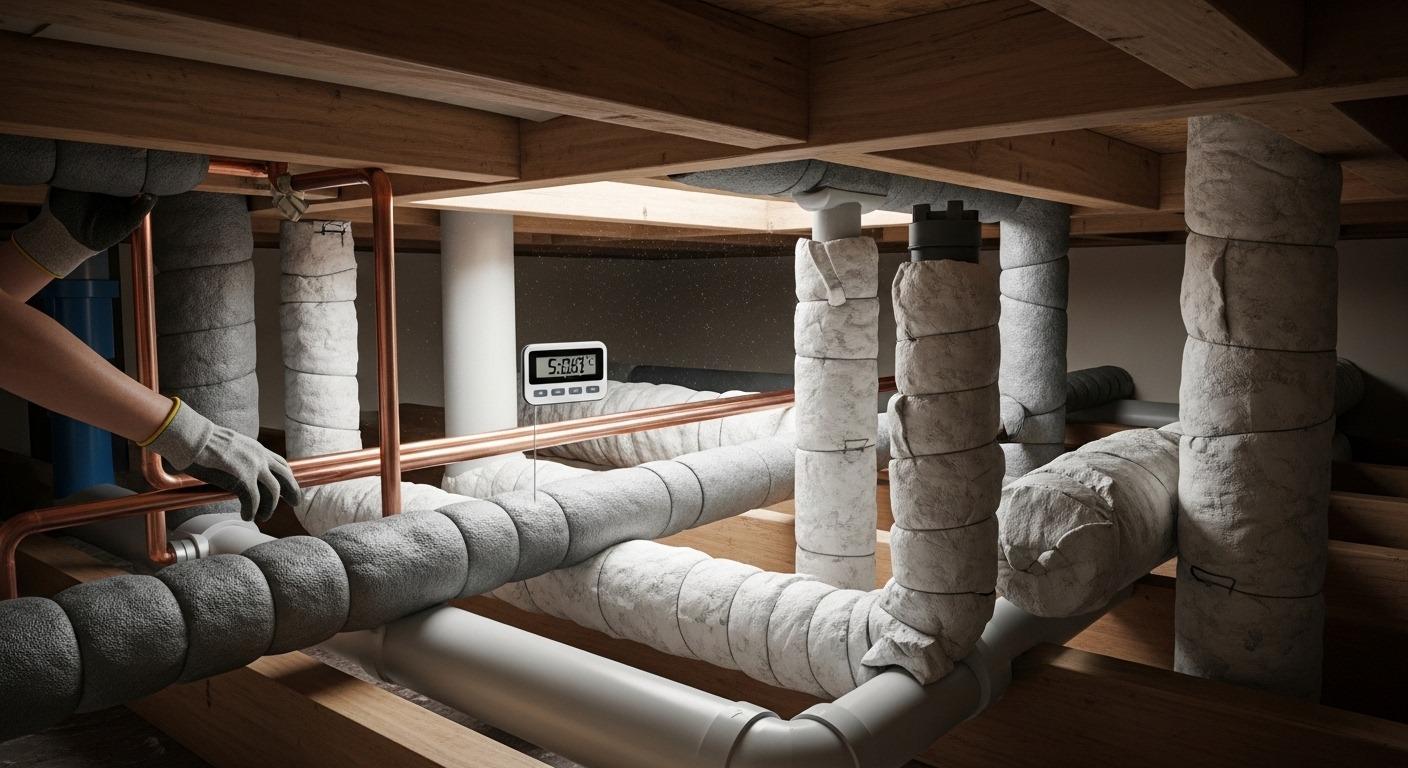
The price of insulation under the subflooring depends on many factors, including system length, insulation type, availability of labor, and rates local to your area. Many homeowners and contractors rely on piping cost estimators to accurately assess material quantities and overall project expenses. Materials can cost anywhere between $1 and $5 per foot.
Costs of labor can be anywhere between $100 and $500 for a bathroom-wide insulation project. For bathrooms with concrete floors and limited space, the total project costs will increase.
Common mistakes to avoid during Pipe Insulation
If you leave gaps between your insulation, it reduces heat retention and lets cold air in. It lowers the temperature of your water and can cause pipes to freeze, especially during the winter months.
If you use insulation designed to be used in areas of high moisture, this can lead to mold growth, as the dampness under your subfloors is trapped. Over time, weak insulation materials will break down, damaging pipes and wood structures.
By ignoring drain pipes, you are causing noise and problems with condensation. The drain pipes create vibration sounds that can spread moisture to the wood and insulation around them. This increases the risk of injuries during installation because it involves working in areas with low visibility, sharp objects, and small, tight spaces. Safety measures are important to follow, including wearing eye and hand protection.
If you hurry the installation of insulation, it will result in an uneven application, poor coverage, and loose or missing seals. All these factors can reduce overall insulation performance and even shorten material life. Failure to properly secure the insulation allows it to slip or sag, exposing pipes and decreasing the value of the insulation.
Energy Efficiency and Insulation
Insulate pipes to keep the water warm longer. They reduce energy costs and workload on your heater by reducing heat losses as it travels through the pipe. As less water passes through the faucets and into the shower or tub before it reaches a warm temperature, you can save energy.
In addition, stable pipe temperatures can reduce pipe stress. They also extend the life of pipes, decreasing long-term costs associated with cracks in joints, leaks, and weakened connections. Because water heaters use less energy, they can help to reduce utility costs and maintain system performance. Insulation helps to reduce temperature variations inside the pipes. This protects seals, fittings, and other components from wear and tear caused by frequent heating and lowering.
After Insulating Bathroom Plumbing, Maintenance Tips
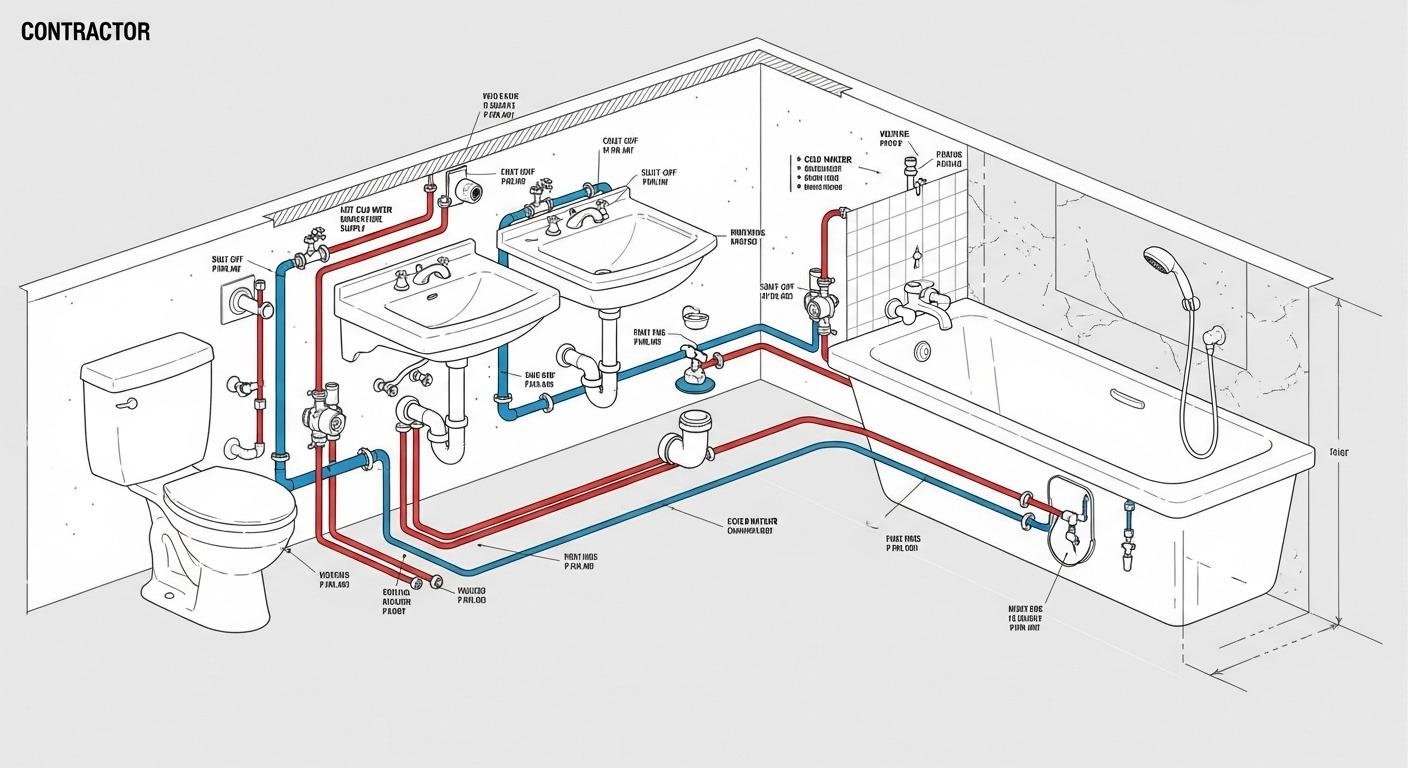
After significant rainfall or plumbing work, or severe weather conditions, check your insulation frequently for gaps or worn signs.
It is important to fix small problems early, as they may grow larger if left unattended. Maintain a dry, ventilated crawl space to avoid mold growth.
If you find nesting material, insects, or debris near insulation pipes, be sure to remove it to protect the layers of insulation. Prior to the cold winter months, plan seasonal inspections. This will ensure that your insulation layers are secure against airborne temperatures.
The Difference Between Professional Insulation and DIY Insulation
Due to tighter spaces, concerns about safety, and complex pipe configurations that demand experience, specialized tools, some homeowners opt for professional assistance. Easy access to basic pipe and layouts makes DIY insulation ideal, especially for homes with basements that open up or crawl spaces with wide openings.
The cost of professional insulation work can be higher, but the benefits are worth it. It is safer, offers better coverage, and lasts longer. Experts are familiar with moisture control requirements, vapor protection, and the thickness of insulation needed, allowing them to make better decisions about performance. Hiring experts reduces the physical strain on workers and their risk of injury.
Long-Term Advantages
Insulate the subfloor of your bathroom to improve comfort, save energy, control noise, and prolong pipe life. Bathrooms will stay warm during the cold season, reducing cold surfaces and improving daily comfort.
Heat loss is reduced throughout the entire plumbing system, resulting in a more efficient water heating system. Repairs become less frequent as pipes stay protected from damage caused by moisture, corrosion, and freezing.
Insulating plumbing can increase the value of any home by promoting energy efficiency. A bathroom with long-term, high-performance insulation is more reliable, quieter, warmer, and has a longer lifespan.
Conclusions
Insulate the pipes that run under your bathroom floor to improve energy efficiency and comfort. Good insulation will keep water warm longer and reduce the stress placed on your heating system. You can also lower your risk of pipe breakage due to frozen temperatures and condensate buildup.
Insulation materials installed in a safe and careful manner, paying attention to safety and moisture control, will protect bathroom subfloors for many years. Repairs and energy costs are reduced. A regular inspection will ensure the insulation remains effective and that small problems do not become costly.
FAQs
Why is it important to install bathroom pipe insulation beneath the subfloor
Bathroom pipe insulation protects pipes and floors against moisture and cold, while reducing heat loss and noise.
How long is the pipe insulation in the floor of a toilet?
If installed properly, it can last up to 20 years.
Does pipe insulation help reduce water heating costs
Insulating pipes can keep water at a warmer temperature for longer. That reduces energy usage and, over time, lowers bills.

 English
 Arabic
 French
 Spanish
 Portuguese
 Deutsch
 Dutch
Dutch
 Italiano
 Russian
 Romaian
 Portuguese (Brazil)
 Greek
Greek