
PEM Electrolyzer Industry Green Hydrogen, Industrial Decarbonization, and Technology Advances
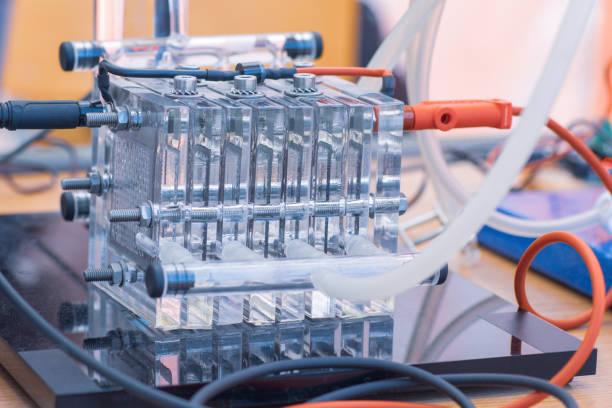
The global shift toward low-emission energy is increasing attention on technologies capable of producing hydrogen without relying directly on fossil fuels. Proton Exchange Membrane (PEM) electrolyzers use electricity to split water into hydrogen and oxygen through a solid polymer electrolyte membrane. Their compact design, operating flexibility, and compatibility with variable renewable electricity make them increasingly relevant to emerging hydrogen-production systems.
According to MarkNtel Advisors, the global PEM electrolyzer industry is estimated to expand at a CAGR of around 32.7% during 2024–2030. The study identifies rising hydrogen demand in transportation, supportive government policies, increasing green-ammonia requirements, and decarbonization initiatives as important growth factors. The PEM electrolyzer industry growth forecast also highlights Asia-Pacific as a leading regional contributor, supported by renewable-energy integration and expanding hydrogen infrastructure.
How PEM Electrolyzers Support Green Hydrogen
PEM electrolyzers generate hydrogen by passing electricity through water and using a polymer membrane to selectively transport protons. At the anode, water is separated into oxygen, protons, and electrons, while hydrogen is produced at the cathode. The U.S. Department of Energy notes that PEM electrolyzers typically operate at approximately 70–90°C and can be deployed from relatively small distributed systems to large centralized hydrogen facilities. DOE's explanation of electrolysis provides technical context for the technology.
When electricity comes from renewable sources such as solar or wind, the resulting hydrogen can support lower-emission energy pathways. However, the overall environmental performance depends heavily on the electricity source and the broader production system.
Renewable Energy Integration Creates New Opportunities
The increasing deployment of renewable electricity is creating opportunities for electrolyzers to absorb electricity and convert it into hydrogen. This can provide another pathway for using renewable generation during periods when electricity production exceeds immediate grid demand.
The International Energy Agency reports that dedicated hydrogen electrolysis capacity reached approximately 1.4 GW globally at the end of 2023, almost doubling from the previous year. It also notes that PEM and alkaline electrolyzers are commercially available, while other technologies remain at earlier stages of development. IEA analysis of electrolyzers illustrates the accelerating development of the broader electrolysis ecosystem.
Transportation Remains an Important Application
Hydrogen-powered transportation is one of the applications supporting PEM electrolyzer deployment. Hydrogen fuel-cell vehicles require reliable supplies of hydrogen, creating demand for production facilities and refueling infrastructure. PEM systems can be suitable for applications requiring flexible operation and high-purity hydrogen.
Heavy-duty transportation, including buses, trucks, and other commercial vehicles, is receiving particular attention because hydrogen can potentially provide longer driving ranges and shorter refueling times than some battery-based alternatives. The pace of adoption, however, depends on vehicle costs, fueling infrastructure, hydrogen availability, and the economics of competing technologies.
Industrial Processes Expand the Addressable Demand
Industrial applications represent another important area for PEM electrolyzers. Hydrogen is already used as a feedstock in sectors such as refining and chemicals, while emerging projects are evaluating hydrogen for steel production, synthetic fuels, methanol, and ammonia.
The IEA reports that much of the committed electrolyzer project pipeline is associated with industrial applications or hydrogen-based fuels for transportation. This indicates that electrolyzer deployment is increasingly connected with efforts to decarbonize hard-to-abate industrial activities rather than being limited to standalone energy projects.
Platinum and Iridium Remain Important Materials
Material selection is a significant consideration for PEM electrolyzer economics and performance. According to MarkNtel Advisors, platinum is estimated to account for the majority share of the PEM electrolyzer material segment during 2024–2030, supported by its catalytic efficiency, durability, and commercial availability.
Iridium is also important in PEM systems, particularly for catalyst applications. However, reliance on platinum-group metals creates cost and supply-chain considerations as deployment scales. The IEA has highlighted ongoing innovation aimed at reducing critical-material intensity in PEM electrolyzers, including efforts to lower iridium and platinum requirements.
Cost and Efficiency Remain Key Development Priorities
Although PEM electrolyzers offer operational advantages, cost competitiveness remains a central challenge. The IEA notes that PEM systems have experienced significant cost reductions but remain more expensive than alkaline systems in many applications. Increasing production volumes, manufacturing automation, supply-chain optimization, and technology improvements could contribute to further reductions.
The U.S. Department of Energy has established technical targets focused on reducing capital costs, improving efficiency, increasing durability, and lowering platinum-group-metal content. Its targets include an ultimate system capital-cost objective of USD 150/kW and hydrogen production cost target of USD 1/kg. DOE PEM electrolyzer technical targets illustrate the direction of ongoing technology development.
Asia-Pacific Strengthens Its Position
Asia-Pacific has been dominating the PEM electrolyzer industry, according to the MarkNtel Advisors assessment. Renewable-energy expansion, government support, hydrogen infrastructure development, and industrial investment are contributing to regional deployment.
China, India, Japan, and South Korea are among the countries developing hydrogen strategies and electrolyzer manufacturing capabilities. India's National Green Hydrogen Mission, for example, includes support for domestic electrolyzer manufacturing and renewable hydrogen production.
Outlook for PEM Electrolyzers
The PEM electrolyzer industry is moving toward larger-scale deployment as governments and industries pursue lower-emission hydrogen production. Transportation, industrial feedstocks, ammonia, methanol, energy storage, and renewable-energy integration are creating multiple application pathways.
Future progress will depend on reducing capital costs, improving durability and efficiency, lowering critical-material intensity, expanding renewable electricity availability, and establishing reliable hydrogen demand. As these conditions develop, PEM technology is likely to remain an important part of the expanding global electrolyzer ecosystem.

 English
 Arabic
 French
 Spanish
 Deutsch
 Turkish
 Dutch
Dutch
 Italiano
 Russian
 Romaian
 Portuguese (Brazil)
 Greek
Greek
