
How to Improve Airflow in a Laminar Flow Cabinet?
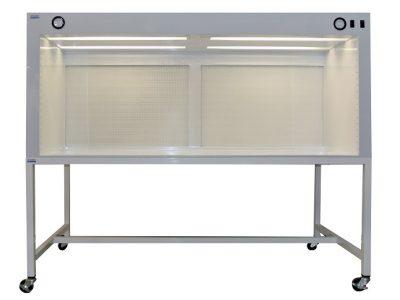
Maintaining proper airflow in your laminar flow cabinet is essential if you want consistent contamination control, reliable laboratory results, and longer equipment life. Whether you handle pharmaceuticals, biotechnology, electronics, medical devices, or research samples, clean and uninterrupted airflow protects sensitive materials from airborne particles.
If your cabinet fails to maintain uniform airflow, contaminants can enter the work area, reducing product quality and increasing the risk of failed experiments. Fortunately, you can improve airflow performance with proper maintenance, correct operating procedures, and routine inspections.
This guide explains practical ways you can maximize airflow efficiency while protecting your laboratory processes.
Understand How a Laminar Flow Cabinet Works
A laminar flow cabinet creates a continuous stream of HEPA-filtered air that moves uniformly across the work surface. This unidirectional airflow removes airborne contaminants and provides a clean environment for handling sensitive materials.
For the system to perform effectively, every component—including the blower, HEPA filter, work surface, and cabinet interior—must function together without obstruction. Even small airflow disruptions can create turbulence that reduces contamination control.
Understanding this principle helps you identify operational habits that may unintentionally reduce cabinet performance.
Keep the HEPA Filter in Excellent Condition
Your HEPA filter is the most important component affecting airflow quality.
Although HEPA filters are designed for long-term use, they gradually become loaded with particles. As resistance increases, airflow decreases, reducing cabinet efficiency.
You should:
- Follow the manufacturer's replacement schedule.
- Perform regular airflow validation.
- Replace damaged or saturated filters promptly.
- Never attempt to clean a HEPA filter unless specifically recommended.
Routine inspections help you maintain consistent airflow while protecting critical laboratory applications.
Avoid Blocking Airflow Paths
One of the most common airflow problems comes from improper placement of equipment inside the cabinet.
Large instruments, storage containers, or stacked materials can interrupt the smooth movement of filtered air.
For better airflow:
- Keep air intake grills completely unobstructed.
- Arrange materials from clean to dirty workflow.
- Avoid placing tall objects directly in front of the filter.
- Leave adequate space between equipment.
A well-organized work area allows air to move evenly across every surface.
Clean the Cabinet Regularly
Dust, fibers, chemical residues, and laboratory debris gradually accumulate inside the cabinet.
Even minor contamination can interfere with airflow patterns.
You should routinely clean:
- Interior walls
- Work surface
- Side panels
- Air intake grills
- Exterior surfaces
Always use cleaning agents recommended for your application and avoid abrasive materials that may damage cabinet surfaces.
Consistent cleaning supports both airflow efficiency and contamination control.
Monitor Blower Performance
The blower generates the continuous airflow required for laminar protection.
If the motor begins to wear or airflow speed changes, cabinet performance may decline.
Watch for signs including:
- Unusual operating noise
- Reduced airflow velocity
- Vibration
- Inconsistent pressure readings
Routine preventive maintenance helps identify mechanical issues before they affect laboratory operations.
Minimize Rapid Movements
Your work habits directly influence airflow stability.
Fast arm movements, frequent reaching, or repeatedly opening and closing access areas create turbulence inside the cabinet.
To preserve airflow:
- Move your hands slowly.
- Perform deliberate, controlled motions.
- Organize supplies before beginning work.
- Limit unnecessary movement during procedures.
These simple adjustments help maintain a stable protective air curtain.
Maintain Proper Room Conditions
Your laboratory environment also affects cabinet airflow.
Air conditioning vents, ceiling fans, open windows, and heavy foot traffic can disturb the cabinet's carefully balanced airflow.
For optimal performance:
- Position cabinets away from doors.
- Avoid direct HVAC airflow.
- Reduce unnecessary movement near the cabinet.
- Maintain stable room temperature.
A controlled laboratory environment improves cabinet consistency throughout the day.
Perform Routine Airflow Certification
Even if your cabinet appears to operate normally, airflow should be verified through scheduled certification.
Professional testing evaluates:
- Air velocity
- HEPA filter integrity
- Airflow uniformity
- Leak detection
- Overall cabinet performance
Certification ensures your equipment continues meeting laboratory standards while protecting sensitive work.
Avoid Overloading the Work Surface
Every laminar flow cabinet has a recommended working capacity.
Overcrowding the work area creates airflow shadows where contaminants may accumulate.
Instead:
- Only place necessary items inside.
- Remove unused equipment.
- Keep workflows organized.
- Allow sufficient air circulation around materials.
Efficient workspace organization significantly improves airflow distribution.
Train Every Laboratory User
Even the highest-quality cabinet cannot perform well without proper operator practices.
Provide regular training covering:
- Correct startup procedures
- Proper loading techniques
- Cleaning requirements
- Airflow preservation practices
- Routine inspection checklists
Consistent operating procedures reduce user-related airflow disruptions and improve laboratory reliability.
Upgrade to a High-Quality Laminar Flow Cabinet
Older equipment may struggle to maintain consistent airflow due to aging components or outdated designs.
Investing in a modern high-performance Laminar Flow Cabinet for contamination-controlled laboratory applications provides improved airflow management, energy efficiency, durable construction, and advanced filtration technology.
Modern systems are engineered to deliver stable airflow while supporting demanding laboratory environments.
Choose Reliable Laboratory Equipment
Equipment quality plays a major role in long-term airflow performance.
CleaTech LLC advanced laboratory airflow solutions for cleanroom and research environments offers laboratory equipment designed to help you maintain clean working conditions with dependable performance, quality engineering, and durable construction.
Selecting reliable equipment reduces maintenance challenges and supports consistent laboratory productivity.
Get Professional Support
If your cabinet shows declining airflow performance despite regular maintenance, professional evaluation can identify underlying issues before they become costly repairs.
Whether you need equipment guidance, maintenance recommendations, or replacement solutions, Contact us today for expert Laminar Flow Cabinet consultation and laboratory equipment support to keep your laboratory operating at peak efficiency.
Conclusion
Improving airflow in a laminar flow cabinet requires more than replacing filters. Proper cleaning, organized workflows, regular certification, careful equipment placement, and trained operators all contribute to maintaining a clean and reliable workspace.
By following these best practices, you improve contamination control, extend equipment lifespan, and achieve more consistent laboratory results. Investing in preventive maintenance today helps ensure dependable airflow performance for years to come.
Frequently Asked Questions
Why is airflow important in a laminar flow cabinet?
Uniform airflow continuously removes airborne particles, helping protect sensitive samples and maintain a clean working environment.
How often should a laminar flow cabinet be certified?
Most laboratories schedule certification annually, although high-use environments may require more frequent testing.
Can blocked air vents affect cabinet performance?
Yes. Blocked intake or exhaust areas disrupt airflow patterns and reduce contamination protection.
When should a HEPA filter be replaced?
Replace the HEPA filter according to manufacturer recommendations or whenever testing shows reduced filtration or airflow performance.
Does room airflow affect a laminar flow cabinet?
Yes. Air conditioning vents, open doors, fans, and heavy traffic can disturb the cabinet's airflow and reduce its effectiveness.
Original Source: https://laboratoryquipment.blogspot.com/2026/08/how-to-improve-airflow-in-laminar-flow.html

 English
 Arabic
 Spanish
 Portuguese
 Deutsch
 Turkish
 Dutch
Dutch
 Italiano
 Russian
 Romaian
 Portuguese (Brazil)
 Greek
Greek
