
A Strategic Analysis of Customer-Centricity: The Global CRM Software Market
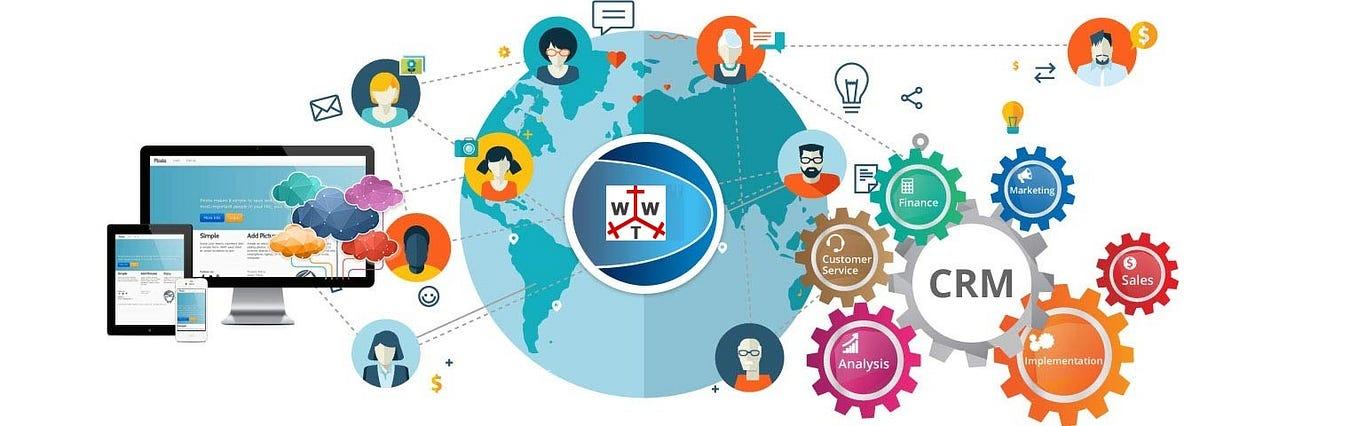
A strategic SWOT analysis—examining the Strengths, Weaknesses, Opportunities, and Threats—of the Customer Relationship Management (CRM) software market reveals a massive and mature industry that is the undisputed system of record for customer data, but one that is also facing significant competitive and user adoption challenges. The market's primary and most enduring strength, as any detailed CRM Software Market Analysis would highlight, is its ability to provide a single source of truth for all customer interactions. By breaking down the traditional silos between sales, marketing, and service, a CRM platform creates a unified, 360-degree view of the customer. This is a massive strategic advantage, enabling personalized marketing, more effective sales conversations, and better customer service. A second major strength is the powerful ecosystem and "stickiness" of the leading platforms. Once a company has built its core business processes around a specific CRM and has migrated all of its customer data, the cost and disruption of switching to a new provider are immense. This, combined with the vast marketplaces of integrated third-party apps, creates a powerful competitive moat for the incumbent leaders and ensures a stable, recurring revenue base.
Despite its critical role, the CRM market has several notable weaknesses. The most significant of these is the persistent challenge of user adoption, particularly among sales teams. Salespeople often view the CRM not as a tool to help them sell, but as a "big brother" tool for management to track their activity. They can see the process of manually entering data about every call and meeting as a tedious administrative burden that takes time away from actual selling. This can lead to low adoption rates or, even worse, the entry of poor-quality data, which undermines the entire value proposition of the system. Another weakness is the high cost and complexity of the major enterprise-grade CRM platforms. The software licensing, implementation services, and customization required to deploy a platform like Salesforce or SAP for a large enterprise can be a multi-million-dollar undertaking. This complexity can also lead to long implementation times and a failure to realize the expected ROI if the project is not managed well.
The market is, however, brimming with opportunities for vendors to expand their value proposition and address these weaknesses. The single greatest opportunity is the continued and deepening infusion of Artificial Intelligence (AI). AI can directly address the user adoption problem by automating data entry and by providing proactive, valuable insights to the end-user. An AI that can automatically log a sales call, summarize it, and then recommend the "next best action" for the sales rep to take transforms the CRM from a passive data entry tool into an active, intelligent assistant. The rise of generative AI presents a huge opportunity to automate content creation, such as drafting personalized sales emails or generating marketing copy. Another major opportunity is the move towards industry-specific CRM solutions. By creating pre-configured versions of their platform that are tailored to the unique processes and data models of a specific vertical (like financial services, healthcare, or manufacturing), vendors can offer a more out-of-the-box solution that requires less customization and delivers faster time-to-value.
Finally, the CRM market must navigate a landscape of significant competitive threats. The primary threat is the intense competition and potential for commoditization. While the top end of the enterprise market is dominated by a few large players, the small and medium-sized business (SMB) segment is a crowded battlefield with hundreds of CRM vendors competing fiercely, often on price. This can lead to margin erosion. A second major threat comes from the "unbundling" of the CRM. A company might choose to use a collection of best-of-breed point solutions—a separate tool for marketing automation, another for sales engagement, and a third for customer support—rather than adopting a single, monolithic CRM suite. This poses a threat to the "all-in-one" platform vision of the major vendors. There is also the constant threat of data security. A CRM system contains a company's most valuable asset: its customer data. A major data breach at a leading cloud CRM provider would be a catastrophic event with massive reputational and financial consequences, making security a paramount and ever-present concern.
Top Trending Reports:

 English
 Arabic
 French
 Spanish
 Portuguese
 Turkish
 Dutch
Dutch
 Italiano
 Russian
 Romaian
 Portuguese (Brazil)
 Greek
Greek